
By Ebunoluwa Sessou
As part of activities marking this year’s Down Syndrome Awareness Month, stakeholders have called for inclusive healthcare policies that guarantee equal access for persons with disabilities across Nigeria. The event, held in Lagos, was themed “Inclusive Healthcare Support for All.”
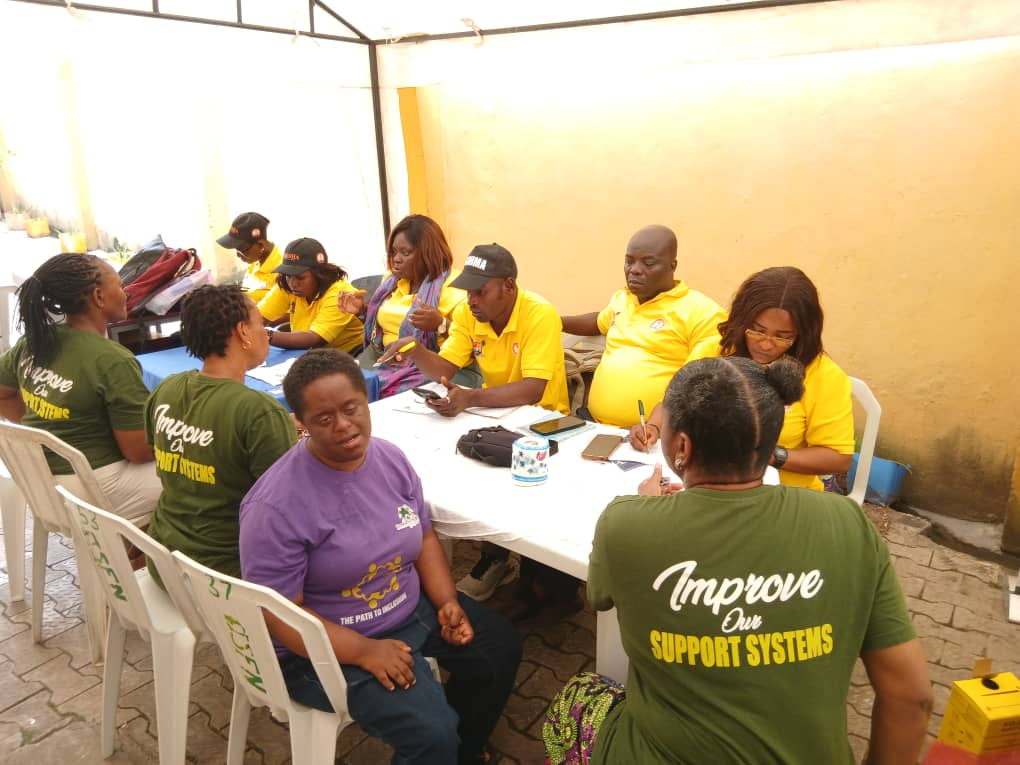
The Health Summit 2025 was organized by the Down Syndrome Foundation Nigeria, DSFN, in partnership with the LASHMA powered by NSIA.
The event was set aside to register persons with disabilities in the Health Insurance scheme of Lagos State for them to be able to enjoy free medical treatment, services and consultation whenever it is needed.
The National Administrator of the Down Syndrome Foundation Nigeria, DSFN, Mrs. Nike Denis, said the initiative stemmed from the Foundation’s long-standing advocacy for better health access for persons with Down Syndrome and intellectual disabilities.
According to her, October is globally recognized as Down Syndrome Awareness Month, and the Foundation in its 24th year has continued to use the period to raise awareness and promote advocacy.
“This year’s theme, Inclusive Healthcare Support for All, was borne out of the urgent need for our cluster which is for persons with Down Syndrome and intellectual disabilities to be included when healthcare policies are being made,” Denis said.
“Health is wealth and without health, there is little anyone can do. Many of our children face congenital heart defects and other health challenges that require early medical attention.”
She revealed that the partnership with the Lagos State Government, through the Lagos State Health Management Agency LASHMA, through the Ilera Eko Health Project, was designed to subsidize health insurance for persons with disabilities.
“Lagos State has been a strong partner through the Office for Disability Affairs, LASODA, and the Ministry of Health. The Ilera Eko initiative is open to all Lagosians, regardless of ability.
“LASHMA went a step further by visiting our centre to register our students, staff, and family members. This means our beneficiaries can now access healthcare without worrying about the financial burden,” she explained.
Speaking on the challenges faced by persons with Down Syndrome, Denis described the condition as a genetic disorder caused by an extra chromosome on pair 21, leading to intellectual disabilities and several health complications.
“Most babies with Down Syndrome are born with congenital heart defects. Many require surgery within months of birth. Sadly, some lose their lives before getting medical help due to the high cost of surgery,” she lamented.
She further highlighted speech, vision, hearing impairments, thyroid disorders, and low muscle tone as common health challenges among affected children. The Foundation, she noted, provides therapy, education, and vocational training to help them become self-reliant.
“We recently opened a large-scale fish farm to teach our students entrepreneurship. They can work, they can contribute to society. All they need is inclusion and support,” Denis added.
For Mrs. Olapeju Coker, founder of Real House of Courage and a UK-based health and social worker, the government must take full responsibility for disability management from birth to adulthood.
“Disability should not be an individual family problem, it is a societal and governmental responsibility,” she stressed. “From diagnosis to care, the system should monitor and support each child. No parent should have to choose between feeding their family and paying medical bills.”
Coker, who has worked extensively with persons with disabilities, said inclusive healthcare means providing free, accessible, and comprehensive support for all categories of citizens, including those with special needs.
“It breaks my heart that parents of special needs children in Nigeria still struggle for basic care. In the UK, government agencies handle this from A to Z. Nigeria must begin to implement its Disability Act, not just have it on paper,” she said.
Both Denis and Coker called for stronger policy implementation of the United Nations Convention on the Rights of Persons with Disabilities, UNCRPD and the Nigerian Disability Act, insisting that inclusion must go beyond slogans to real action.
“The policies are there in black and white,” Denis emphasized. “We must implement and enforce them. Only then can we achieve true inclusive healthcare for all”, they said.
One of the parents, Mr Oluremi Tinuoye also urged government to consider the health and welfare for her citizens.
Disclaimer
Comments expressed here do not reflect the opinions of Vanguard newspapers or any employee thereof.