
By Rotimi Ojomoyela
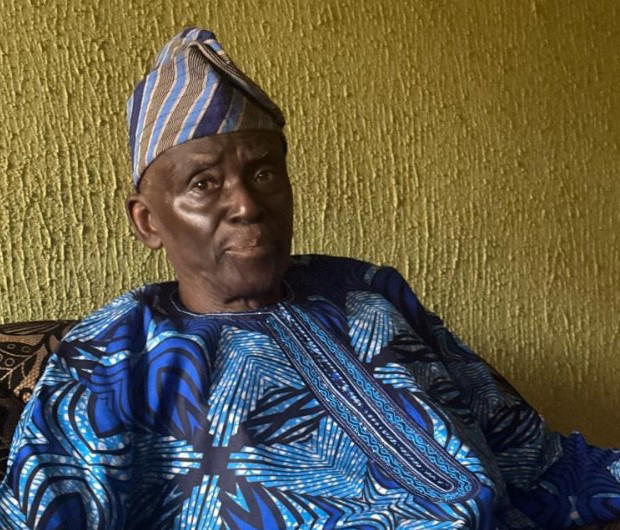
Prince Bayo Adeniran is, unarguably, the most popular former teacher of all time at Ekiti Parapo College (EPC), Ido-Ekiti. Before he became a teacher, teaching English and Literature-in-English, he was a student at EPC. After leaving the college as a teacher, Adeniran went on to record giant strides, becoming principal at five prominent secondary schools and the first Tutor-General in Ekiti State. He was also Chairman, Ekiti State Teaching Service Commission. In this interview, the Okemesi-Ekiti born astute administrator and quintessential teacher, who turned 80 on Tuesday, October 7, 2025, speaks on his times as a student at Ekiti Parapo College where he had his Higher School Certificate in 1968/69 before proceeding to the University of Ibadan for his first degree and later returned to the school as a teacher. Excerpts:
What is your vivid recollection when you were a student and teacher at EPC?
I was a student at Ekiti Parapo College where I had my HSC in 1968/69 before I secured admission into the University of Ibadan. So after my graduation in 1972, with patriotic spirit, I decided to go back to my own home. That is, Ekiti Parapo College, with a promise fulfilled. The question, if properly answered and in full detail, is sufficient to publish a book, but everything has to be abridged because as a student and a teacher, there was no cause for regret. I served only two years as a student and the footprints are already there. I was the Senior Prefect of the school, as well as the Games Captain and, as a teacher, I was the Head of Department, House Master; I was in charge of socials and so many things. Even where I was not officially appointed, I participated in any assignment that I felt I could be of use, just for the welfare and progress of the students. As a student, I did my best in academics. I did my best in sports and I did my best in everything that one could refer to.
More than anything else, as a student, I had academic excellence because when I had my HSC exam in 1969 and the results came, the principal at that time had to send for me because I had the second best result in the whole of Western Region at that time. He said the result was wonderful and so on and so forth. He appreciated me, praised me and commended me for it. I had four papers including three principal papers which included Literature, English, Economics and History. I had B in all the principal papers including the general paper. What I’m trying to say is that I had my best in academics at that time, even though before the end of my course there, I had already sat for the GCE Advance Level without the knowledge of my principal and I had a very good result, but I didn’t tell him about the result because I knew he wouldn’t allow me to leave the school because of my commitment and dedication to duty. After my HSC result came out, the principal sent somebody to me to confirm my plan. He asked if I was leaving the school. I promised him that I would not leave the school after my HSC and, after my graduation from university, I would come back to the school to teach. That was my commitment and I fulfilled it. When I became a teacher, that was another phase, which I think to the glory of God, everything was successful. So I came back to school in 1972 when I successfully completed my course and the principal was very happy and appreciative to have me back. Summarily, I will say that I had a successful teaching career as a graduate teacher at Ekiti Parapo College where I spent eight years teaching.
Factors
I left there in 1980 because I was promoted directly as principal; I was never a vice-principal. It might be that the government considered so many things and factors before promoting me as the pioneer principal of Eso-Obe Comprehensive High School, Ikoro-Ekiti in Ijero Local Government Area. I was the founding principal of that school. When I was in Ekiti Parapo College as a teacher, I had absolute commitment to my work. I never missed my lessons and no students will be absent from any lesson. I was teaching English Language and Literature-in-English in the senior classes. That was where my wife also taught. Chief (Mrs) Monisola Adeniran, was also teaching the English Language. So I did my best to bring up the students to a level of pride because what we were doing at that time was for the future.
Discipline
The discipline at that time was absolute, hard work, excellence and everybody who knew exactly what we were up to will never miss a lesson. I’m very much proud of the students of that place, especially the sets that I handled.
Tell us your experiences as the Head of Social Activities?
I was just treating the academics because that was a tripod on which the future of the students is resting and we shouldn’t play with it. The students were very amenable to correction and very respectful. Though we had some naughty ones among them, which is normal, but they were corrected and they were amenable to that. With that spirit, the academic work was successful because if there was laxity, moral laxity, the work will be so shoddy and not go as expected. So, we had some of them who excelled and, right now, they are in very good positions, they’re in good places and that is the pride of any good teacher. We had the literary activities at that time, in which case, there would be social gathering, impromptu speeches, debates, lectures and everything, just to bring up the students and we also had dramatic activities. I brought them up in drama because drama itself is complementary to English Language. Anybody who is exposed to drama will have confidence in himself to perform, to speak anywhere, even before anybody, before any audience and I thank God that, like I directed them, they followed the path. It was there and then that we had a play which was entitled, Kiriji, at Ekiti Parapo College which we staged. We took it to so many places, we had some of my students as members of the cast. I was also a member of the cast, taking a principal role. It was a great achievement for both the teacher as well as the students at that time.
How were you able to cope with the pranks or naughty attitude of some of your students?
When you are dealing with youngsters, you should be very firm, very strict but, at the same time, very soft because it was 100% firmness. What is normal is that, let the students follow your instructions, your dos’ and your don’ts should be complied with. If that is done, there will be no quarrel for it. Discipline, like I said earlier, is a major principle. And I thank God they were very much amenable to this training, very responsible and responsive. So after punishing them, mind you, the punishment was without malice, not with victimization, possibly that was why they give me much regard and respect.
Why was the Kiriji War drama very imperative?
I told you earlier that drama was complementary to English Language. There are so many advantages that the students will be exposed to if they were involved in drama. One, they will have confidence in themselves to speak anywhere. They will have the courage to tackle any problem. Personally, I had an interest in drama because, in my university course, I had three principal courses which were English Language, sociology and drama. I had very good results in all the courses. It will interest you that, in drama, we covered so many plays. All the Shakespearean plays, we finished everything in one time at the university and we were exposed to practical. We staged plays and Kiriji War was one of them in the university. The play was written by Wale Ogunyemi. I was a member of the cast then. I had the script. So, when I got back to EPC, I had interest in developing my students to have interest in drama.
How difficult was it to put the cast together?
It was not easy to put the cast together, but people say when there is will, there is a way. With my experience at the university, because I knew exactly how directors mobilized us, I knew their problem at that time, I had to adjust myself and ensure that I mobilized the students also to come and then be part of the cast. We had drama practices, we had rehearsals, some people might be funny, some might take it seriously, but if you are very fair in controlling them, and you will be there before anybody else, it will take a long time before anybody could think of being late. I myself was a member of the cast, because I took the part of Fabunmi at that time. Who will be the student that will not cooperate? If you are late, you know that you will face some problems because you’ll be punished. It was an integral part of the school activities and, therefore, it should be taken seriously. So, I made sure that the students followed exactly what I said and they appreciated it, they enjoyed it and they benefited from it.
Were the school authority and students’ body cooperative?
The input of the school authority was to cooperate with us. The head of the school had nothing against it, other than to appreciate our efforts, commend us and even use that as an example to others, while addressing them. The results of the school were very encouraging, especially in Literature-in-English. Even when we had HSC there, I was handling Literature for HSC students and it was a very interesting period. We had the first set of HSC Literature students at that time and there were 12 students. 11 of the 12 passed creditably in all the papers. Only one student had ordinary. This means the 11 HSC students who scored excellently well were qualified to go to the university. And when they went to the university, some people gave me feedback, that’s the interesting aspect of it. We referred to Literature as English in the university. So the notes which I gave my students in Literature at that time were used or copied by their course mates in the university, even to perform.
How was the drama group funded, and was it profitable at the end of the day?
We staged our plays not to profit; it was not a venture to make profit. It was a venture in which you made it part of the students, to encourage them, to improve them and to make them realize what it was meant for. This was in the sense that, even in the university, you had theater arts. Like I said, I had drama as one of my courses. Even though drama was not in the curriculum of the school at that time, anybody who was so fortunate to go to the university could take it as one of his courses. So, that was very basic.
Funding could just be, if we wanted to take the vehicle, the fueling and taking care of the students; I did most of those things on my own without getting money from the school. Only the major aspect of it was handled by the school, it was a matter of interest, a matter of commitment and this we enjoyed in order to ensure that the students benefited so highly from it.
What were the challenges encountered?
You don’t have advantages without disadvantages, but the greater aspect of it was that the students cooperated. Some of the challenges would be absenteeism for rehearsal by the students which was rightly handled by the teacher in charge or the director, so that they would know the purpose for the drama. In as much as they understood this and they knew that I will not accept any slackness, any sense of irresponsibility, they had no choice, but to toe the way I wanted them to toe. Our challenges could have been the slackness or lateness, absenteeism, but it was corrected because if it was not corrected, the exercise would be futile, it wouldn’t be successful. In drama, we had so many actors, actresses; we had people with different parts to play. If an actor missed rehearsal, it meant a lot, which meant you would be waiting for him and the order of things would be disjointed. The goals will not be achieved as expected. So I made sure the students were present at every rehearsal. We took the play to Usi-Ekiti, Okemesi, many other schools and the then University of Ife (now Obafemi Awolowo University). It was so good, we want to thank God that throughout the journey, we had no accident, everybody was committed and we enjoyed it. Even the students of University of Ife commended our efforts, they were surprised, it was incredible having people at the university level to say that kind of thing. Ekiti Parapo War was the war between Ibadan and Ekiti. Ibadan people were trying to enslave and maltreat Ekiti people, which was not palatable.
How impactful do you think your teaching of English and Literature-in-English on your students at that time was?
We have three segments in Literature: Poetry, prose and drama, and each helps the other. The situation was that the drama as part of Literature itself would have place. When you read Literature books, it fertilizes your mind and, in fact, I made it almost compulsory that students should take Literature up to the final class, so that it will help the standard of their language, written and spoken. Because in Literature, you have so many expressions, vocabularies and everything that will enhance better performance in English Language. So, that was key to the whole situation; it was very impactful because any student of Literature will perform very well in English Language and even, in all other subjects. Because it is English Language you are going to use to express yourself in some other subjects, that is the impactful aspect of it. It will facilitate understanding of other subjects, free expression of your points and you marshal your points very well. This is exactly what my students of Literature enjoyed at that time and it enhanced their performance in English Language as a principal subject in that school.
How do you rate the welfare of students at that time? Was it adequate, or were there lapses?
I would say their welfare was above average, but not 100%. Starting from feeding, there was no amount of feeding you can give students that they will not complain. But, on the average, I think the school authority tried. I made it essential, if not compulsory, for students to know how to make use of their set of cutlery because of when they will be mature enough to go outside, attending ceremonies on their own where forks, spoons and knives should be used. Many students will not like to comply, but regular supervision will make them have no choice, but to comply which I did successfully, and my wife also came in as a house mistress to do the same thing. They enjoyed this later in life and I’m sure it has been a point of reference. Apart from that, we took care of their health. Apart from the fact that we had a first aid box, I would make sure that anybody with very serious ailments was taken to the hospital. Sometimes I would take them to hospital myself without asking for any money to buy fuel. So, what I’m saying in essence is that the teachers at that time took care of the students, ensured that their health was taken care of and everything was alright without any tragic incident.
You were quite popular among students of that era. What was the secret?
One, as a teacher, you should face your work with diligence and seriousness, not missing your lessons and teaching your lessons the normal way, not wasting the time of the students and, at the end of the day, if the results of the students were good, that will be you glory. Naturally, they will like you. Secondly, if any student misbehaves and you discipline that student with very clear mind, with good spirit, without any victimization, without any malice, they will like you and you don’t allow the bad character of the student to be reflected in the marking of the exam scripts. We had some teachers, I’m sorry to say, when any student misbehaved, maybe the teacher sent him somewhere, he did not go and there were some other situations like that, that student had come to the bad book of that teacher. During exam, that teacher will be tempted to fail him. That is injustice, I don’t think God will ever forgive that type of person. So, if you offended me, I would correct you, discipline you, that is the end of it. If your script comes to me and you come first in it, I will give you your first position. I wouldn’t allow any poor relationship or any bad relationship to be reflected in the result or in the marking exercise of that student.
Thirdly, being involved in certain activities in the school which the students themselves enjoy will make you popular. You will come to the aid of the students when they have problems because I took interest even in the personal academic work of the students. Anytime they had a problem, they will bring it to me; even after school hours, I will help them. There shouldn’t be anything to disturb that type of relationship between a teacher and his students. Let me give you an instance: My wife was also a teacher there, she was teaching Literature-in-English in one of the classes and I was head of department. I would make sure that I go around when teachers were teaching their lessons. This time, I didn’t go into the class directly because it will be embarrassing to the students and the teacher might not even like it. In this instance, I was behind the classroom, but I was seeing what everybody was doing. The teacher herself was teaching, she did not even know that I was around. I saw one student doing another thing different from that subject at that particular time; I was furious, I was very uncomfortable, I stopped the lesson, got into the class, brought out the student and disciplined that student; my wife was surprised. The students were surprised that such could happen. That student did not know that I was behind. So in the following lesson, nobody will ever do that and, at the end of the day, the performance of the student was great.
How did the name ‘Oga Bayo’ come into being, and how did it stick?
Students will do anything they like if they like any teacher and, personally, I didn’t know much of this until I left the school. Like I told you, I left the school in 1980 when I was given an appointment as principal of Eso-Obe Comprehensive High School. I used to be a part-time farmer in Ekiti Parapo College. We planted maize, we planted yam, we planted so many things and when I was to leave finally, I made sure that I harvested what I had there and took them to my new station. A few weeks later, I got a message from the students that I should come back to the school and with a vehicle to collect my remaining yam from the farm. I thought I had harvested everything but my students went to the farm and harvested the remaining yam and gathered them together. I was moved to tears! I would never forget, if I were to be a wicked teacher, a very malicious teacher, instead of gathering the pieces of yam together, they would destroy them, whether you are in the school or not, but that was quite different. So, I made an arrangement with a vehicle. I came down there to pick the yam, so many pieces of yam, and I thanked them for it. Concerning popularity, a wicked teacher will not have that as his price. Even after working so hard, if you are wicked and you are not good enough, nothing will be achieved. I believe I earned that name because of the students’ fondness for me.
What were your high and low points at EPC as a student and teacher?
As a student, I told you I was senior prefect and you know how loving or how loved a senior prefect who knew his onions will be, even at that time. I ensured that I disciplined the students, they followed the school rules and regulations. But you never can tell who will never be pleased with that, but I never cared for that type of thing. There was an incident during my time as senior prefect. Chief Ade Akomolafe, of blessed memory, was our principal at that time. We were to have general work. Then a girl, I won’t mention her name, while students were participating in labour, I saw her strolling along the compound in trousers and blouse, not even the school uniform. Immediately I saw her, I was furious. I was very unhappy. As senior prefect, I asked her to meet me in the dining hall and, in fact, you just had to be in the dining hall because if you failed to be in the dining hall, that’s another offence. So on getting to the dining hall, I made sure that I gave that person the whole length of my tongue. I wouldn’t know the series of expressions I used at that time to run that person down. It got to a stage where there was uproar, people were shouting. The shout got to the principal in town, it was in the evening, the light prefect had put off light and people were shouting. I maintained my stand. So, the principal himself came to the school to find out what happened. When I said this was exactly the situation, the principal had no choice, but to ask me to go and do my work because he would not tolerate any type of indiscipline. The student involved came to me, apologized and promised never to do such again. From that time, we were friends. I never had anything against her, and other students also did their best to be amenable to whatever I asked them to do. Apart from academic excellence, anytime we went out for socials to perform either in debates or impromptu speeches and such, our students will excel. In most cases, they would come first. There was a time we went to Christ’s School to play football against them, I was there. It was 2-2 draw and instead of the hosts priding themselves that they defeated Ekiti Parapo, they regretted they drew us; it was an achievement. As a matter of fact, because in sporting activities, the games, academic work, everything was on the high side.
Your favorite students, recollections on the 1975/80 Set?
I wouldn’t like to be partial, some students impressed me, especially when they took an active part in drama, the academic performance was good and they had nothing to regret as far as the student-teacher relationship was concerned. Well, Abiodun Abe was good, I must confess. He was one of our very good students academically and Adeyemi James. Ayo Ajiboye also was a student to be proud of because he was very harmless and respectful and went about his work as a matter of fact. By the time he had an eye accident, I’m sure he still remembers, it was a very bad time. We came to the rescue at that time, but we thank God that he didn’t lose the eye. Dotun Adekambi, Ademola Ogunruku and the Senior Prefect, Reuben Oni were also good, we had some of the students who were very active, very supportive. It’s a pity that I can’t remember all the names now, but these students give you joy in academic performance and in behavioral tendencies. You can’t, but like them and that is exactly what happened.
What are your comments on the alumni and advice to old students?
The life of students nowadays is quite different from what we had during our time. To be frank, sincere and realistic, there is laziness here and there in schools. You force them to read, they are not even very interested to read or even read ahead of the class. Even many of them are wilful absentees from lessons. You’ll find some of them in town, some in the market, and so on and so forth. When we were still principals, we tried to check this type of laxity. At the same time, we still have to talk to the new generation to take hard work as a priority, discipline as something that should mould their lives for the future, respect to elders and the parents should support teachers in trying to discipline the students, not parents going to the school, furious and being harsh against teachers for trying to discipline their children. So, the bottom line of what I’m saying is that students should take their work very seriously, hard work should be their priority and they should prepare ahead of class. They should not waste their time after school hours in being frivolous in some situations. They should minimize their laxity after school and prepare for the next lesson. The students of today will be members of their alumni tomorrow and, if the foundation is bad, there is nothing you can build on it. Everything will be an effort in futility. They should respect their teachers, work very hard in the classroom and prepare very well for examination and do not think of examination malpractice because if you are involved in examination malpractice, your academic standard will be very low. By the time you leave school, even with a grade one certificate, which you never merited, by the time you get out to meet with your mates, you’ll have a complex issue that would not be exactly what we expect from the products of Ekiti Parapo College. As far as the alumni are concerned, support for the school should be taken as a priority. We operate on set basis, the school provided the ladder for you to attain the height you reached and so, it will be ingratitude of any alumnus to leave the school that catapaulted him to a very good position and forget the ladder with which he climbed to that very height. So, in essence, what I’m saying is that every alumnus of Ekiti Parapo College should be very patriotic, should always think of that school and how to make the school a pride, even outside. Whatever you can do to upgrade the level of the school, to assist the school morally and financially, do it without counting the cost. Apart from that, support the association itself, support the EXCO in ensuring that Ekiti Parapo College maintains the status quo of academic excellence, discipline, and hard work. If you do that, posterity will be grateful. As far as I’m concerned, I spent only two years in that school, not five or six years, but to me, the school contributed to whatever I have become today and that is why I can never forget that school. The school contributed a lot when I was a student and, in fact, it will be ingratitude if I now look back and I shun that ladder that produced me. That is what I’m selling to all old students of Ekiti Parapo College, to make sure they don’t forget that school. They should be active members of the old students association, national and chapter, so that everybody will know that, well, you’ve done your best. There’s nothing permanent in life, if you are in a position today, make good use of your position, help your classmates, help your schoolmates, help the school itself and ensure that whatever you do, it is God who gives you the lead in that respect.
Tell us about life in retirement…
I thank God for everything. I retired in 2007 and what God has provided for me and my family to date is what we should be grateful for. There has been no loss of life and welfare is not a substandard one. I got my gratuity. I regularly have my pension, I’m contented with what I have, I don’t envy anybody. Whatever I have, I make sure I share it with some other people. I let people enjoy from the experience I have. The same thing within the family, we have no regrets and, even on my retirement, I became the chairman of Teaching Service Commission of Ekiti State. I’ve been given good position in the state and I have everything that I could say is a pride to the family. Mobility wise, God has provided it, shelter, God has provided it, I have good relationship with people and people give me my respect and my regards. And, in all, I’m living a comfortable life.
How are Auntie Moni and children doing?
I thank God, they are all doing fine. My wife is my younger sister, my helper, my comforter, everything that makes a happy home. Even when I was ill, with God on my side and her assistance, the goodwill of good people, the old students, I am what I am today. As for my children, they’re also doing well, some of them are in United States of America, Canada, there is one here; even those who are abroad came to see me when I was ill. I don’t know how to express it other than to thank God for their lives, to thank them and to continue praying for them, for long life, successful life and for greater achievements because they occupy great meaning in the life of my family. Early last year, I had health challenge which lasted a very long time, upward of ten months. In fact, it could be described as crucible of health challenge. I thank my family, my children, my friends, my old students and everybody connected with me, who has been making me happy. Without any expectation as well, the 1980 Set of EPC did something magnanimous at that time by coming to my financial aid which I can never forget. It will continue to be in memory, they gave me substantial amount and it formed the background of the financial assistance I enjoyed. I thank the entire members of that set because people say a friend in need is a friend indeed. So, on behalf of myself, my family and everybody who is connected with me, I say thank you very much. God will continue to bless you, enrich you.
When is your next birthday?
October 7, 2025 is my 80th birthday and it’s going to be a memorable celebration.
Disclaimer
Comments expressed here do not reflect the opinions of Vanguard newspapers or any employee thereof.