
By Gabriel Ewepu
ABUJA – ACROSS Africa, a quiet transformation is reshaping how humanitarian aid is delivered. From nutrition to maternal health, local leadership and evidence-based action are redefining philanthropy.
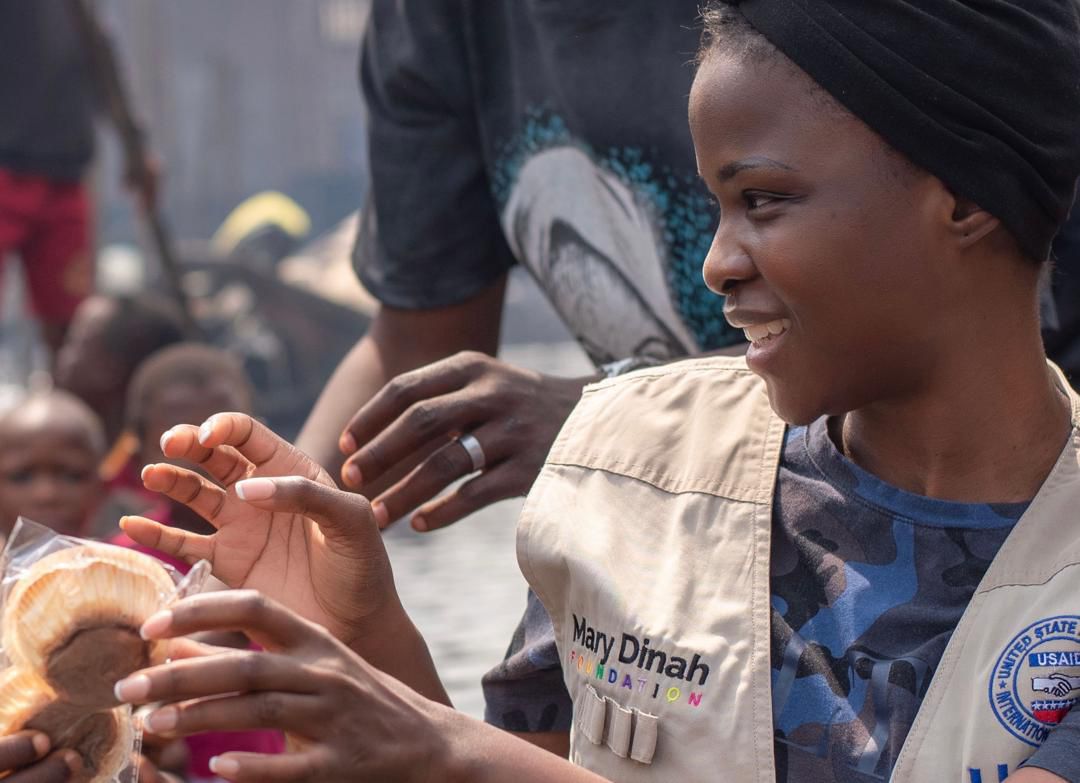
At the heart of this shift stands the Mary Dinah Foundation (MDF), recently featured in Forbes Africa’s October–November 2025 issue on Sustainable Philanthropy.
Founded in 2005, the Foundation has worked where the needs are greatest — in communities affected by conflict, climate shocks, and economic fragility.
Across Africa, a quiet transformation is reshaping how humanitarian aid is delivered. From nutrition to maternal health, local leadership and evidence-based action are redefining philanthropy. At the heart of this shift stands the Mary Dinah Foundation (MDF), recently featured on the cover of Forbes Africa’s October–November 2025 Philanthropy segment.
Its Zero Hunger Programme, originally implemented in partnership with USAID and now supported by the U.S. Government, has delivered over 55 million meals across Northeast Nigeria, Far North Cameroon, Chad’s Lac Province, and the borders of Sudan.
Through this initiative, thousands of mothers have been linked to antenatal care, while children have received lifesaving vaccinations.
Over the past two decades, the Foundation has operated at the intersection of nutrition, health, and empowerment—demonstrating that local leadership and innovation can drive large-scale impact.
Mental health and empowerment initiatives such as Mother and Girls Voices have reached more than 351,000 women across 83 rural communities in Africa, increasing breastfeeding and antenatal attendance rates and promoting safer deliveries.
This locally embedded, data-driven model — described in Forbes Africa as the Mary Dinah model — combines urgency with sustainability. It leverages community partnerships, aligns with national health strategies, and measures progress through rigorous health and nutrition indicators.
In 2025, the Foundation launched the Maternal and Newborn Fund (MNF) to transform maternal and newborn health in low- and middle-income countries. Through its flagship program, BirthStrong, the Fund will provide multiple micronutrient supplements (MMS) to five million women by 2030, improving maternal outcomes and strengthening national health systems.
The Fund also represents a paradigm shift in African philanthropy — blending capital investment, local delivery systems, and policy reform to build lasting resilience. Local production hubs will strengthen national supply chains, reduce costs, and create employment opportunities, while data systems will enable real-time monitoring of impact.
Lady Mary Dinah, J.P., Founder and Chief Executive Officer, is the visionary behind the Foundation’s mission. A global hotelier turned philanthropist; she has redefined how humanitarian work can scale with purpose.
“Lasting change is never delivered — it’s discovered within communities empowered to lead. Our role is to trust, equip, and step back so their systems can endure.” — Lady Mary Dinah
The Forbes Africa issue also features global partners such as UNICEF’s Child Nutrition Fund, the World Food Programme (WFP), the African Development Bank (AfDB), Médecins Sans Frontières (MSF), the Association Mondiale des Amis de l’Enfance (AMADE) — founded by Princess Grace of Monaco and under the patronage of the Prince’s Palace of Monaco — and Edesia Nutrition. Each organisation, like the Mary Dinah Foundation, is driving innovation in nutrition and sustainable development across Africa.
Together, these stories reflect a broader movement to reshape philanthropy from emergency relief to long-term sustainability — focused on prevention, dignity, and opportunity to build the future of health and resilience across the continent.
Disclaimer
Comments expressed here do not reflect the opinions of Vanguard newspapers or any employee thereof.