
…Judge urges parties to explore settlement as prosecution withdraws documents
By Efe Onodjae
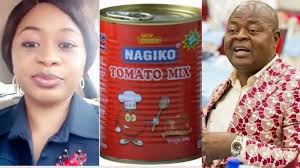
There was a mild drama, Wednesday, at the Federal High Court, Abuja, as the police failed to tender any evidence against Mrs. Chioma Edoka Okoli, a Nigerian mother standing trial for alleged cyberstalking following her negative review of Nagiko Tomato Mix, a product manufactured by Erisco Foods Limited.
The hearing, which resumed on October 29, 2025, before Justice Peter Lifu, saw the prosecution withdraw all the documents it had sought to tender after stiff objections by the defence counsel, human rights lawyer, Mr. Inibehe Effiong.
Justice Lifu, at the commencement of proceedings, reiterated his earlier advice that parties in the suit should explore an amicable settlement in line with Section 17 of the Federal High Court Act, which empowers judges to encourage alternative dispute resolution.
According to the judge, “I am only acting as the conscience of the nation by urging both sides to try and settle their differences. However, I am ready to proceed with the hearing if they are unable to reach a resolution.”
Responding, the prosecution counsel representing the Inspector General of Police, A.S. Uguwanyi, told the court that it was the responsibility of the defendant to seek settlement.
Justice Lifu then asked Mr. Nnamdi Nwokolo, representative of Erisco Foods and personal assistant to the company’s CEO, Chief Eric Umeofia, if the firm was open to reconciliation.
In his reply, Nwokolo insisted that Mrs. Okoli must tender another apology before Erisco Foods could consider withdrawing the case.
Effiong, however, told the court that several high-profile individuals had previously intervened in efforts to settle the matter but that the company’s management had refused, claiming that Chief Umeofia once vowed on national television that he would “rather die than drop the case.”
The court thereafter invited Nwokolo, who appeared as the first prosecution witness, to testify.
In his testimony, Nwokolo said that in September 2023, his attention was drawn to a Facebook post by Mrs. Okoli, where she complained about the sugar content in Nagiko Tomato Mix.
He said the post went viral, triggering protests by women groups and a nationwide boycott campaign against the company’s products. According to him, Erisco Foods’ Chinese partners later expressed concern via email, while the company’s business fortunes “drastically and irreparably declined” following the controversy.
Trouble began when the prosecution attempted to tender several documents, including a petition to the Inspector General of Police, the viral Facebook post, emails from Chinese suppliers, an online publication by NAFDAC, photographs of protests, and an alleged apology letter from the defendant.
Effiong raised multiple objections to their admissibility, citing Section 84 of the Evidence Act (2011) on the admissibility of electronically generated documents, and Section 104 which requires proper certification of public documents.
He argued that the documents lacked proper certification, had no police seal, and that the so-called “certified true copies” were merely handwritten endorsements by the former prosecutor, contrary to the law.
Citing the Supreme Court decision in Kubur v. Dickson (2013), Effiong told the court that the prosecution failed to lay the necessary foundation for tendering such documents.
Police Withdraw Evidence
Faced with the objections, the police prosecutor, Uguwanyi, abruptly withdrew all the documents, pleading with the court for an adjournment to “put his house in order.”
Effiong, opposing the request, argued that no cogent reason had been given for the adjournment and urged the court to award him a cost of N500,000 for time wasted, insisting that “the police are only postponing the evil day.”
Justice Lifu, in his remarks, agreed that the prosecution had not provided any valid justification for the adjournment and had wasted the court’s time.
At that point, the prosecution counsel opted to close the evidence of his first witness without tendering any documents—a move the defence did not oppose.
Justice Lifu then adjourned the case to January 21 and 22, 2026, for cross-examination of the first prosecution witness and presentation of other witnesses.
Disclaimer
Comments expressed here do not reflect the opinions of Vanguard newspapers or any employee thereof.