
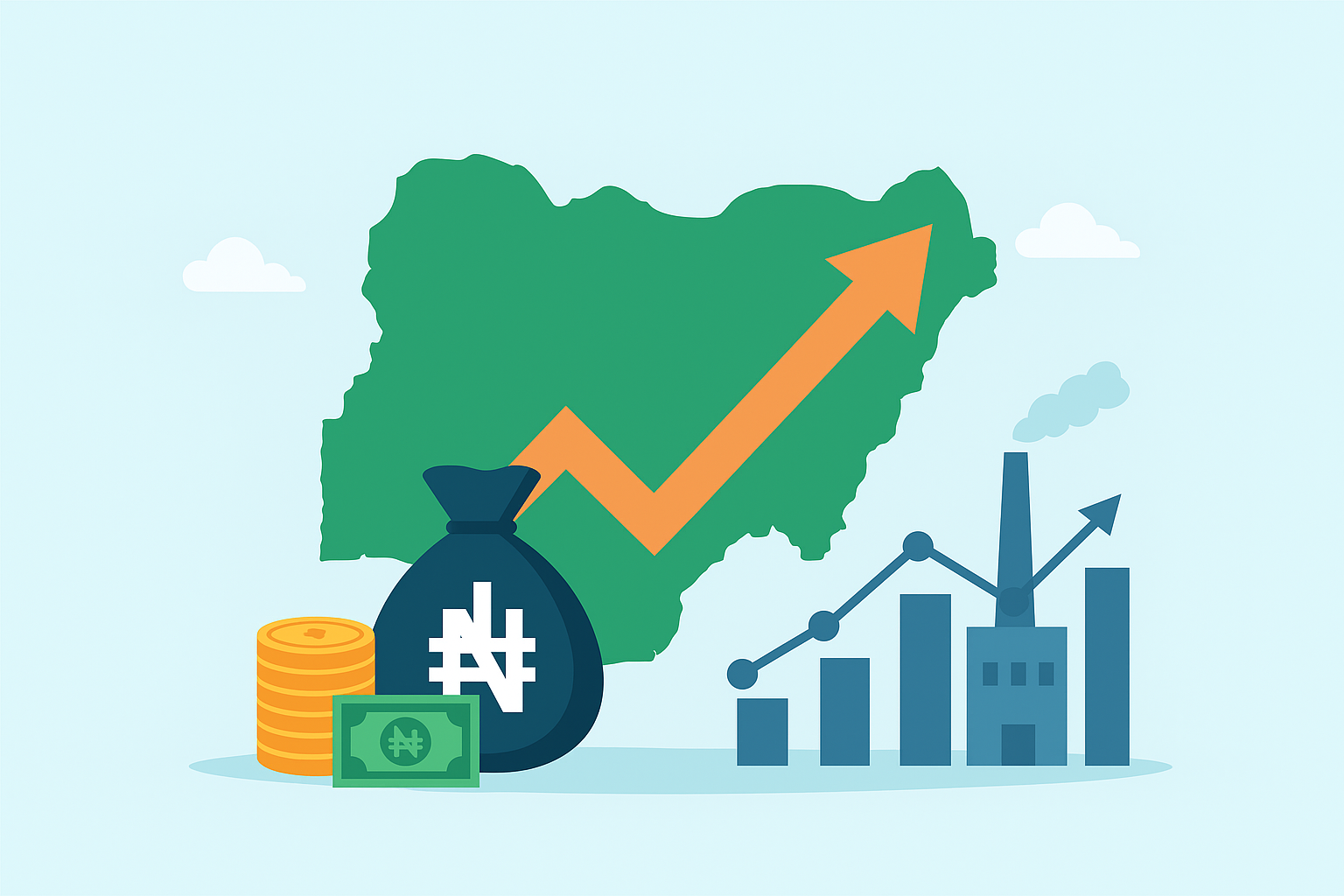
In the traditional Independence Day broadcast on October 1, 2025, President Bola Tinubu took stock on two fronts: our 65 years of existence as an independent nation and his 28 months in the saddle as Chief Driver of the economy.
His declaration that our battered economy had turned the corner was meant to raise optimism. The numbers he reeled out appeared to validate his claim. For instance, he said the economy grew by 4.23 per cent in Q2 2025, the fastest in four years, exceeding the IMF’s prognosis of 3.4 per cent. Inflation rate, which he met at well over 30 per cent, went down to 20 per cent in August 2025.
Also, non-oil revenue broke the historical record of N20trn as of August 2025. The numbers Tinubu displayed appeared to validate the assessment of World Trade Organisation, WTO, Director General, Ngozi Okonjo-Iweala, on her working visit to the president in August this year. Okonjo-Iweala raised a few eyebrows when she declared that Tinubu and his team had stabilised the economy, with growth as the next juncture to pursue.
We need to point out, once again, that these numbers mean very little to the people who are still being bruised and battered by the economic policies of this regime. The summary implementation of petrol subsidy removal, devaluation of the Naira, structured removal of subsidy on electricity and tax reforms impoverished millions of struggling Nigerians. These economic reforms simply zapped the pockets of the populace into the coffers of a government that refused to share in the reforms’ pains.
Tinubu’s broadcast suggested that the growth that Okonjo-Iweala called for is already on the boil. However, what matters to us is the reflection of positive outcomes in the pockets of Nigerians. Petrol and other hydrocarbon-derived energy sources, which are the economic lifeblood of the nation, are still more than 400 per cent above their costs before Tinubu’s reforms.
The gap between the old and new Naira exchanges to the US Dollar is even wider. The referenced 20 per cent inflation is still too astronomical. The next assignment for the president and his team is to bridge these gaps and take the numbers towards what he met on May 29, 2023.
The president observed that the proceeds of his economic gains are being reinvested in the education, healthcare, agriculture, infrastructure and “social investment” programmes. While we acknowledge efforts to boost agriculture and extend loans to indigent tertiary education students, we caution that investment in infrastructure is wrongly prioritised to new elephant projects, leaving our existing federal highways in decrepitude.
The same goes for “social investments” of cash transfers which remain opaque and prone to corruption. We need social investment that equips the people to fish rather than giving them fish. The security situation is as nightmarish as ever.
We have only scratched the surfaces of our economic and social problems.
Disclaimer
Comments expressed here do not reflect the opinions of Vanguard newspapers or any employee thereof.