
By Efe Onodjae
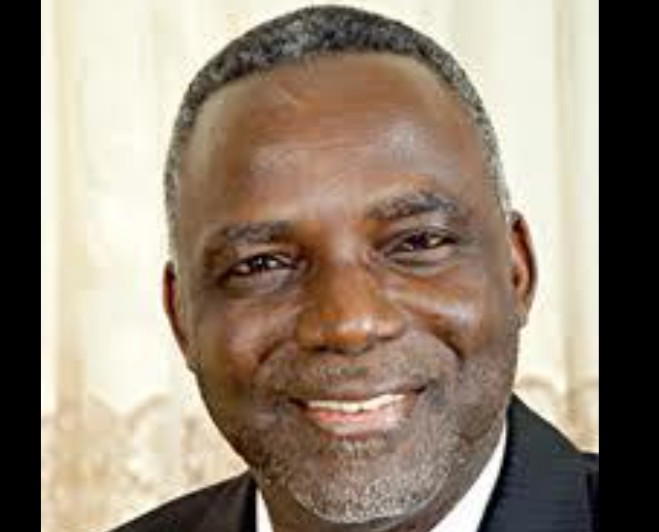
Chairman and Chief Executive Officer of Geometric Power Group, Bart Nnaji, has called on the Federal Government and sub-national authorities to embrace generative artificial intelligence in the education system, beginning from the primary school level.
Speaking at a public lecture organised by Independent Newspapers to mark the 70th anniversary of Free Universal Primary Education in Nigeria at Eko Hotels and Suites, Victoria Island, Lagos, Nnaji said providing every teacher with a computer will help Nigeria catch up with the rest of the world in technological advancement.
Nnaji, who traced the history of free education in the country, described education as a tool of progress and a major factor distinguishing developed nations from developing ones. He quoted American civil rights activist Ella J. Baker who said, “Show the light, and the people will find the way,” a line later adopted by Nnamdi Azikiwe as the motto of the West African Pilot newspaper in 1937.
He said the launch of free primary education by Obafemi Awolowo in the Western Region in 1955 was a turning point in the nation’s history, resulting in a surge in school enrolment. He recalled that similar programmes introduced in the 1970s and late 1970s by the federal and regional governments attracted an unprecedented number of pupils, including young adults who had previously been denied access due to poverty.
According to him, his own education was made possible through extended family support, stressing that benevolence and communal responsibility played a critical role in helping promising children acquire basic education.
The former minister commended Independent Newspapers for celebrating an initiative that has shaped the nation’s educational foundation. He described Awolowo’s personal struggles and sacrifices for education as an enduring lesson for Nigeria’s present generation of leaders.
He said the introduction of free education in the East, though challenged by limited resources and opposition from the Catholic Church, helped ignite a culture of community-driven scholarships. Citing Chinua Achebe’s The Trouble with Nigeria, Nnaji recalled how the Igbo people closed their educational gap within 20 years through communal efforts.
He also highlighted the healthy educational competition between Nigeria’s regions in the post-independence era. He noted that after the establishment of University of Nigeria, Nsukka in 1960, the Western Region responded with Obafemi Awolowo University in 1962, while the North established Ahmadu Bello University in the same year. He stressed that such rivalry spurred progress and improved competitiveness among graduates.
Nnaji called for the revival of that spirit of competition and innovation, particularly as Nigeria faces new educational challenges. He noted that countries like Germany have demonstrated how free education at all levels can transform societies.
Reiterating his position at the recent Fafunwa Memorial Lecture, he emphasized the need to integrate AI into the curriculum. “I proposed that the Federal Government, all state governments and the 774 local governments jointly pool funds to provide each public school teacher with a computer. This is the only way to prepare our children for the AI-driven future,” he stated.
He drew a parallel with the initiative of Olusegun Obasanjo’s administration, which mobilized funds across the three tiers of government to provide vehicles for police divisions nationwide, saying the same political will should be applied to education.
Nnaji also raised concerns over the current quality of education in public schools. He recalled that when he left Nigeria for the United States in 1977 to study physics, mathematics and engineering, the quality of education he received in public schools enabled him to compete favourably abroad. He questioned whether today’s public-school students enjoy the same quality of instruction.
“AI is the way the whole world is going, and Nigeria must embrace it fully? beginning from primary school,” he said.
The lecture, which had dignitaries, education stakeholders and members of the diplomatic community in attendance, ended with a panel session on the future of education in Nigeria.
Nnaji urged government at all levels to recommit to investment in education, describing it as the foundation of national development.
Disclaimer
Comments expressed here do not reflect the opinions of Vanguard newspapers or any employee thereof.