
By Kikelomo Solomon-Ayeni
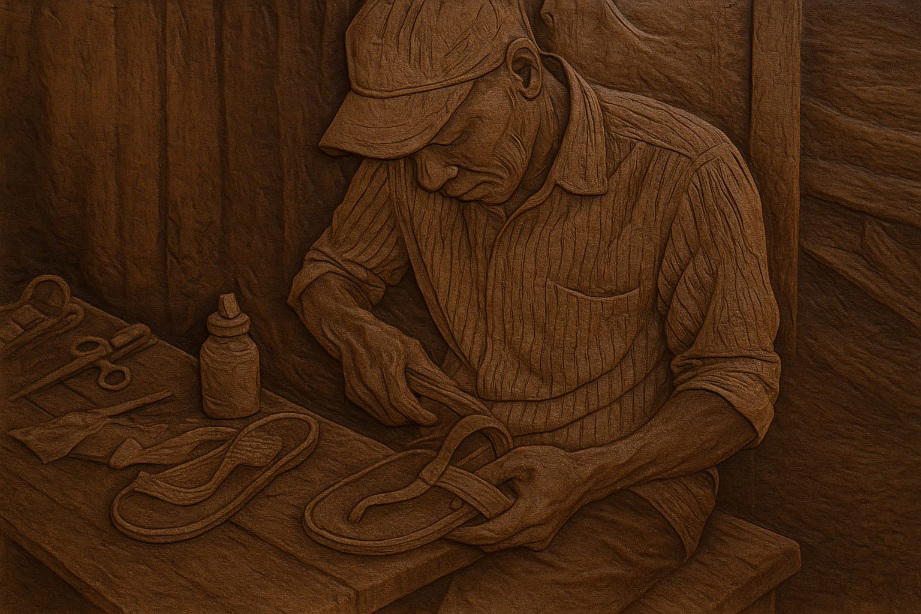
When I first saw Dauda Itopa Ova’s A Labourer Is Worthy of His Earnings, something in me went still. It wasn’t just the beauty of the wood, that deep, living brown carved with patience, it was recognition. I lived in Nigeria long enough to know every face in this series. I’ve met the cobbler at the roadside, the tailor hunched over his old machine, the orange seller balancing her bowl beneath the heat, the bus driver shouting “Oshodi!” like it’s both an anthem and a prayer. These are not strangers. These are my people.


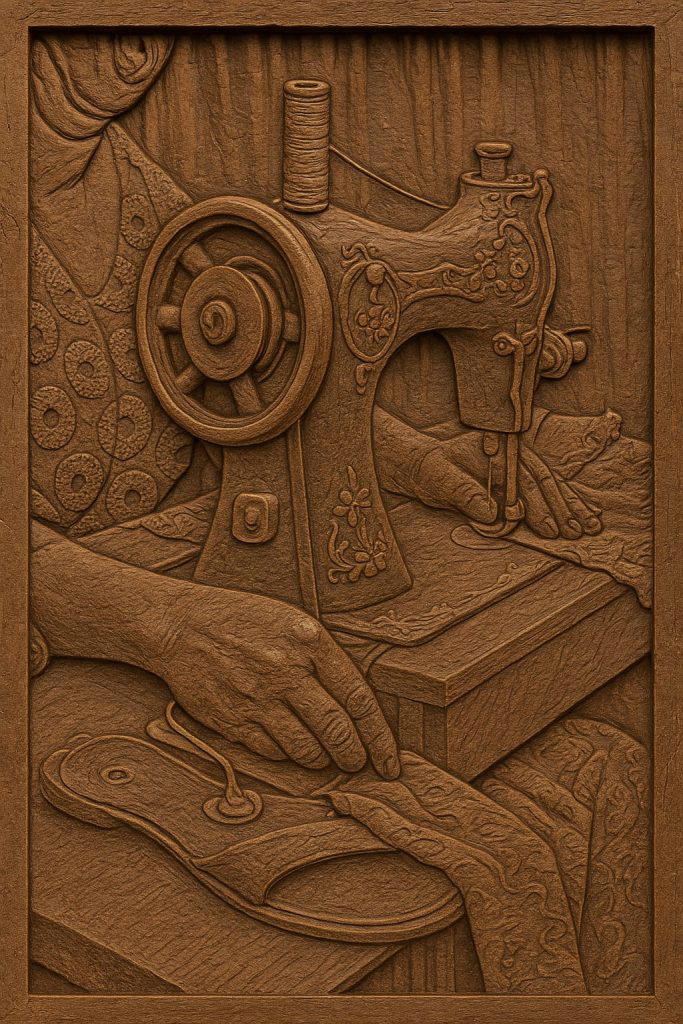
Every piece has the feel of a solidified memory. The Cobbler’s cautious hands and tired eyes remind me of the Aboki (northern man) who used to fix my sandals when I was a student; he never stopped smiling despite the harsh sun. The Tailor transports us back to the corner stores that stitched our dreams into shape, complete with the whirr of vintage Singer machines and the smell of fabric. And every man I’ve seen kneeling by a broken motorcycle, bending over his tools with oil on his skin, is the Mechanic, transforming adversity into expertise.
Ova doesn’t just carve; he bears witness. His hands translate sweat, effort, and faith into texture. The wood carries their stories the way earth carries footprints, firm but gentle. And when you look closely, you see not just their work, but their worth.
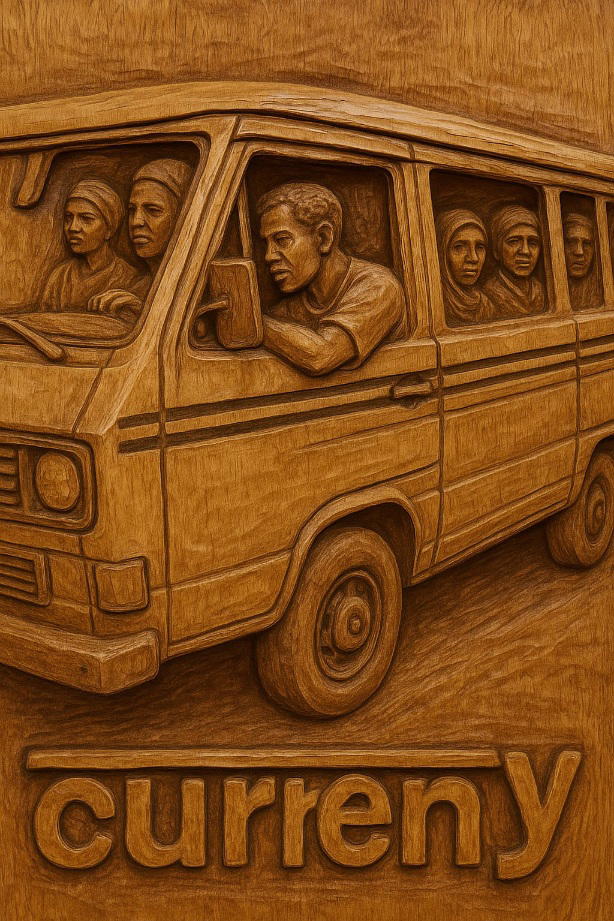
Then there’s Danfo Driver (Currency), that chaotic, familiar rhythm of Lagos life. You can almost hear the conductor banging the door, the rumble of traffic, the resigned faces of passengers squeezed into hope. Ova calls it “currency,” and he’s right, in Nigeria, movement itself is survival, and survival is the real currency.
But it’s Hawking Orange that stopped me. The woman’s gaze, steady, almost regal, speaks of generations of women who have carried more than fruit. She carries history, dignity, and the quiet kind of pride that doesn’t need to be announced. I’ve seen her on every corner of Lagos, Ibadan, Abuja. Always moving, always standing tall.
The way Ova’s art gives humanity back to the people we frequently pass is what most moves me. He portrays them as heroes rather than laborers. Additionally, you want to reach out and trace every line because of the wood’s warmth and honesty, as though touching it could help you connect with something more real than words.
The adage “Work is prayer” comes to mind when I look at this series. These postures, hands, and faces are all acts of prayer. They are a wood-engraved tale of tenacity.
Itopa Dauda Ova has given us remembrance, not just art. He reminds us that a labourer is not just worthy of his earnings, he is worthy of our respect, our attention, and our gratitude.
Kikelomo Solomon-Ayeni is a multi skilled award winning artist (visual and written), Art Curator and Jury, Art Reviewer whose work has been featured on Daily Trust Nigeria, The Daily Independent Nigeria, The Nation Nigeria, The Nigerian Tribune and others.
Disclaimer
Comments expressed here do not reflect the opinions of Vanguard newspapers or any employee thereof.