
From last week continues the narrative of how party supremacy has declined over the years with the President now calling the shot, ordering the party chairman around and can fire him at the slightest excuse. This is unlike what obtained during the NPN era when a caucus chaired by the party boss would take the major decisions.
Always present at the caucus meeting were the Senate President, Dr. Joseph Wayas (May 21, 1941 – November 30, 2021), the deputy speaker of the House of Representatives then, Alhaji Ibrahim Kuta Idris (October 1, 1942- May 1, 2008), because his boss, Chief Edwin Ume-Ezeoke (September 8, 1935 – August 1, 2011), was not an NPN member and Alhaji Umaru Dikko (December 31, 1936 – July 1 2014), who represented the Council of Ministers.
Since 1999, the powers of the President have grown like an oak tree. The President not only controls the central government but also the party to the extent that he hires and fires his ruling party chairmen at random. The ruling party’s headquarters is now like a department of The Presidency. We no longer hear of party’s convention, which used to be the annual pilgrimage of faithful party delegates where key party officers are elected. Emergency meetings of the governors with the President and those selected by the President, have now replaced the party’s annual conventions. This is a new development.
Section B of the Third Schedule of the 1999 Constitution affirms that the Council of State shall “advise the President”, among other things, on the award of National Honours. I am not sure that the Council has been allowed to play that role of late. The President seems to be the Council of State now. What we are witnessing is the hawking of National Honours irrespective that there is an existing committee, a screening committee charged with that schedule. Incidentally, the current screening committee on National Honours was inaugurated on November 27 last year under the chairmanship of Justice Sidi Dauda Bage (69), the 17th Emir of Lafia in Nasarawa State, who is also a retired Justice of the Supreme Court. Other members of the screening committee are Mrs Farida Waziri, former chairman of the EFCC; Alhaji Muhammadu Jafar, Alhaji Bello Ison and Chief Inikio Dede. The Committee has been in existence since October 1963 under the National Honours Act Cap N 43 of the Federation. It was established by Sir Abubakar Tafawa Balewa (December 1912 – January 15, 1966), the first and only Prime Minister of Nigeria upon independence.
Another threat I have observed is the deployment of the military to quell civil matters.
On November 20, 1999, President Obasanjo authorised the deployment of military troops to Odi to quell riots without recourse to the National Assembly contrary to Section 217 (2) C of the 1999 Constitution which requires firstly for some conditions to be prescribed by an Act of the National Assembly for the use of the military in that regard. He justified the invasion.
Between October 20 to 24, 2001, President Obasanjo, ordered the military invasion to Zaki-Biam in Benue State. The action was a surreptitious operation of the Nigerian army to avenge the killing of 19 soldiers whose mutilated bodies were found on October 12, 2001, near some Tiv villages in Benue State. The action took place in villages, including Gbeji, Vaase, Anyiin, Iorja, Ugba, Tse-Adoor, Sankera, Kyado and Zaki-Biam.
President Obasanjo justified the two invasions. He replied: “When the unfortunate incidents in Odi and Zaki-Biam escalated beyond the capacity of the Nigeria Police Force to control, I decided to deploy the Army to assist the Nigeria Police in restoring order as not only were properties being destroyed on a large scale, civilians and law enforcement agents were also being killed. In the case of Odi, four policemen, a total of seven soldiers deployed there on law enforcement and peacekeeping duties were killed. The Governor of the State, who is also the Chief Security Officer of the State, had reported his inability to contain the rapidly escalating lawless situation.
It was only after these developments that additional troops were sent to restore law and order. No responsible Government will fold its hands and allow such a situation to continue unchecked. In authorising the deployment of the Army to the affected areas, I was guided by the provisions of the Section 218 (1) of the 1999 Constitution and Section 8(1) of the Armed Forces Act No. 105 of 1993.”
To be concluded
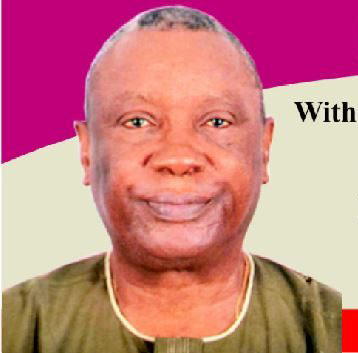
•Teniola, a former director at the Presidency, wrote from Lagos.
Disclaimer
Comments expressed here do not reflect the opinions of Vanguard newspapers or any employee thereof.