
By Chioma Obinna
Despite two decades of global research collaboration, African men remain disproportionately affected by prostate cancer, a disease experts describe as a “silent killer” that devastates families when detected late.
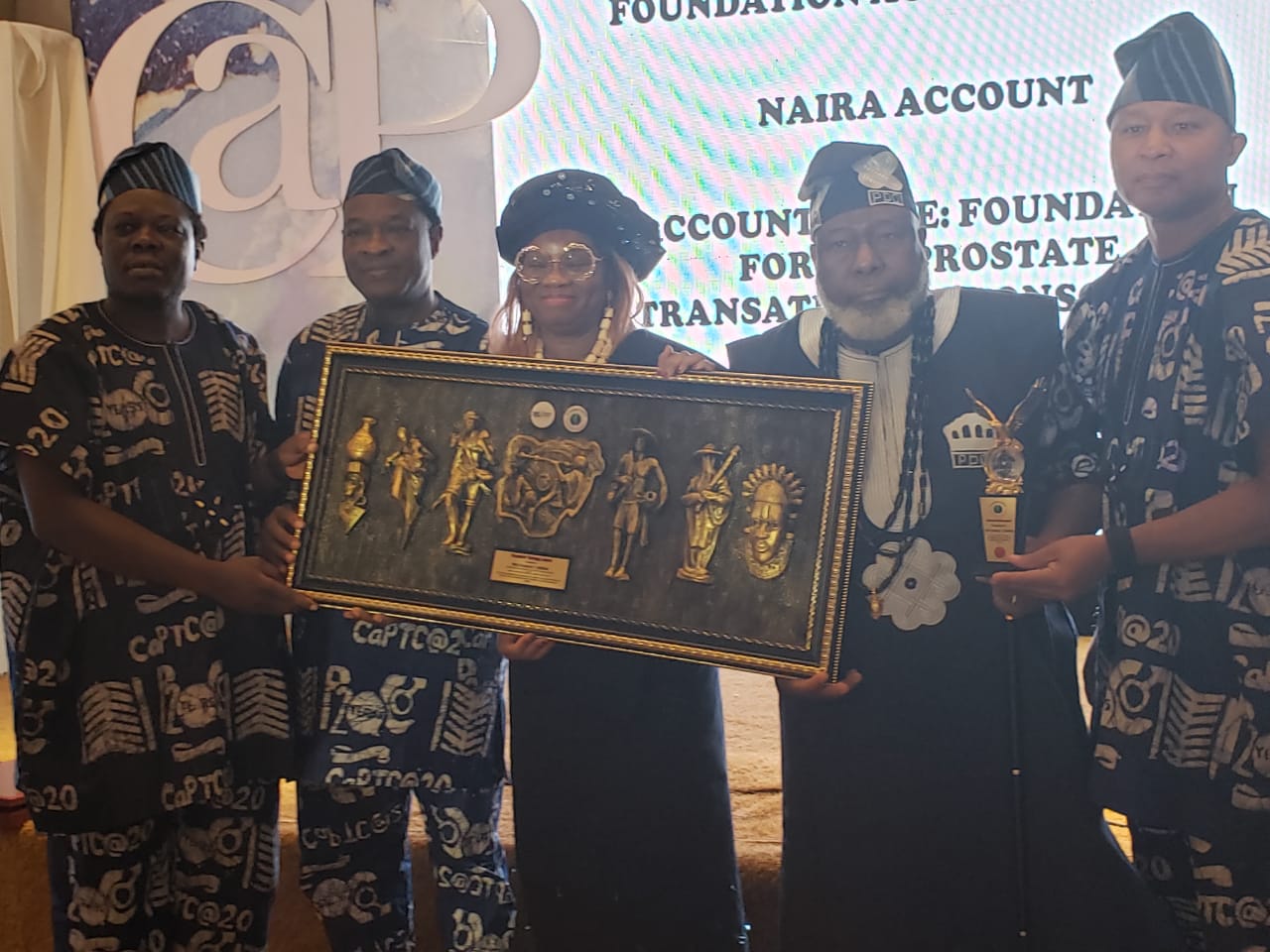
The alarm was raised again in Lagos as the Prostate Cancer Transatlantic Consortium (CAPTC), a network of researchers, clinicians, and survivors, marked its 20th anniversary with fresh calls for African governments to prioritise early detection, clinical trials, and survivor support.
A Professor of Haematology and Oncology at Mayo Clinic, Prof. Folakemi Odedina, said the disparities remain stark.
“African men are still more likely to be diagnosed at a late stage and more likely to die from prostate cancer than their counterparts in Europe or North America. Behind every statistic is a family shattered. That is why we cannot relent.”
According to the World Health Organisation, prostate cancer is the most common cancer among men in sub-Saharan Africa, with rising incidence and mortality. Yet screening, awareness, and treatment remain limited.
She explained that the next frontier is grooming CAPTC Next Generation — young African scientists, clinicians, and advocates who will sustain the mission.
“Our goal is formidable — to eradicate prostate cancer in men of African ancestry. It will take research, policy, and community action working hand in hand. The cost of inaction is measured in lives lost.”
“I know that we have received over $50 million to be able to do the work that we do, as well as the publications that we have. So we are very proud of what we have. We are looking back to the achievement that we have through the grace of God, but we are also meeting to think about what we are going to do in the next 20 years as well.”
Speaking further, she said: “We need to inform men about prostate cancer. What we do know is that if a man gets diagnosed with prostate cancer early, we can treat that and that person can be cured. So education is the key.
“The second thing is that when a person is diagnosed with prostate cancer, we need better treatment. What we now know is treatments that necessarily work in the western world do not always fit sub-Saharan Africa. So we need to make sure that we’re tailor-making the treatment strategies, the intervention, and that the community is supporting these individuals so that we can change the tide. This is doable. We can all do it if we come together, and that’s what CAPTC is about.”
Speaking, a consultant surgeon and CAPTC member, Dr. Ebenezer Nkom explained: “It is a silent killer of men of a particular age group. When the man goes, the family scatters. But if you get it early, the chances of cure are real. The tragedy is that too many men in Africa only show up when it is too late.”
On his part, Prof. Solomon Rotimi of Covenant University noted that one of the biggest challenges is the lack of Africa-based clinical trials.
“Most cancer drugs are tested in Europe and America, raising questions about their effectiveness in African populations with different genetics, diets, and environments.
“You cannot enter your house through another man’s gate,” said“Our men need treatments tested here, not borrowed results from elsewhere.”
Rotimi, who coordinates CAPTC’s African investigators, said the solution lies in Africa-based research and trials.
He argued that drugs tested abroad cannot simply be imported and applied without considering local realities.
“If you develop a drug in Europe and test it ‘after a meal’, that meal may be a cup of coffee and a slice of bread. But in Nigeria, when you say ‘after a meal’, a man may be swallowing the drug with a mound of amala or pounded yam. The outcomes will not be the same,” he explained.
“This is why some anti-malaria drugs, for example, don’t work here as effectively as reported elsewhere. Our sun exposure is different. Our lifestyle is different. You can’t take one thing from another environment and force it into ours. As we say, it is wrong to enter your house through another man’s gate.”
Rotimi welcomed Nigeria’s recent policy shift toward encouraging clinical trials, describing it as an overdue but vital step. “When you test a drug at home and it doesn’t work as reported, you can adjust — change the dose, increase the cycle, or modify the intervention. That is how to improve outcomes for our people.”
Reflecting on CAPTC’s achievements, he recalled that the consortium was the first to identify the genetic characteristics of prostate cancer in Nigerian men, showing that certain drug classes could work for patients previously thought untreatable. He also noted their research linking vitamin D deficiency — common among Black populations due to reduced sun exposure — to higher cancer risks and weaker immune systems.
“Our ancestors lived outdoors and got enough sun, but today’s lifestyle leaves many men vitamin D deficient,” Rotimi said. “Vitamin D is not just a vitamin — it’s a hormone that strengthens the immune system. If it is low, the body becomes vulnerable to diseases, including prostate cancer. Men must know their vitamin D levels and take supplements if needed.”
He said CAPTC has begun to bridge this gap by pioneering investigator-led trials in Nigeria, while also sequencing the genomes of men of African ancestry — discoveries that have led to tailored therapies now influencing global practice.
Speaking at the event, a prostate cancer survivor, a 73-year-old retired soldier, Captain Yahaya Ayinde Yahaya, said he has turned his diagnosis into advocacy.
“When I learned I had prostate cancer, I accepted my fate,” he said. “But joining CAPTC turned me into an advocate. I organised free tests for over 300 people in my community. That is how we break the stigma and save lives.”
In his keynote address at the anniversary, Prof. Clayton Yate of Johns Hopkins School of Medicine praised CAPTC’s role in tackling disparities but warned that more must be done.
“CAPTC established the first prostate cancer genome sequencing for African American men. That has changed therapies. But the work is far from finished. Unless access improves, too many African men will continue to die needlessly.”
Disclaimer
Comments expressed here do not reflect the opinions of Vanguard newspapers or any employee thereof.