
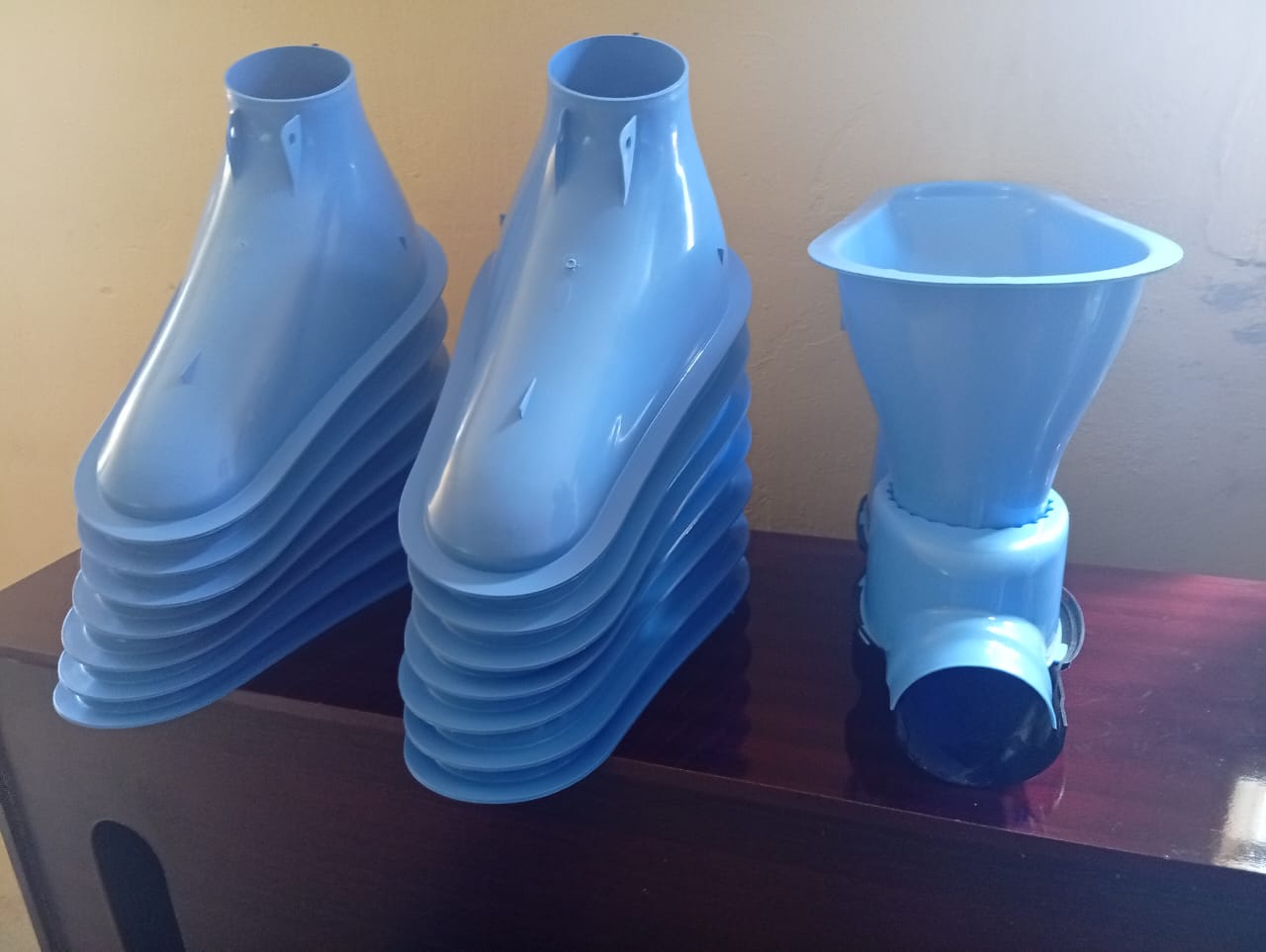
Some of the sato pans
By Marie-Therese Nanlong
Jos – Some weeks ago, stakeholders in Plateau State gathered to tackle one of the State’s most persistent public health challenges, open defecation. The meeting focused on Sustainable Development Goal (SDG) 6.2, which seeks to achieve adequate, inclusive, and equitable sanitation and hygiene for all by 2030.
The urgency was necessary, none of Plateau’s 17 local government areas (LGAs) has attained Open Defecation Free (ODF) status, and over 56% of its population still practice open defecation, placing the State second in Nigeria for prevalence.
Past efforts, particularly in the Riyom and Shendam LGAs, had raised hopes but fell short of delivering results. Now, renewed determination, backed by partnerships and innovative solutions, is driving progress, especially in Riyom, which has already crossed the 50% mark toward ODF status.
At the forefront of this effort is the distribution of over 800 Sato pans to vulnerable households in Riyom. These low-cost, easy-to-install sanitation devices are designed for low-income households and are an upgrade from traditional pit toilets. By ensuring complete containment of human waste, they prevent contact between people and feces, thereby reducing the spread of harmful pathogens.
The intervention is supported by the UNICEF Bauchi Field Office in collaboration with the Plateau Rural Water Supply and Sanitation Agency (PRUWASSA), the Riyom Local Government Council, and public-spirited individuals.
Speaking during the distribution of the sato pans at the Riyom Council Secretariat, UNICEF’s Water, Sanitation, and Hygiene (WASH) Officer, Nanbam Dawap, emphasized the importance of collective action.
“Nigeria is among the countries with the largest number of people practicing open defecation. Today’s gathering is aimed at reminding people about the dangers of open defecation and the benefits of maintaining an ODF environment,” Dawap said.
To strengthen Plateau’s push to end open defecation, UNICEF facilitated an exchange visit earlier this year for State officials to Bauchi, where they studied fecal sludge management.
Dawap explained that simply owning a toilet is not enough, but safe disposal and treatment of waste are equally critical, and disclosed that properly managed, fecal sludge can be recycled into manure or processed into charcoal for cooking, turning a health risk into an economic opportunity.
“This creates jobs for young people, improves public health, and strengthens education outcomes. Healthy children attend school regularly, parents spend less on medical bills, and resources can be channelled into more productive uses,” Dawap emphasized.
PRUWASSA’s General Manager, Godfrey Dashuhar, revealed that while the target for Riyom is 2,000 Sato pans, the over 800 already available will make a significant impact, as the selection of beneficiary households was based on merit from 285 communities across Riyom’s 17 wards.
PRUWASSA’s Director of Sanitation and Hygiene Promotion, Magdalene Jibrin, detailed the contributions saying, “A sato pan costs N6,500. We got 300 Sato pans from the Riyom LGA, 500 from PRUWASSA, 16 from the Plateau Municipal Water Supply and Sanitation Agency (PLAMWASSA), 20 from Engineer Badung Manchai from Ganawuri, and 5 from a local donor, totalling 841 units. The pans are easy to clean, odour-free, and designed to prevent flies from accessing waste.”
Chairman of Riyom LGA, Sati Shuwa, represented by his Deputy, Gwong Song, said the council invested N2 million to purchase its share of the pans. “We are committed to making Riyom the first LGA in Plateau to achieve ODF status,” he said.
Acting Director of Riyom’s WASH Department, Musa Choji, confirmed that the LGA has achieved over 50% coverage and is mobilizing volunteer groups to reach the households. “Our goal is that by November, we will officially achieve ODF status,” he declared.
A beneficiary, Chundung Mwasho expressed joy at the intervention saying it has been embarrassing not having a toilet due to the lack of funds, but the provision of the free sato pan has solved a major problem which she was unable to solve, promising to make proper use of the pan.
For a State ranked so high in open defecation, Riyom’s progress is a sign that tackling sanitation challenges requires political will, grassroots involvement, and sustained partnerships.
As UNICEF’s Dawap stressed that with continued collaboration, Plateau can break free from the grip of open defecation, one community at a time.
If Riyom meets its November target, it will not only be the first in Plateau to achieve ODF status but also a model for other LGAs, proving that with the right mix of commitment and innovation, public health goals can be turned into lasting realities.
Disclaimer
Comments expressed here do not reflect the opinions of Vanguard newspapers or any employee thereof.