
By Ishola Balogun
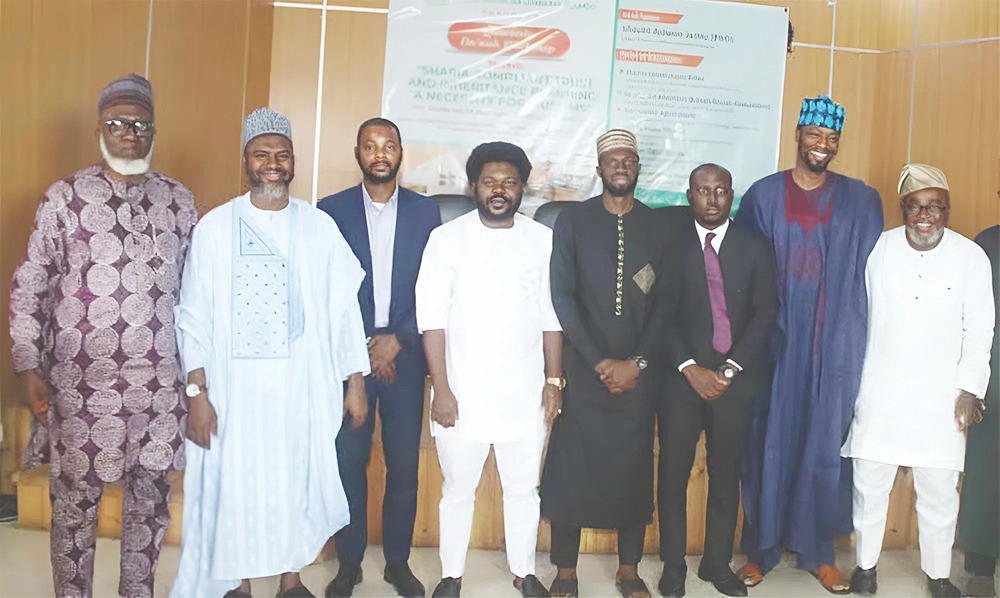
The atmosphere was intellectually vibrant and spiritually uplifting at the Lekki Central Mosque Complex last Sunday, as Islamic scholars, legal and financial experts, and members of the Muslim community gathered for the quarterly Da’wah workshop organized by the Lekki Muslim Ummah (LEMU).
The event, held at the Vice Admiral Jubrila Ayinla Multipurpose Hall, focused on the crucial theme “Sharia-compliant Trust and Inheritance Planning: A Necessity for Muslims,” emphasizing the importance of proper estate planning rooted in Islamic teachings.
The workshop attracted distinguished speakers, with Mr. Lateef Omoyemi Akangbe, SAN, serving as the event’s chairman. He opened the session with insightful remarks on the intersection of Islamic law and contemporary estate planning, emphasizing the importance of Muslims adhering to religious directives in managing their wealth. Akangbe stated, “Estate planning is not just a legal process; it’s a spiritual duty that every Muslim must take seriously to ensure justice and righteousness in inheritance.”
The keynote address was delivered by Sheikh Ridwan Jamiu, the Chief Imam of Lekki Central Mosque, who passionately emphasized that estate planning is a divine obligation, not merely a legal requirement. “Planning for one’s death is a clear Islamic injunction,” Sheikh Jamiu declared. “Prophet Muhammad (SAW) explicitly instructed that no Muslim with assets should sleep two nights without writing a will.” He recounted a recent example of the sudden demise of a medical doctor en route to Sokoto, illustrating life’s unpredictability and the need for preparedness.
Sheikh Jamiu condemned the growing trend of wealthy Muslims passing away without proper documentation, underscoring the spiritual and moral irresponsibility of neglecting this duty. “Some of us are billionaires, and yet, nobody knows because nothing has been documented,” he lamented.
The imam elaborated on Quranic injunctions emphasizing divine justice, stating, “The shares are fixed. You cannot change them. If you tamper with Allah’s allotment, the punishment is severe.” He recommended practical tools like will writing (wasiyyah), lifetime gifts (hibah), endowments (waqf), and Islamic insurance (takaful), warning that not all products labeled Islamic are genuinely compliant unless properly verified.
Adding to the discourse, Sheikh Jamiu emphasized that estate planning begins with the next generation. “What are our children learning? What future are we preparing for them? The best legacy you can leave for humanity is righteous children,” he said, closing with heartfelt prayers for the families present. His remarks underscored the importance of passing down Islamic values alongside material wealth, ensuring a lasting spiritual inheritance.
Legal expert Mr. Akangbe then shared insights from a legal standpoint, explaining that trusts can be far more effective than wills in estate management.
“Setting up a trust is more efficient and less prone to dispute,” he remarked, drawing from his personal experiences with legal battles over inheritance.
Akangbe praised the initiative, emphasizing that understanding both Islamic and civil legal frameworks is vital for successful inheritance planning. “The more wealth at stake, the higher the potential for disputes; trusts help mitigate that risk,” he observed, highlighting the importance of informed estate planning for the Muslim community.
Disclaimer
Comments expressed here do not reflect the opinions of Vanguard newspapers or any employee thereof.