
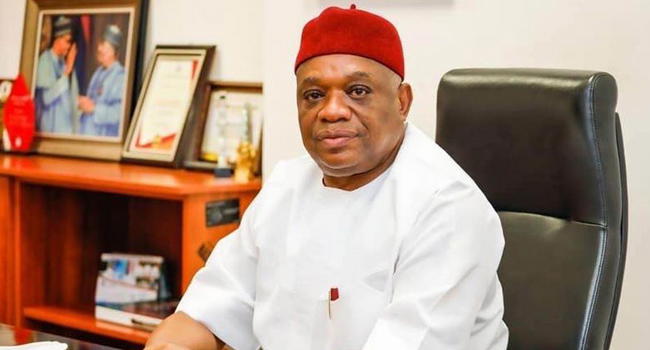
Orji Uzor Kalu
By Rubby Obinna
In a recent political discourse, Senator Orji Uzor Kalu, former Governor of Abia State and current senator representing Abia North, made a bold assertion that has reignited conversations about his tenure in office.
“I built Abia and I saved funds for Abia State as governor,” he declared, a statement that has drawn both admiration and skepticism among political analysts and citizens alike. This remark encapsulates the broader narrative about the challenges and triumphs of governance in Nigeria, particularly in the South-East.
Orji Kalu served as Governor of Abia State from 1999 to 2007, a period marked by significant political turbulence and economic challenges. Following nearly three decades of military rule, Nigeria transitioned to democracy in 1999, and expectations for good governance were exceptionally high. Kalu’s rise to power came with promises of infrastructural development, economic rejuvenation, and social welfare initiatives. He was regarded by many as a beacon of hope for a state long burdened by underdevelopment and corruption.
In his recent remarks, Kalu highlighted the infrastructure projects initiated during his administration. He pointed to the construction of roads, schools, and healthcare facilities as key achievements that transformed the state’s landscape. According to him, these projects were not just physical structures but lifelines for the people of Abia, designed to foster economic growth and improve living standards. “When I took office, Abia was in dire need of infrastructure. I made it my mission to ensure that we laid a solid foundation for future generations,” he stated.
Kalu’s administration is also credited with revitalizing the commercial sector in Abia State, particularly in Aba, renowned for its vibrant markets and entrepreneurial spirit. Under his leadership, the state witnessed an influx of small and medium-sized enterprises, which significantly contributed to job creation and economic stability. Kalu argued that by saving funds and investing in local businesses, his government was able to empower citizens and reduce unemployment. “I did not just build roads; I built opportunities for our people,” he added.
Kalu’s claims draw attention to a critical aspect of Nigerian politics: the legacies of leaders. In a country where leadership is constantly scrutinized, the ability of past governors to articulate their achievements can strongly influence future electoral outcomes. As Kalu continues to defend and champion his record, other political figures in Abia State and beyond may respond—either by challenging his narrative or by attempting to emulate his successes.
Disclaimer
Comments expressed here do not reflect the opinions of Vanguard newspapers or any employee thereof.