
By Ibrahim Hassan-Wuyo, Kaduna
The Nigerian Economic Summit Group (NESG), in collaboration with the Bill and Melinda Gates Foundation under the Nigerian Hamilton Project, has emphasized that sustainable national development requires a shift in societal attitudes in addition to sound policy frameworks.
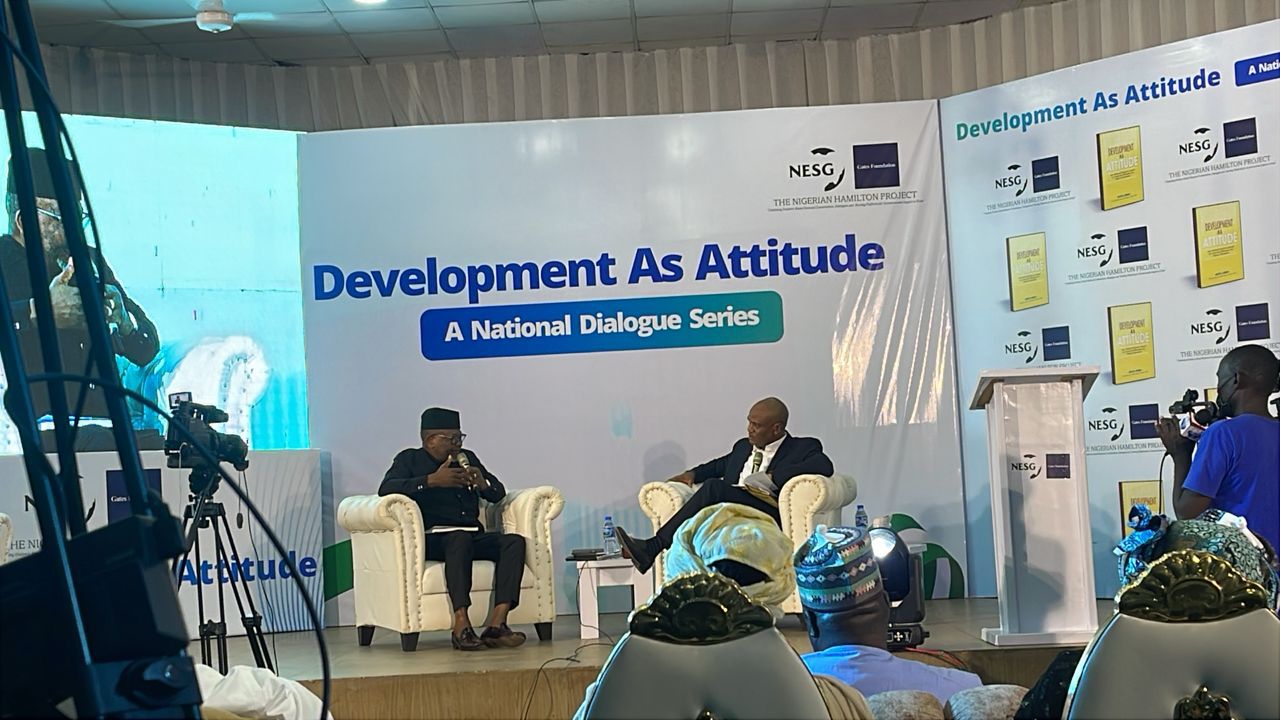
This was the focus of the Kaduna edition of the Development as Attitude: A National Dialogue Series, held at Arewa House, Ungwan Sarki, Kaduna. The event brought together policymakers, academics, private sector leaders, and development experts to explore the cultural and institutional factors influencing Nigeria’s development.
The series draws inspiration from the book Development as Attitude, authored by Prof. Osita Ogbu, Co-Chair of the NESG National Economic Advisory Council. Prof. Ogbu argued that beyond economic statistics, Nigeria must embrace values such as accountability, shared purpose, and civic responsibility to achieve meaningful progress.
“Nigeria’s challenges—unemployment, policy inertia, and misalignment—are deeply rooted in attitudes. Without a mindset change, development will remain elusive,” he stated.
Representing Governor Uba Sani of Kaduna State, the Permanent Secretary of the Ministry of Finance, Mr. Lawal Al-Hassan Habib, said the objectives of the Hamilton Project align with Kaduna’s ongoing reforms aimed at fiscal responsibility and inclusive growth. He highlighted that development is influenced not only by resources but also by the values and behaviors of both leaders and citizens.
A panel session featured notable voices in public service and academia. Dr. Habiba Lawal, a former presidential adviser on policy, emphasized the importance of leadership that fosters national consensus and prioritizes equity and accountability.
Dr. Shamsuddeen Usman, Chairman of SUSMAN and Associates, acknowledged Nigeria’s democratic continuity while noting the need to strengthen the relationship between citizens and the state.
Prof. Maryam Abdu of Kaduna State University underscored the need for visionary and principled leadership as a foundation for reform.
ESV Ishaya Idi, President of the Kaduna Chamber of Commerce, highlighted the importance of clear national planning and the risks of uncoordinated reforms.
Participants at the forum concluded that Nigeria’s development journey must move from short-term fixes to long-term planning, and from rhetoric to sustained action. A shift from dependence to civic responsibility was identified as a core requirement for national transformation.
The Kaduna dialogue reinforced the goal of the Nigerian Hamilton Project: to spark ideas that lead to real reform and to encourage a development culture rooted in national values. The dialogue series is expected to continue across other regions in the country.
Disclaimer
Comments expressed here do not reflect the opinions of Vanguard newspapers or any employee thereof.