
….we can’t give poison to our own people – Dr Gidado
By Gabriel Ewepu
ABUJA – AMID criticisms and attacks on Genetically Modified Organisms, the Director General, DG and Chief Executive Officer, CEO, Biotechnology Research and Development Agency, NBRDA, Prof Abdullahi Mustapha, Wednesday, declared biotechnology has positively impacted on farmers and food production in the country.
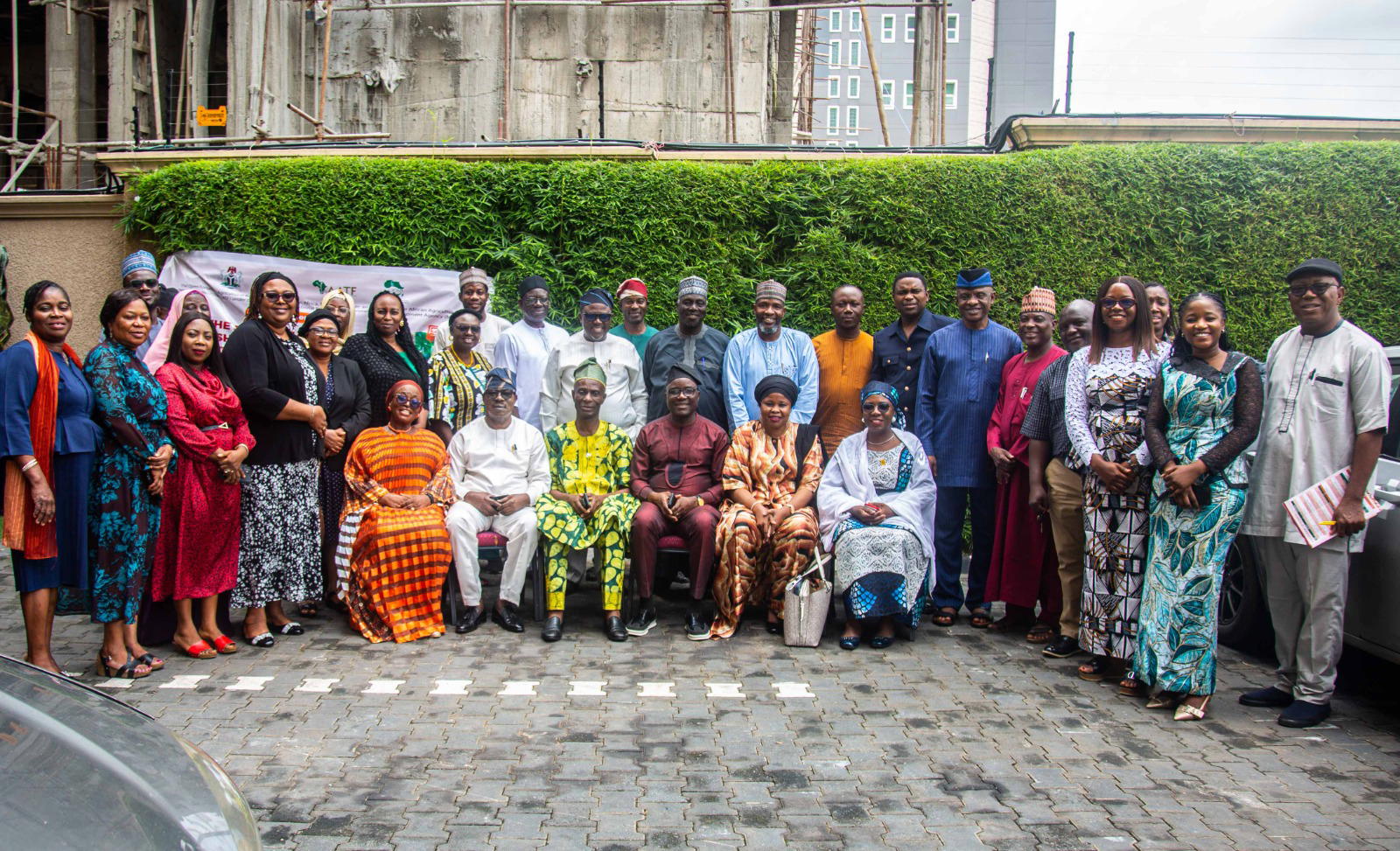
Mustapha who was represented by Dr Oyedele Julius in the Agency stated this at a ‘Sensitization Workshop on Genetically Modified Organisms and their Products’, held in Abuja, and organized by the Open Forum for Agricultural Biotechnology, OFAB, and NBRDA, for directorate officers in the Federal Ministry of Health and Social Welfare.
He also explained the essence of the Sensitization Workshop, which he said had become imperative to make salient clarifications on GMO and its products, therefore, the workshop focuses on discussions sharing concrete evidence, evaluate outcomes, and enhance the policy and communication strategies that will safeguard health, improve agricultural yields, and secure livelihoods.
He said: “I want to start with a candid observation: despite the criticisms surrounding modern biotechnology, it has already produced significant and tangible benefits for Nigerian farmers. Take, for example, the TELA maize farmers who participated in pilot seasons and reported yield increases exceeding fifty percent, alongside reduced pesticide usage and enhanced net revenues.
“These are not mere theoretical claims; they represent real harvests impacting real families. Cowpea, a staple and cash crop for millions, has likewise seen transformation through pod-borer resistance traits.
“Field studies and economic evaluations indicate striking returns to farmers cultivating Bt/PBR cowpea: dramatically reducing insecticide sprays, increasing substantial yield protection and very strong returns on investment. For many households, this is translated directly into more food on the table and more money in the pocket.
“Let us not forget Bt cotton, which reintroduced a level of yield potential previously unseen in our cotton belt. Trials and early commercialisation demonstrated that Bt cotton can produce yields multiple times higher than the local varieties it replaced, while reducing the pesticide burden on farmers and the environment. That is a win for incomes and a win for safer farming.These are not isolated anecdotes. Our regulatory advancements have moved in parallel with science.”
Amid the criticisms and attacks on biotechnology, he (Mustapha) said, “Nigeria has approved and progressed the commercialisation pathway for insect-resistant and drought-tolerant maize varieties, signalling that we are serious about deploying tools that mitigate pests and climate risks.
“Why does this matter for health and social welfare? Health, nutrition and economic resilience are closely bound. Reduced crop losses mean a more stable food supply, lower food prices and fewer nutrition shocks. Reduced pesticide use lowers public-health risks to rural communities and agricultural workers.”
He also maintained that, “The deployment of safe, evidence-based biotechnology aligns squarely with President Bola Ahmed Tinubu’s Renewed Hope Agenda and its blueprint for food security and economic revival. Science and policy must operate in concert to deliver on that promise: better yields, stronger incomes, and resilient food systems that serve every Nigerian region. “
He also added that his agency’s regulatory framework is designed to be robust, transparent and science driven.
According to the DG, NBRDA works with independent biosafety authorities, national research institutes and international partners to ensure that approvals follow rigorous trials, risk assessments and post-release monitoring.
“We owe it to our citizens to be rigorous and to communicate the rigour that underpins our judgments.A few words on risk communication. Journalists and public officers: facts matter, context matters and tone matters.
“The public deserves transparency and candour; that is how trust is built.I welcome our partners present and those who could not be here from research institutes, development agencies and civil society”, he added.
Meanwhile, the Director, Agricultural Biotechnology Department at the National Biotechnology Research and Development Agency, NBRDA, Dr Rose Gidado, in a remark, debunked claims against GMOs as being deadly to the health of Nigerians, describing them as unfounded and baseless.
In her presentation titled, ‘The Science of Agricultural Biotechnology’, she pointed out that there are wrong public perception and misinformation, which had led to public skepticism and misinformation about GMOs in Nigeria and Africa, partly due to inadequate communication from scientists and policymakers, therefore , it is essential to engage communities, provide transparent information, and involve local stakeholders in decision-making processes.
According to her, GMOs had a 30-year history of safety in over 45 countries, therefore, no cause for alarm to accept and adopt the technology in Nigeria as all safety measures and regulations have proved it to be unharmful.
“We cannot give poison to our own people. Many of us, and the professors working in this field, are Nigerians, responsible scientists who are also consumers.
“Safety is never compromised. Our National Biosafety Management Agency (NBMA) was established to regulate biotechnology practice in the country”, she said.
In another presentation, titled
‘Biotechnology as a Tool to Address Low Productivity and Emerging Challenges’, by Prof Muhammad Umar, Department of Plantv Science, Institute for Agricultural Research, IAR, Ahmadu Bello University, ABU, Zaria, said this is the time Nigerians need to embrace the GMO technology.
“TELA maize has the potential to transform Nigeria’s farming communities by: Increased yields (7 t/ha) over conventional varieties of 3 t/ha Better grain quality Resistant to insects (Fall armyworm); Tolerance to Drought; and more income to farmers and processors”, Umar added.
Dr Angarawai Ignatius of the International Crops Research Institute for the Semi-Arid Tropics, ICRISAT-NG, argued that with the current population of Nigeria of over 200 million people and rapidly increasing, the food demands requires proactive action, hence the need to adopt biotechnology as a panacea to boost food production.
He explained that genetic modification strengthened weak traits in crops, making them more resistant to diseases, pests, and climate stress, without posing risks to human health.
In an opening remark, the Director, Food and Drug Services, John Atanda, said, the workshop aims to deepen understanding of biotechnology innovations’ biosafety considerations and their health and food security implications.
“Today, we stand at an important crossroads where various interpretations for and against the use of modern biotechnology have made media rounds and caused some sensational headlines.
“We believe that by working together, we can transform the way biotechnology is perceived and applied within our nation, ensuring that innovations like genetically modified organisms, GMOS, contribute meaningfully to our food security and nutritional advancement”, Atanda said.
He also assured that the Food and Drug Services Department and its Agencies remain committed to protecting and promoting public health.
Disclaimer
Comments expressed here do not reflect the opinions of Vanguard newspapers or any employee thereof.