
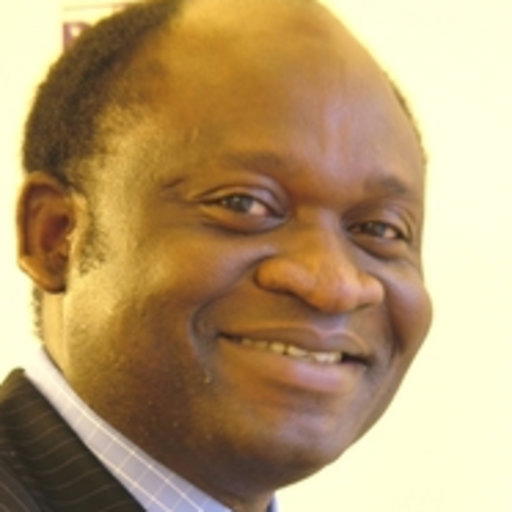
Olu Fasan
Speak no ill of the dead, says an ancient aphorism. That maxim broadly held sway in Nigeria this week as friends and foes alike paid glowing tribute to former President Muhammadu Buhari, who died in London on Sunday, July 13, aged 82. Buhari was one of the most divisive and pilloried leaders in Nigerian history. In life, he was loved and hated in equal measure. But this week, his death united the country in deep mourning for a leader whose place in Nigerian history, controversial as it might be, is firmly secured.
General Ibrahim Babangida, who led the coup that toppled Buhari as military head of state in August 1985, who incarcerated him for three years and who, in his recent memoir, described the Buhari regime as a “private personal autocracy”, showered praises on Buhari in death, saying he embodied “commitment to the ideals of service and love for country.” Former President Olusegun Obasanjo, who viscerally opposed Buhari’s re-election as civilian president in 2019, accusing his government of “gross incompetence”, said, at Buhari’s death, that Nigeria needed former leaders like him “to get us out of the situation we are in.” Even President Bola Tinubu, Buhari’s successor, who, as recently as last week, said in Saint Lucia that Buhari left him a “country near bankruptcy”, hailed the late president’s “legacy of service”. All, it seems, are observing the axiom: speak no ill of the dead!
But, in my book, when someone chooses to govern his country, controlling the destinies of millions of citizens, his legacy, good or bad, must be assessed in life and in death. That’s necessary for posterity and for ensuring that lessons are learned. In 2020, a journalist asked me if I was an enemy of President Buhari because my columns were relentlessly critical of him and his government. I replied: “No, I am not Buhari’s enemy. I’m his critic, not his enemy.” But when Buhari was leaving office in May 2023, I passed judgement on his legacy in an article titled “Good riddance, Buhari: You came, you saw, you failed woefully!” (Vanguard, May 25, 2023). It was a damning verdict that summed up Buhari’s presidency.
Now, am I resiling from that verdict? No, but I am recalibrating it. In doing so, I say unequivocally that Buhari was a patriot who deeply loved Nigeria. Everything Buhari did as a leader, he did from the standpoint of what he genuinely believed was good for this country. Unfortunately, however, due to his ideational limitations, his personal predilections, his worldview and philosophical underpinnings, all wrapped in his famed stubborn streaks, Buhari pursued policies and took actions that harmed the country he loved. The metaphorical saying “loving someone to death” means, in one sense, doing something that is born out of love, but that is harmful to someone. That’s how to view Buhari’s governance of Nigeria.
To be sure, nothing can detract from the gallant and patriotic role Buhari played as an army officer fighting in the civil war to keep this country together. But as Plato makes clear in The Republic, fighting to protect a country in wars, an undoubtedly noble role for soldiers, is different from governing it, a role ideally reserved for philosopher-kings. Of course, there’s nothing stopping a soldier from transitioning into a philosopher-king, as General Charles de Gaulle did in France and General Dwight Eisenhower did in America. But General Buhari did not make that transition. He was stuck in the military mode and never really understood how to run a country, especially one as vast and as diverse as Nigeria.
Truth be told, both as military head of state and later civilian president, Buhari ruled with the command-and-control mindset that works in the military but not in any other sphere of life. Whether it was in handling the economy, managing Nigeria’s diversity, dealing with separatist agitations, responding to calls for restructuring or tolerating alternative or fresh policy ideas, Buhari was utterly impervious; it was his way or the highway. He said after leaving office in 2023 that Nigerians were “extremely difficult people to govern”, but he did not introspect and ask whether he really understood the country and the people he was leading, whether he possessed the skills and attributes needed to govern Nigeria.
It is worth reading Lt-Gen Joshua Dogonyaro’s speech when announcing General Buhari’s overthrow as head of state on August 27, 1985, and ask whether Buhari’s image as a military leader who took “stubborn and ill-advised unilateral actions” changed when he became a civilian president 30 years later. No, it didn’t. In his memoir, A Journey in Service, General Babangida said Buhari ran “essentially Soviet-style centralised economy”. But did Buhari’s economic approach as a civilian president differ from his economic approach as a military ruler? Hardly. The “new” Buharinomics was nearly the same as the “old” Buharinomics!
I never stopped wondering why Buhari so desperately wanted to return to power as a civilian leader that he ran for the presidency three times before clinching it in his fourth attempt in 2015. One theory is that he was so hurt by his overthrow in 1985 that he wanted sweet revenge on his former military colleagues. A more charitable theory is that he truly believed he did the right things as a military head of state and wanted to return to power to continue the unfinished business; hence, in many respects, very little changed from the way he ruled Nigeria as a military ruler and the way he ruled the country as a civilian president.
For instance, in their paper, titled “Nigeria: Economic and Political Reforms at Cross-Purposes”, Jeffrey Herbst and Adabayo Olukoshi said that “the Buhari regime rejected fundamental structural and institutional changes that could allow Nigeria to adjust to the changing oil market.” As president, Buhari adopted the same approach and refused to allow the naira to find its market value. He believed a strong currency symbolised a strong nation. The reasoning was patriotic but utterly misguided. Cicero warned that if leaders don’t have a thorough knowledge of what they are doing, “their actions will be dangerously misguided.” Both as military ruler and civilian president, Buhari pursued, out of economic ignorance, dangerously misguided policies that destroyed Nigeria’s economy.
But beyond economic mismanagement, Buhari also mismanaged Nigeria’s diversity. He responded to separatist agitations with brutal military clampdowns yet turned a blind eye as Fulani herdsmen killed Middle-Belt farmers with impunity. Neither in tackling insecurity nor in fighting corruption did Buhari leave any indelible mark. He filled critical offices of state with people from his ethnic group, a practice his successor embraced with gusto. What’s more, Buhari described those calling for restructuring as “ignorant and naïve”.
Yet, Buhari made history: the first politician in Nigeria to become president after three failed attempts, the first to defeat an incumbent. But what did he do with power? Some will say infrastructure, others agriculture. In truth, the constant refrain that he bankrupted the economy and mismanaged Nigeria’s diversity will be his enduring legacy. He sought power so badly yet did little good with it. Buhari was a patriot but, sadly, left a tragic legacy!
May his soul rest in peace!
Disclaimer
Comments expressed here do not reflect the opinions of Vanguard newspapers or any employee thereof.