
By Kennedy Mbele
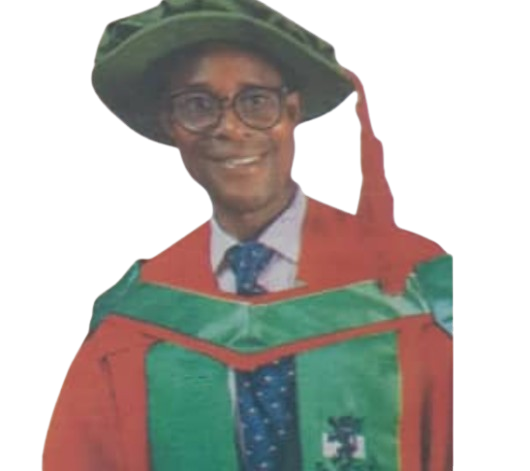
History was recently made at the popular Ebonyi State University, EBSU, Abakaliki, as the state-owned institution meritoriously appointed one of its former students, Dr. Simon Ugochukwu Nwankwo, as the Head, Department of Mass Communication. With the appointment, Nwankwo now leads the entire department, including some of his former lecturers who taught him two decades ago. In this interview, the new HOD, who graduated with first class honours, speaks on his journey into academics and describes challenges in the nation’s education sector as systemic. He shares his dreams about his department, his leadership style and other pertinent issues. Excerpts:
The journey so far, tell us about yourself
The journey of my life is a product of God’s grace and magnanimity. My father majors in peasantry farming and palm wine tapping. My mother is a typical African house wife with amateur farming experience. My father sets the tagart of JSS 3 as the highest he could afford for me and any other children of his.With that target, I felt challenged and resolved to go further through personal efforts and struggle.Through manual labour in people’s farms, even at far away, Ijesha, Irole, Ileshaw and Odogbolu in Ogun State, I managed to write the West African Certificate Examination and made 8 credits with a pass in Mathematics at a sitting. Thereafter, my target was to raise funds for my university education. For good five years (1994-1999), I laboured to raise the funds needed. I was involved in bread baking at the famous Our Ladies Bread industry, Nkpor, Anambra State and pounding of yam in restaurants at Akure, Ondo State. Later, I established my on small canteen which I closed when I was offered admission at EBSU, Abakaliki. I studied Mass Communication and graduated with first class honours. I did my Masters degree programme in the same Mass Communication Department, EBSU and later crowned it with a PhD also in Mass Communication with bias in Development Communication at the University of Nigeria Nsukka, UNN. I have been a lecturer in the Department of Mass Communication, EBSU since 2007. I became a senior lecturer in the year 2020. I am married to my lovely wife, Comrade Maria Nnenna Nwankwo. The marriage is blessed with many lovely children.
From student to lecturer to HOD in the same department within just 2 decades, what’s the magic?
The magic of rising from a student to a HOD is nothing but a product of determination, hard work, purposefulness, as well as God’s grace and design.
How did you feel when you heard the news about your appointment as the new HOD?
The news of my headship appointment brought me mixed feelings. It was a feeling of happiness which quickly gave way to a feeling of getting a big and challenging responsibility and the corresponding need for excellence in service as well as taking the department to a higher level of development. It was more of a feeling of being challenged to give back to my alma mater; giving back to a department that shaped and built me, a feeling of how best to lead my former lecturers and making them to give their best to the service of the department.
Few months down the lane, how has it been?
The work is challenging but not frustrating.I should say that I had cognate experiences. I served 4 former HODs; Dr. Odicha Ude, Professor Ifeyinwa Nsude, late Professor Hygenus Aligwe and of course, my predicessor, Dr. Agatha Orji-Egwu. My services spanned over 12 years. In those years, I served as Departmental Academic Board Secretary, Departmental Coordinator, Work and Study Programme (WASP), Result Reconciliation Officer WASP, Coordinator, Project, Seminar and Industrial Work Experience Scheme, Staff Adviser, Examination and Space Time Table Officer, Course Allocation Officer, etc. Before now, I already know most of what it takes to serve as a HOD, under normal circumstances.
Tell us about your relationship with lecturers in your department, particularly those that taught you in your days as an undergraduate.
My relationship with all lecturers is predicated on my principle of servant-leader style of leadership, humility in service especially when your mentors are under you. My office as a HOD is just to serve them as usual. To me, I am serving my bosses and colleagues. I am uniting and and leading. All inclusive leadership. Everybody is playing one role or the other to move the department higher.
Can you share with us some of your dreams for the department and how you intend to achieve them?
I prefer talking about my targets. So, my target include: strengthening commitment in pursuit of academic excellence. I am committed to fostering excellence in teaching and learning in my department. My target is graduating students who can practically demonstrate their learning any where and any time. I am interested in graduating students who are worthy both in character and in learning. In doing this, training and retraining of staff of the department is enjoying priority attention. That is why I appointed a renowned international scholar, Prof Ifeyinwa Nsude, to head the Departmental Standing Committee on Conferences and Workshops. To achieve these targets, I seek for collaboration amongst stakeholders in the department and the university, particularly the academic staff. And, I am confident that our level of collaboration in the department right from time, will earn us more than we expect to achieve.
Now that you are on a better pedestal to understand university education, what can you identify as major challenges of Nigerian universities and how can they be addressed?
The greatest challenge to university education in this country is the emphasis placed paper certificate instead of practical knowledge of what one can do in justification of the paper certificate in one’s possession. Consequently, less attention is now given to educational foundations at primary and secondary schools. University is not a miracle centre where wrong educational foundations are quickly corrected. Today, university education in Nigeria has become a case of “garbage in, garbage out”. In fact, the problem confronting the education sector in Nigeria is systemic. Merit is today sacrificed on the altar of mediocrity. Nepotism is killing education, getting-rich quick syndrome is killing education, inadequate pay to teachers is killing education and so many other factors.
How do you think these can be addressed?
The solutions are not far-fetched. For instance, as a nation, let’s emphasis practical knowledge instead of paper qualifications, let’s emphasize merit instead of allowing nepotism to govern employment into government and non government sectors, let us emphasize skill oriented formal education, let such bodies as WAEC and NECO overhaul their examination papers and invigilation security systems, the National Assembly should formulate laws to punish those who violate examination laws, let parents allow teachers even at the university level to professionally do their duties, let the government and private employers of labour in the education sector be ready to pay higher remuneration, let such supervising bodies as the National Universities Commission, NUC, reform their monitoring systems in such a way that accreditation team should visit universities without prior notice or officially scheduling such a visit with the affected universities, and many other solutions.
Examination malpractice seems to be defying every solution across the country. As the head of a department, how do you plan to purge your department of this ugly trend?
Adequate punishment to those that engage in examination malpractice is suggested. As a new HOD, I have told my students and their parents that I have the administrative will to drag any offender to the university examination malpractice panel though, my department (Mass Communication, EBSU) is not known for engaging in examination sharp practices.
You mean you can vouche for your all your students?
There is no department in any Nigerian university that will claim that all her students are saints when it comes to examination sharp practices. But, the university and my department system of examination invigilation ensures that sharp practices are greatly minimized.
Your department has been producing graduates for the past 20 years. Can you share with us how they are faring in the labour market, particularly as Nigerian graduates are said not to be employable?
Our former students are doing very well in the industry. Many of them are in Federal Radio Corporation of Nigeria, FRCN, Nigerian Television Authority, NTA, Voice of Nigeria, VoN, lecturering in Nigerian / foreign universities, newspaper establishments, banks, private radio/tv stations, politics, etc.
Tell us about the unbundling of the famous Mass Communication?
EBSU is working towards unbundling of Mass Communication. On my assumption of office as a new HOD, I set up an Unbundling Committee, headed by Dr. Emmanuel Chike Onwe, a senior lecturer in the department. I am confident that the committee will realize our target of unbundling Mass Communication in EBSU, soon.
How would you explain unbundling Mass Communication to a 90-year-old woman?
Unbundling of Mass Communication means structuring of studies on Mass Communication in such a way that each undergraduate student will choose an aspect of Mass Communication right from admission point where he or she will specialize in line with global best standard. Before now, a study of Mass Communication means each undergraduate student within the four years get a little knowledge of advertising, public relations, journalism, broadcasting, drama and film, development communication. strategic communication, etc. This implies studying everything and mastering none. Remember, we say that Mass Communication is one course with many professions. So, unbundling simply means, directing students right from year one to choose and focus on any preferred area of specialization as listed above. With that, on graduation, one will likely compete better in the global market. Unbundling Mass Communication in Nigeria is an effort to study Mass Communication the way it is studied outside Nigeria, particularly, in Europe, United States of America, etc.
We learnt that you graduated with 1st class honours in this department about 20 years ago. What was the magic?
The magic of my getting first class is hard work and God’s grace. I read many books beyond what the lecturers gave us. I prepared for examinations beyond what the lecturers taught us. So, I wrote examinations reflecting intellectual angles – what the lecturers taught and what books and journal authors said about the same topic. Above all, God helped me because He had willed it even before I got my admission.
Can you share with us, other students who also graduated with 1st class and their current employment status?
Yes, I will. Dr. Stephen Elem, Dr. Kenneth Adibe Nwafor, Dr Jude Ogbodo, Mr. Ebuka Stephen Nworie, Ruth Ngozi Alo, Mercy Nwaleke, Ifeanyi Onumara and Chibueze Lincoln all graduated with first class in my department. And, all of them are now lecturers in the department.This is because the university, EBSU, and my department have the legacy of retaining students who graduate with first class honours degree
To what extent does the performances of your students reflect the caliber of their lecturers?
You can imagine what the teaching and learning of Mass Communication in EBSU will look under more than 10 first class honours degree holding lecturers. Many went to the United Kingdom, UK, and other countries on government and university scholarships to do their master’s and Ph.D. You can imagine, a department having the likes of Prof. Ifeyinwa Nsude, Dr. Chike Emmanuel Onwe, Dr. Odicha Ude, Dr. Agatha Orji-Egwu and others moulding the students! The summary of it, is that the teaching and learning of Mass Communication in EBSU is very strong.
Now, what are your major challenges as an HoD and how have you been addressing them?
My major challenge as a HOD is the declining reading culture of the students. Many students erroneously believe that education is a scam. Third is a big challenge because many of them no longer attend lectures, neither do they take assignments and quizzes serious. Those who attend lectures do so absent mindedly and at the end, blame lecturers for their woes when their examination results are out.
How is your department addressing the issue of truancy amongst students?
The university law says for any student to qualify to participate in any semester examination such a student should have 75% attendance to lecture in the course being examined.
What can you say is your greatest joy in your career as a lecturer?
My greatest joy is the freedom of mind it offers. I am free to aspire to own the whole world like some Nigerian politicians do. I also enjoy seeing my former students excelling and making positive waves.
If you are to pick another profession, what would it be?
I fancy the law profession. I would want to be a lawyer. In fact, left for the paucity of funds, I would have enrolled to study law.
What message do you have for the examination body, the Joint Admissions Matriculation Board, JAMB?
JAMB has to continue with its good work. But they should work harder to ensure that technical errors are minimized.
Disclaimer
Comments expressed here do not reflect the opinions of Vanguard newspapers or any employee thereof.