
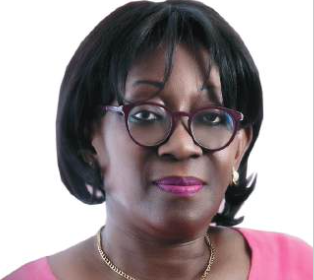
Donu Kogbara
I was kidnapped in Port Harcourt in 2015 and released two weeks later. When I fled to London to recover from this harrowing nightmare, Nick Kotch and his wife, Veronique Tadjo – a truly wonderful couple – reached out to me and embraced me with a tenderness that moved me to tears. I will never forget the three of us slowly walking around Soho, the Chinese district, looking for a nice restaurant to eat in.
And both of them listening with love as I recalled my ordeal.
Now Nick, a veteran British correspondent and leading Africa expert, is no more; and I’ve decided to reproduce an obituary that was first published on The Baron website https:// thebaron.info/.
The Baron was established for journalists who have worked or are working for Reuters, the world-class media organisation that employed Nick for many years.
Veteran Reuters correspondent and leading Africanist Nick Kotch, whose eventful career included being deported from Congo in a small boat, died on May 2 after surgery following a long illness. He was 72.
Nick, who died in a London hospital, spent most of his career at Reuters and afterwards in Africa, developing a deep understanding of the continent which was particularly valued by African colleagues.
He occupied senior roles throughout Africa, with back-to- back postings as bureau chief in both West and East Africa and, in his last posting, as Bureau Chief for Africa based in Johannesburg for three years.
He joined Reuters as a graduate trainee in 1977 and left South Africa in 2004 to take up a freelance career during which he worked as a journalism trainer, including for the Thomon Reuters Foundation. He contributed regularly to France 24, BBC radio and various other outlets. He was the first Africa Editor for South Africa’s Business Day.

At Reuters he reported from 47 African countries as well as France, where he was bureau chief between 1988 and 1990, Italy – where he had a four-year posting early in his career – Mexico and Romania. While posted in Rome, he was sent to Tehran for six months to cover the Iranian Revolution.
During his first Africa posting in West Africa in 1982, Kotch reported from Zaire, (now the Democratic Republic of Congo), on the emergence of the HIV epidemic in central Africa.
He later covered the collapse of Mobutu Sese Seko’s rule in 1997 and the rise of Laurent Kabila and then his son Joseph to lead Zaire/DRC. During the conflict Mobutu’s government ordered Kotch and a colleague to be deported in a small boat across the broad Congo river as Kabila’s army advanced on Kinshasa. It was a dramatic departure – some versions of the story say it was a dugout canoe, others a speedboat. But, undaunted, Nick returned many times to report on the DRC’s often tragic history.
Nick grew up in West London and was a passionate supporter of Fulham Football Club. His assignments included being the Reuters coordinator preparing for the World Cup in Mexico in 1986.
Colleagues paid tribute to Nick’s deep engagement with and understanding of Africa’s diversity and his intellectual commitment to ensuring it was covered properly.
Prize winning ex-Reuters photographer Corinne Dufka said Nick was a “true Africanist.” She added: “I remember him for his depth and breadth of knowledge of Africa that so few people had, but also for fighting for African coverage. He really fought to ensure that Africa was covered in a proper way.”
Colleagues also praised his loyalty and support for correspondents, including nurturing young African talent.
Former Reuters Bureau Chief in Zimbabwe Cris Chinaka paid tribute to Kotch’s support during the often difficult and dangerous task of reporting on President Robert Mugabe’s long rule. “Nick regularly checked in on the team to discuss safety and security, welfare issues and news coverage plans,” he said.
After leaving Reuters, Nick worked as a media consultant and trainer for the Thomson Reuters Foundation. He delivered more than 90 training workshops in English and French on a broad variety of subjects across 20 African countries, including courses run for the United Nations.
He was committed to empowering African voices in the media and was a contributor to both the African Media Development Initiative and the African Media Initiative.
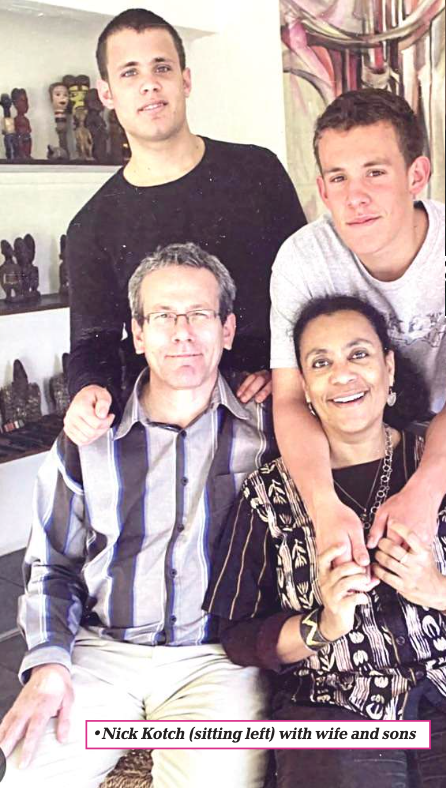
He is survived by his wife Professor Veronique Tadjo, a renowned Ivorian poet, novelist and academic, and his two adult sons, Matteo and Larry.
Tadjo said: “Nick’s life was marked by intellectual curiosity, cross-cultural engagement, journalistic integrity and a commitment to developing African media.”
Let me add that his life was also marked by tremendous compassion and laudable generosity….and that there are many Nigerians who have very fond memories of him. May he rest in perfect peace.
Disclaimer
Comments expressed here do not reflect the opinions of Vanguard newspapers or any employee thereof.