
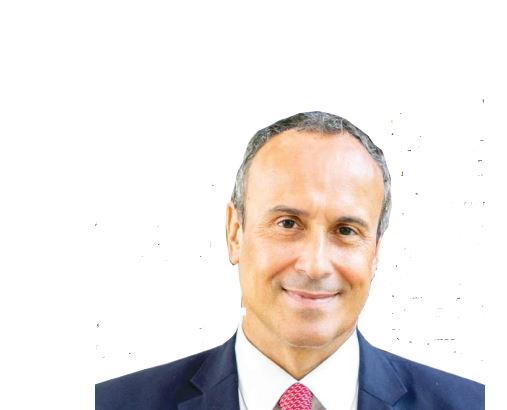
Ambassador Marc Fonbaustier
France is one of Nigeria’s key bilateral partners with cooperation between both nations extending beyond economic ties to areas such as cultural exchange and security cooperation. In this exclusive interview with NKIRUKA NNOROM, the Ambassador of France to Nigeria, Marc Fonbaustier, shares insights into the current state of Nigeria-France relations, highlighting key areas of cooperation, and the role France plays in decarbonizing Nigeria’s transportation sector. With France playing a significant role in Nigeria’s maritime security and development projects, the Ambassador discusses the future of the bilateral relations, strategic partnerships, and France’s support for Nigeria’s growth and development.
He also highlighted France’s commitment to boosting agriculture and food security as well as supporting the creative industry.
The Excerpt:
How do you assess the current state of Nigeria-France relations, and what initiatives are being taken to strengthen ties between the two countries?
We have been enjoying an excellent bilateral relationship since the democratic transition, with several milestones demonstrated by President Olusegun Obasanjo’s State visit to France in the year 2000, and our joint work on debt relief for Nigeria in the 2000s; AFD, our development agency, negan its activities in Nigeria in 2008, its main sectors of intervention being energy, higher education, agriculture, water supply as well as public transportation.
In 2014, we strengthened our security cooperation against jihadi terrorist groups as they were targeting both Nigeria and France; in 2017, the election of President Emmanuel Macron, who worked at the French Embassy in Nigeria for a few months at the beginning of his career took place. He has fond memories of Nigeria and pays a particular attention to the strengthening of our partnership.
I want to highlight that we are currently making progress in three different directions in agriculture and food security, with programmes supporting all kinds of capacity-building, including vocational training, and private sector investment. We are also making progress in cultural & creative industries, where our key objective is to help Nigerian artists and creators to generate more income and employment in Nigeria. We are also involved in investments that aim at transforming the life of Nigerians through public infrastructure, particularly public transportation.
France is one of Nigeria’s significant trading partners. Could you highlight key areas of economic cooperation, such as investments, trade, and joint ventures, and what opportunities exist for French businesses in Nigeria?
The current trend in terms of economic cooperation between France and Nigeria is that of diversification and reciprocity. As at date, 100 French companies are currently operating in Nigeria, employing about 16,000 people, almost all of them, Nigerians.
Focusing on agri-business issues, I can give you two examples of recent investments, one in Kano with NutriK, a subsidiary of Nutriset Group, that is manufacturing therapeutic food while relying as much as possible on locally-produced ingredients, trying to make sure that humanitarian interventions benefit not only direct beneficiaries, but also Nigerian farmers and particularly small farmers. And another one in Ibadan, with Danone/Fan Milk, that has been investing to increase local milk production and dairy products manufacturing.
They have recently opened a new yoghurt production line in Ibadan. At the same time, Nigerian companies are exporting high value products to France and other countries. For instance, Creativo El Matador, a Nigerian company specialized in agricultural exports, is exporting cashews, hibiscus, ginger and dried orange peels to France in large volumes.
What initiatives is the French Embassy undertaking to promote cultural exchange between Nigeria and France?
Cultural exchange is at the heart of our partnership with Nigeria, our two countries being world leaders in terms of culture and artistic creativity. Over the past few years, our priority has been to build the capacity of Nigerian artists and creators so that they are better able to create wealth and employment in Nigeria. In France, culture accounts for more than two per cent of GDP and 700,000 jobs.
In Nigeria, we see incredible creativity and commitment in the cultural and artistic fields, but there is room for improvement in terms of contribution to the economy and opportunities for all, especially for the young people. This is what we are trying to catalyze with our Nigerian partners through capacity-building programmes in all fields: cinema, fashion, video games, heritage, music… From October 16 to 18, 2025, Lagos is going to host Forum Creation Africa, a major event that we organize and fund with a view to foster greater synergies between Nigerian, African and French cultural actors.
France has been involved in development projects in Nigeria. Can you discuss specific initiatives or projects France is supporting in areas of education, health, or infrastructure development?
Regarding infrastructure development, I would like to highlight our support to public transportation projects in the Lagos metropolis since the early 2010s, as well as in Kaduna, more recently. Our development agency, AFD, has been partnering with local transportation agencies to support the expansion of all public transportation networks: rapid transit buses, light rail, as well as ferry routes on Lagos waterways.
Public transportation is a crucial issue at a time when the Nigerian urban population has surpassed 50 percent of the total population. We’re not trying to be present in every field, but France has recognized experience in public transportation, and that’s why we’re entering into partnership with Nigerian players. On health, we have a long-standing presence through our support for international programmes to fight pandemics, and more recently, as a bilateral partner, with a loan of 55 million euro, we are aiming at renovating public health infrastructures and equipment in Oyo State. We strive to help meet the needs of the most vulnerable, transfer skills to healthcare professionals and strengthen infrastructures.
Are there any collaborative efforts between Nigeria and France on renewable energy, climate change mitigation, or sustainable development, and what role does France see Nigeria playing in regional energy initiatives?
Our main area of action at this stage is decarbonizing the transportation sector through energy-efficient public transportation, as I have just described to you. But we hope that in the future, there will be other programmes in other sectors. Earlier this year, the French company – Vergnet – had discussions with Katsina State authorities in order to finalize a wind farm project.
A French company is due to begin construction of a mini-hydroelectric power plant in Katsina State in the coming weeks, supported by French financing. There is considerable potential for developing renewable energies in Nigeria and reducing the use of expensive and polluting generators.
How do you envision the future of Nigeria-France relations, particularly in light of regional and global challenges, and what strategic partnerships or areas of cooperation do you see as crucial for mutual benefit?
Wherever and whenever there is a common interest, we will be there to step up our partnership. I believe we share with Nigeria a common vision of what we want for ourselves and our respective continents, which is strategic autonomy and balanced relationships. We both want to build resilient economies, so as not to depend excessively on foreign partners.
For anything that strengthens this resilience, the resilience of food systems, health systems, energy systems, security systems, we are at the disposal of our Nigerian partners, with humility, respect and mutual interest as our guiding principles.
France will be hosting the next United Nations Conference on Ocean. What specific initiatives or policies does it intend to promote at the conference, and how does France plan to contribute to the global efforts to protect and sustainably manage ocean resources?
Nigeria has made significant progress over the last few years in the field of maritime security, and France is proud to have contributed to this, whether through joint exercises, capacity-building, sale of state-of-the-art equipment to the Nigerian Navy, and deployment of French Navy vessels in close coordination with Navies of coastal countries. It matters because there can be no protection of oceanic resources and maritime ecosystems without maritime security.
The United Nations Ocean Conference that France will host in June 2025, starting from next week, will be not just an opportunity to highlight issues such as the protection of oceanic resources and maritime ecosystems, but also coastal erosion, marine pollution, and many others. Our main goal at this stage is to help make sure that ocean-related issues are more and more perceived as a priority. In May 2024, Nigeria signed the Treaty on conservation and sustainable use of marine biological diversity of areas beyond national jurisdictions (also called BBNJ agreement) and we hope it will be able to ratify it soon.
How will France support developing countries, particularly those in Africa, in addressing ocean-related challenges such as pollution, overfishing, and climate change, and what resources or expertise is your country willing to share to help these nations achieve their ocean conservation goals?
As the country with the world’s largest exclusive economic zone, France has acquired solid experience in ocean issues, particularly scientific knowledge. So far, this seems, to me, to be the priority issue for our partnership with Nigeria in this field, depending on the requests that could be made to us by Nigerian authorities.
Our main focus gor now is how we can strengthen scientific knowledge of the oceans, popularize it, and put it at the service of the Nigerian society and economy, while making sure maritime resources and ecosystems are protected.
Disclaimer
Comments expressed here do not reflect the opinions of Vanguard newspapers or any employee thereof.