
By Ayo Onikoyi
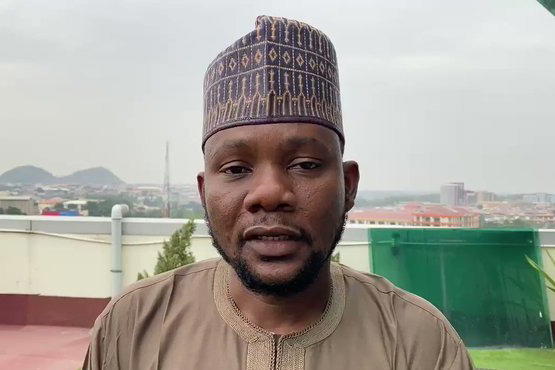
Naziru Mikailu Abubakar, former Editor-in-Chief of Daily Trust and a globally respected media strategist, delivered a thought-provoking lecture at Skyline University Nigeria, urging future journalists to radically rethink their roles in an age dominated by artificial intelligence, mobile technology, and multimedia storytelling.
Abubakar, a BBC-trained journalist and New York University alumnus, was the featured speaker at Skyline’s prestigious guest lecture series organized by the Department of Mass Communication. His keynote address, “Journalism in the Era of Digital Media,” challenged students to go beyond traditional news paradigms and embrace the full spectrum of digital transformation.
“We are witnessing the most rapid evolution journalism has ever faced,” Abubakar told a full auditorium of students and faculty. “To survive—and more importantly, to lead—future journalists must be innovators, data analysts, and content entrepreneurs.”
His lecture explored key themes shaping the future of media, including the shift from print to digital platforms, the rise of social media as news sources, and the growing influence of AI in content creation and verification. He explained how the traditional 24-hour news cycle has been replaced by real-time updates and interactive content, demanding an entirely new approach to reporting and storytelling.
Abubakar emphasized the need for journalists to master a variety of essential skills. These include multimedia storytelling and a visual-first reporting approach, the ability to engage digital audiences meaningfully, and a solid understanding of how to monetize content through innovative business models. He also stressed the importance of data analysis, AI-assisted journalism, product development, and entrepreneurial thinking as integral to the survival and success of future media professionals.
“In my early days, we decided what was news and when to publish it. Today, I’ve had stories scooped by citizen journalists on social media while my team was still verifying facts. This isn’t a threat; it’s an opportunity to collaborate with our communities.”
The veteran editor said that while employers generally look for those with multiplatform skills, language is also key in today’s journalism, telling the students that being bilingual increases their chances of success.
“Many local and international publishers now look for bilingual and multiplatform journalists; mastering one or two more languages will be a great asset as you prepare to face the increasingly competitive job market,” he stressed.
Drawing from his editorial leadership at Daily Trust and collaborations with international outlets such as the BBC, Abubakar offered case studies from The New York Times, BBC, Premium Times, and Legit.ng, showing how leading media houses are adapting and thriving by reimagining their operations in a digital-first world.
He acknowledged the “dark side” of the digital shift—namely, the proliferation of fake news, widespread misinformation, and the financial instability facing many news organizations—but encouraged students to approach these challenges as opportunities for leadership, innovation, and reinvention.
“Journalism is not dying. It’s being reborn,” he declared. “The future belongs to those who build, not those who wait.”
Citing the BBC’s two-step verification process for dealing with external sources, including news agencies, he added that journalists need to earn the trust of their audiences by sticking to the tenets of the profession.
“The journalistic values—truth, accuracy and factual reporting—must be our guiding principles. The rush to break the story first must not jeopardise the ethics of the profession. This is what separates professionals from quarks,” he said
Abubakar urged students to begin building their media portfolios without delay. He encouraged them to create podcasts, launch YouTube channels, write newsletters, and experiment with platforms like TikTok and blogs. He advised that practical experience, collaboration, and a proactive, entrepreneurial mindset are the keys to success in the rapidly evolving media landscape.
Lecturer Usman Bello Balarabe, who facilitated the event, described Abubakar’s presentation as “a landmark moment” for the university and the students. He praised Abubakar’s depth of knowledge and ability to connect with young journalists, noting that such engagements are vital in bridging the gap between the classroom and the newsroom.
Disclaimer
Comments expressed here do not reflect the opinions of Vanguard newspapers or any employee thereof.