
By Rita Okoye
A leading deep-tech innovator, Dr. Moses Asom, has raised concerns over Africa’s lack of comprehensive and structured data, warning that this deficit hinders artificial intelligence (AI) from effectively enhancing policy-making and driving economic growth across the continent.
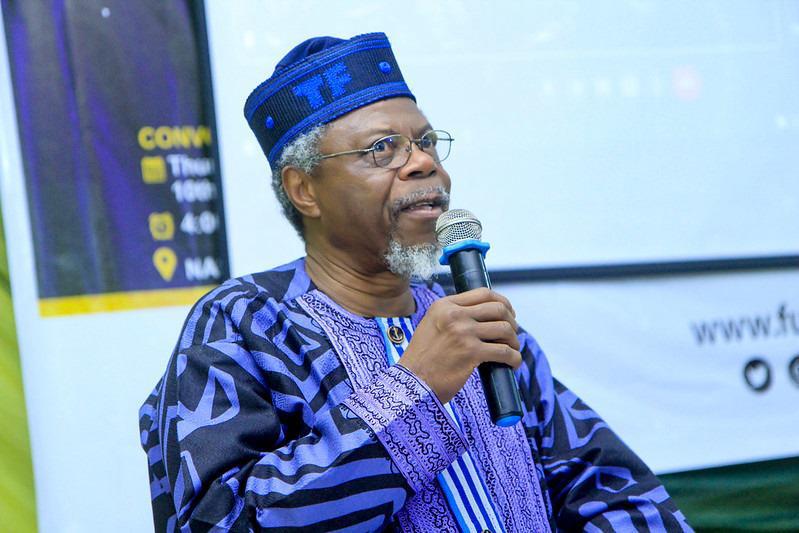
Speaking at a recent technology forum hosted by the Toyin Falola Interviews platform, Dr. Asom emphasized that AI thrives on high-quality, large-scale data to generate insights, predict trends, and inform policy decisions. However, Africa’s fragmented and often unreliable data systems pose a significant challenge to the continent’s ability to leverage AI for governance, economic planning, and social development.
“AI is a big game-changer, allowing us to find solutions to different problems across various industries,” he stated. “There is an urgent need to grow Africa’s economies, and AI can accelerate this development. However, this will not happen without a fundamental shift and strong investment. If we don’t invest in AI infrastructure, we will not see any meaningful results.”
Dr. Asom acknowledged that some investments in AI have been made across Africa, particularly in the FinTech sector, where significant progress is evident. However, he argued that overall investment levels remain too low, with most contributions coming from individuals and corporations making relatively small funding commitments. He pointed out that Africa lacks the necessary infrastructure to compete in the global AI economy and called for a strategic approach to addressing this gap. “We must take stock of what we have on the ground while recognizing the huge gap that exists. The typical infrastructure in the West is not built for our societies. We need to design infrastructure that consumes very low power and supports distributed AI systems. Africa does not have the resources to construct massive data centers, so we must innovate and invest in scalable AI solutions tailored to our needs,” he explained.
Dr. Asom further stressed that AI could be a powerful tool in decision-making processes, particularly in sectors such as healthcare, agriculture, and economic planning. However, he warned that Africa’s data inadequacies limit the continent’s ability to harness AI’s full potential.
Other panelists at the forum echoed Dr. Asom’s concerns while exploring AI’s transformative role in different fields. Among them was Dr. Ilesanmi Adesida, a distinguished scientist and engineer, who emphasized the global AI investment race and Africa’s current lag. “AI has the capabilities to perform tasks associated with human intelligence—learning, reasoning, problem-solving, and decision-making. It is a dynamic field that requires massive investments worldwide. The question we must ask ourselves is: Where does Africa stand in this landscape?” he queried.
Dr. Adesida cited the European Union’s recent commitment of over 200 billion euros in AI investments under the “Invest AI for EU” initiative, as well as significant investments by China and the United States. He urged African governments to recognize the urgency of AI adoption and to take decisive steps toward technological advancement. “We as Africans must come together to discuss and advise our governments on how to partake in this fast-moving technological revolution. If we fail to do so, we risk being left behind, depriving our young people of opportunities and stalling economic progress,” he warned.
Professor Omowunmi Sadik, a distinguished researcher in chemistry and biosensors, highlighted AI’s potential to drive innovation in scientific research. She shared how her work, funded by the Bill and Melinda Gates Foundation, has used AI-powered sensors to help smallholder farmers detect and prevent fungal infections in crops such as yams. “AI can accelerate research and innovation in every field,” she stated. “For years, we have used machine learning to analyze chemical sensor data. These applications have real-world benefits, particularly for farmers who need technological tools to improve productivity and sustainability,” she said.
Dr. Fayé A. Briggs, a technology entrepreneur, further elaborated on AI’s potential in healthcare and agriculture, arguing that Africa must explore AI-driven solutions to enhance productivity and economic growth. “AI can transform healthcare by improving diagnosis and treatment outcomes. By consolidating knowledge and using data-driven insights, we can make significant strides in public health. Similarly, AI has the power to revolutionize agriculture, improving crop yields and promoting sustainable farming practices,” he explained.
Briggs also stressed the need for AI monetization, urging African innovators to develop business models that turn AI applications into profitable ventures.
“It is not enough to develop AI solutions; we must also find ways to monetize them. By doing so, we can improve livelihoods and create sustainable economic opportunities for Africans,” he said.
John Kamara, an AI and data transformation expert, reinforced the idea that AI adoption must be tailored to Africa’s unique challenges. As the Founder and CEO of AICE Africa, he has been at the forefront of developing AI solutions for the continent.
“AI adoption in Africa requires a localized approach. We cannot simply import Western AI models and expect them to work seamlessly here. Instead, we must build AI systems that align with our economic, social, and infrastructural realities,” he noted.
Disclaimer
Comments expressed here do not reflect the opinions of Vanguard newspapers or any employee thereof.