
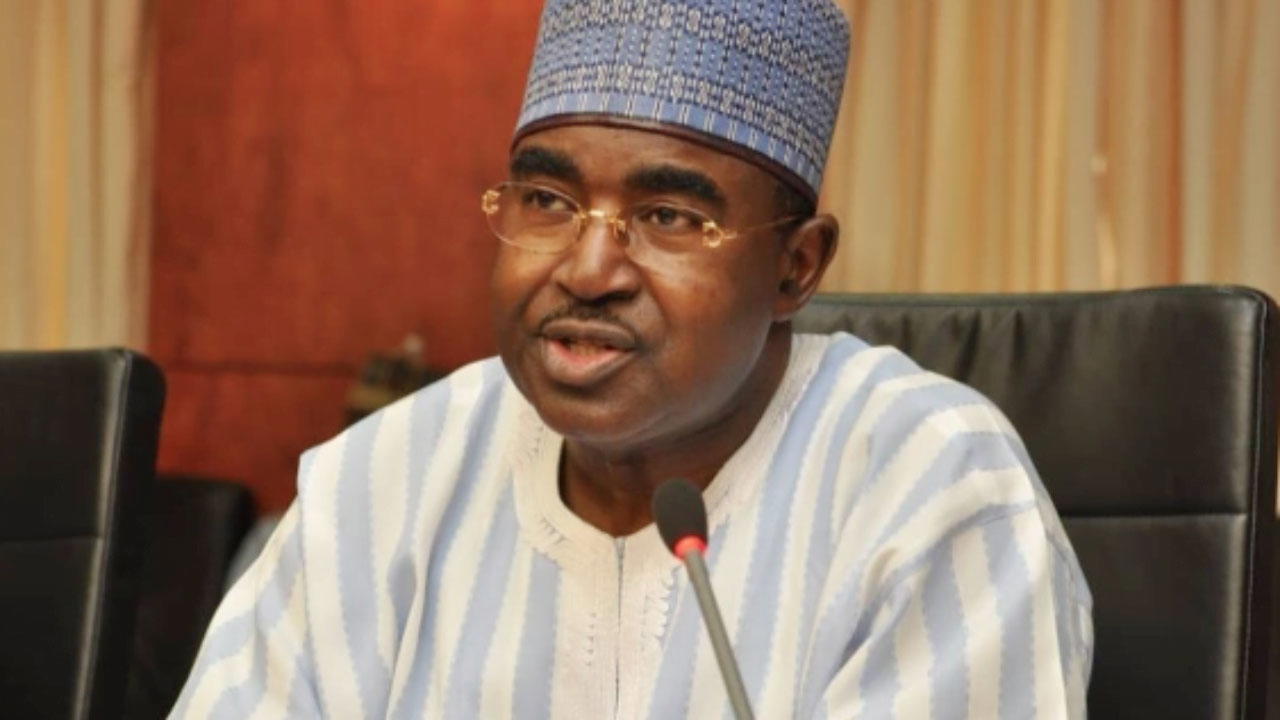
Brig General Buba Marwa
By Olasunkanmi Akoni
Statistics have shown that the South-West geo-political zone of Nigeria has the highest number of illicit drug use.
The South-South, South-East, North-West, and North-Central followed respectively.
The Chairman of the National Drug Law Enforcement Agency, Brig. Gen. Mohamad Buba Marwa (Retd), revealed this on Monday at the flag-off of the North-West Geo-political Zone campaign against the use of illicit drugs, organised by the National Orientation Agency, NOA, held in Kaduna.
The initiative was aimed at reorienting the people of the North-West geo-political zone against the scourge of drug abuse.
Marwa stressed the urgent need by the government, parents, stakeholders and all Nigerians to end the menace of illicit drug use, particularly among the youth.
However, he commended the NOA for organising the event and the Speaker of the House of Representatives, Tajudeen Abbas, for facilitating the crucial initiative, which focused on the northern part of the country.
According to Marwa, in his comprehensive address, “I feel honoured for the privilege of delivering the keynote speech at this all-important gathering put together to address a matter of urgent national importance: our collective fight against illicit drug use and trafficking in Nigeria.
“This effort is a testament to your commitment to building a society free from the devastating consequences of substance abuse.
“Like many other nations, Nigeria is grappling with the tragic consequences of drug abuse, particularly among its youth.
The 2018 National Drug Use Survey conducted by the United Nations Office on Drugs and Crime (UNODC) revealed an alarming reality: 14.3 million Nigerians aged 15–64 use psychoactive substances.
“Even more disturbing is the fact that one in four drug users in Nigeria is female, while one in five suffers from drug use disorder.
“A closer look at the North-West geo-political zone, comprising Jigawa, Kaduna, Kano, Katsina, Kebbi, Sokoto, and Zamfara States, presents an even more concerning picture.
“With an estimated 25 million people in 2016, this zone remains the most populous in Nigeria.
“The survey estimated that 12 percent of the region’s population, approximately three million people are drug users.
“The most commonly abused substances include cannabis, followed by the non-medical use of opioids such as tramadol, codeine, and morphine, as well as cough syrups containing codeine or dextromethorphan.
N’West stats.
“A state-by-state breakdown of drug use prevalence in the North-West shows that Kano has the highest rate at 16.0%, with approximately 1,070,000 drug users, followed by Zamfara at 13.5% (312,000 users), Kebbi at 12.6% (286,000 users), Katsina at 12.0% (481,000 users), Kaduna at 10.0% (462,000 users), Sokoto at 9.0% (230,000 users), and Jigawa at 7.0% (211,000 users).
“These figures are deeply troubling and underscore the urgent need for collective action to combat drug abuse and its devastating consequences.
“The North-West, like other regions of Nigeria, has seen a surge in drug-related crimes, addiction, and social decay.
“Drug abuse is not merely a law enforcement issue. It is a public health crisis, a social problem, and an economic burden.
“Its effects ripple through families, schools, workplaces, and communities, leading to health crises, lost productivity, financial strain on families and the healthcare system, and increased security threats.
“There is a strong link between drug abuse and criminal activities such as banditry, terrorism, kidnapping, and murder.
“However, beyond the crime statistics, we must recognise the human cost of this epidemic addiction, broken homes, lost opportunities, mental health crises, preventable deaths, and an overburdened healthcare and justice system.
“These are not just numbers; they are our children, brothers, sisters, and friends, their potential squandered by addiction.
“This crisis demands a multi-sectoral response involving law enforcement agencies, traditional and religious leaders, civil society organisations, educators, the media, and the entire community.
“We recognise the resilience and cultural values of the people of this region and call upon community leaders, parents, and young people to play an active role in preventing drug abuse and trafficking.
“This campaign, aimed at tackling drug abuse in the North-West, is part of a broader national strategy to rid Nigeria of the scourge of illicit drugs.
“In line with the National Drug Control Master Plan (NDCMP) 20212025, which outlines our national framework on drug control, we are implementing a balanced approach that includes prevention, treatment, care, and enforcement.
“The NDLEA has intensified efforts to apprehend drug traffickers and dismantle drug cartels.
“Our landmark operations, such as the seizure of large consignments of drugs and the arrest of kingpins, have sent a strong message that we will not relent in our fight against this menace.”
57,792 drug traffickers nabbed in 4yrs
Marwa added, “In the past four years, we have arrested over 57,792 drug traffickers, including 65 drug barons and 10,572 convicted. Our seizure was in excess of 9.9 million kilograms.
“Recognising addiction as a health issue, we have prioritised treatment and rehabilitation. This has led to the establishment of 30 counseling and rehabilitation centers nationwide, offering psychosocial interventions, medical care, referrals, and social reintegration for recovering drug users.
“In addition, we have built three model counseling and rehabilitation centers in Kano, Abuja, and Adamawa and recently renovated the rehab center in Zaria. Across the seven North-West states: Kano, Kaduna, Sokoto, Jigawa, Katsina, Kebbi, and Zamfara, we have counselling and rehabilitation services in our commands in these states. The least is in Zamfara, which has a three-bed space, but I’m glad to add that the state government is at the verge of building one as we speak.”
22,047 persons rehabilitated
He continued: “A total of 22,047 persons have been counselled, treated and rehabilitated through these facilities in the past four years.
“In this regard, we are also not unaware of the fear of being judged and stigmatization by people afflicted by this scourge, and as a result, we have established a national call centre where we have a range of experts:
“Counsellors, clinical psychologists, psychotherapists, and psychiatrists work 24/7 to attend to clients on our toll-free helpline- 080010203040, with the utmost confidentiality.
“To make this service accessible to people in the rural areas who may not be able to speak English and Pidgin English, the Service is language sensitive and can be accessed through any of the three major Nigerian languages: Hausa, Yoruba and Igbo.”
Calls on govs’ for rehab centers
The NDLEA also stressed the need for governors to complement the agency’s effort in building more rehabilitation centers for an effective campaign and results.
Marwa stated: “This notwithstanding, we call on our governors in the zone to please build at least three rehabilitation centres in their states, one in each senatorial district, because of the enormity and consequences of this menace on the socio-economic well-being of our citizens and the security of everyone, if left to fester.
“At the NDLEA, we have rolled out a series of strategic interventions, including the War Against Drug Abuse (WADA) social advocacy initiative, aimed at educating and mobilizing communities, especially young people, to take a stand against drug abuse.
“And in four years, we have conducted over 9, 239 of such engagements in schools, worship centers, workplaces, motor parks, and communities, among others, with more than 3,333,678 in physical attendance and millions more reached virtually.
“One of the strategic measures of WADA is the establishment of WADA Clubs in schools, raising peer counsellors and educators among young people. Empowering young people with knowledge, skills, and resources is central to our strategy.
“Therefore, the agency partners with schools, universities, women’s groups, youth organizations, workplaces, traditional, religious, and community organizations, as well as governmental and non-governmental bodies, to organize lectures, campaigns, seminars, workshops, competitions such as football matches, debates, quizzes, and essay contests.
“Information, education, and communication materials with different concepts and illustrations are also produced and distributed to raise awareness of the dangers of drug abuse and trafficking.
“Closely linked to this, is our Save Our Families (SOF) advocacy campaign, which is to encourage parents, families, religious institutions, traditional rulers, schools, employers of labour and governments at all levels to embrace our Drug Integrity Test initiative.
Advocates drug-free cert for prospective couple
“This is to ensure that the drug integrity test becomes a major requirement for school admission, weddings, employment, and election into public offices, starting with local councillorship. We are glad a number of the stakeholders, including some states, have already adopted this.
“Our commitment to this cause remains unwavering, and today’s event marks another significant milestone in our collective fight against this threat.
“We urge state governments, lawmakers, local authorities, and private stakeholders to partner with us to ensure long-lasting solutions. A few states have already provided land for barracks and other logistical support for NDLEA commands, and we encourage others to do the same.
Campaigns require concerted support.
“The success of this campaign requires the support of everyone here today: Parents, community leaders, traditional rulers, pastors and Imams.
“Together, we must strengthen our resolve to prevent drug abuse, support those affected by it, and ensure that drug traffickers face the full force of the law.
Govs’s intervention through job creation
“We must also encourage and empower our youth with alternative opportunities that steer them away from the lure of drugs and crime.
“This is where our state governors need to do more by creating jobs and empowerment schemes for our youths because joblessness is a major factor that pushes the young ones into drugs, and even when they are treated and rehabilitated, they go back to the same situation, the problem relapses.
One of the major ways of doing this is to encourage agriculture.
“The Agency has established an Alternative Development Unit in my office to partner with stakeholders on how to provide alternative sources of income to people in the growing of cannabis and production and distribution of illicit substances.
“The UNODC has already commended us as the first to do this in Africa.
“I therefore urge all stakeholders to sustain this momentum beyond today’s event.
“Let us reinforce our commitment to a drug-free Nigeria, one community at a time. With collective effort, determination, and the right policies, we can defeat the scourge of drug abuse and build a healthier, safer, and more prosperous nation.
“May this campaign mark the beginning of a new era in our fight against illicit drugs in the North-West region and beyond.”
Disclaimer
Comments expressed here do not reflect the opinions of Vanguard newspapers or any employee thereof.