
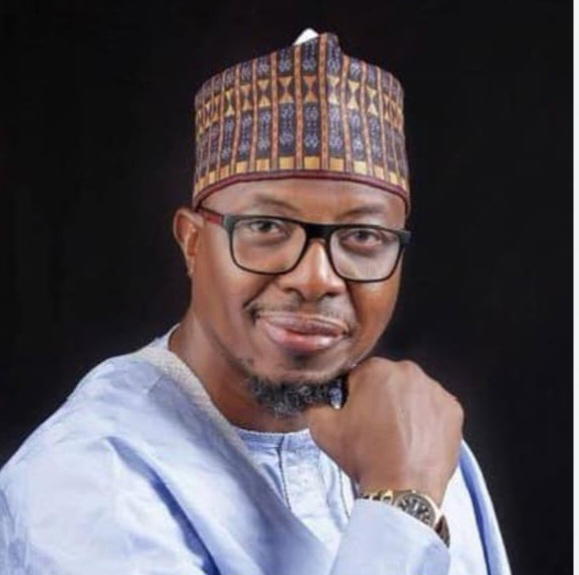
Saliu Osifueme Ahmed, is the immediate past Managing Director/Chief Executive Officer of the Benin Owena River Basin Development Authority (BORDA). A Civil Engineer specialized in Water and Transportation.
In this interview he spoke on how under his leadership, BORBDA that was ranked worst of the 12 River Basins in the country was now ranked number three.
How will you describe your two terms of 8 years at BORDA?
It was a fulfilling experience. It gave me an opportunity to contribute in my own ways to moving our country forward. The Benin Owena River Basin Development Authority (BORBDA) is an agency in the water sector aligned with my professional calling. It gave me an opportunity to put into practice some of the things that we learnt in schools and also experienced in my professional practices. Working under the public service rules with other public servants was quite a major eye-opener.
At the BORDA, I was able to work with other career public servants, and other political appointees like myself at the level of Executive Director, I was able to direct the affairs of the authority to achieve a number of things in line with the mandate of the River Basin.
The primary mandate is the development of the nation’s water resources to meet all the used water serves at both domestic, agricultural and hydro power generations levels among others.
I would say that, I came up fulfilled that we were able to impact on different people, different communities across the catchment states that the BORBDA superintended over. I also thank God for the opportunity.
What have been your major achievements in the 8 years in the authority?
First and foremost, I think I was able to reposition the BORDA in particular. Before my appointment, BORBDA was ranked as the worst of all the 12 River Basins Development Authorities in the country. But, by the time, I was leaving, it was ranked among the best three. For me, that was a major achievement.
That ranking came about because of the impact we were able to make along the line of the mandate of the agency.
First, we were able to provide potable water to a number of communities. Even in cases where it was almost impossible to extract water from the ground, we cracked it to get water out.
Before, I came on board for instance, the Edo Central Senatorial district was largely rated as an area where boreholes were impossible to drill, but by the time, I was leaving the office, we successfully drilled at least three functioning boreholes in Uromi, other three in Irrua, two in Ewatto in Esan South East Local Government Area and one around Ekpoma.
These boreholes went to a depth of over 1000 feet. That was partly achieved because of the leadership I offered.
During my tenure, I challenged our hydro-geologists and engineers that we are not only associated with just drilling of hand dug wells which other people were doing, but we should be a goal getter organisation as far as water and water related issues are concerned.
So, we went to the fields, carried out necessary studies and out of the understanding of the terrains we went to work, and we were able to get water successfully.
For me, that is one the achievements we recorded.
I only used Edo central Senatorial district as a case study because hitherto it had been taken and accepted that you cannot get water in that area. But we did across the entire catchment areas of BORBDA. All parts of Edo, Ondo, Ekiti and Delta states (Delta North). For your information, it is easier to drill boreholes because of the sedimentary base that Ondo and Ekiti states belong to, but it is much more difficult in part of Edo and Delta states. But we were able to drill successfully.
But by the grace of our efforts,p a number of communities today get potable water. We also initiated projects for the construction of some major water schemes. We initiated the construction of an Earth Dam in Otuo, Owan East Local Government Area of Edo State. The project is still ongoing. But it is gratifying to note that we got as far as over 50 % of the effort. The dam is yet to be completed but a number of other components around the dam have reached appreciable level of work.
In addition to that, we also initiated efforts through studies to carry out some Regional Water Schemes in Auchi and Jattu in Etsako West Local Government Area. The one in Jattu is currently ongoing. It has been constrained by funds. But construction works have started while the one in Auchi, we successfully built a 3 million litres complete tank which will be part of the infrastructure for the water supply to Auchi in the future.
We were also able to rehabilitate a number of existing dams in our catchment areas.
In Edo State, we were able to rehabilitate a dam which has been existing and said to be leaking. We arrested the leakage, the dam is Ukhun-Erha dam around Ekpoma in Esan West Local Government Area. The dam is for irrigation and aquaculture. We did the same thing in Ondo State. Today, the dam is fully functioning, and in Ekiti State, we also rehabilitated a dam for irrigation purposes.
These are asides, a number of rural infrastructure like roads that we constructed across our catchment areas.
In a sense, I will say, I am fulfilled that we were able to do a bit with the resources available to us during the period of my stewardship at the Benin Owena River Basin Development Authority.
When I was in the office, we set up four integrated farms. One in Obayantor in Ikpoba Okha Local Government Area, one in Auchi, Okpe and Uneme-Nokha in Akoko-Edo Local Government Area of Edo State. All the farms are thriving and in production.
In fact, because of the relative expertise that we have attained in setting up these farms, we were invited to set up one in Abia state which is currently ongoing.
Though Abia State is not in our catchment state but because of the relative success we attained in setting up the ones we did in Edo State, the then member of the National Assembly, now a current Minister of State for Labour and Employment, Mrs Nkeiruka Onyejeocha, invited us and made provision in BORBDA’s budget to set up one in her constituency in Abia State.
The farms are thriving, but one major step I took before leaving the office was to try and cascade them into a public private partnership. We started the process but by the rules of government, there is a long process to moving government infrastructures to private partnership. We have appointed a transaction advisor and the documentation is currently ongoing for the farms to secure the approval of the Infrastructure Concession Regulatory Commission (ICRC) which is the first step towards getting suitable private investors.
The input of it is that there will be enough funding and the right management to keep the farms in continuous productions.
The farms are patterned along the Songhai farm in Port Novo in Benin Republic. They are coexisting in the productions of both crops and animals in such a way that there is a zero-waste situation.
The farms are into livestock, poultry, and fishery. One of the farms has a cattle ranch. Some have piggery, goatery.
On the crops side we have cassava, vegetables and also processing cassava into tumeric garri among others.
Sir, what are those challenges that you encountered in the course of your job as the MD of the authority? Which solutions did you proffer to addressing the challenges?
Quite frankly, there were challenges. Some were human, systemic and others that may be described as natural. Some of the systemic challenges, like I said before as a professional coming into the public sector for the first time. As it were, I was a greyhound and I had to quietly learn and adapted myself to the public service rules and procedures. So, that means relating with a number of other institutions, individuals, stakeholders among others.
But we navigated the challenges, and somehow we understood the system and we worked within the system and we’re able to achieve our purpose.
The human challenges were that some persons in the authority were of the habit of giving out official secrets, using them to try and pull down the system. But truth always overshadowed falsehood, as it were we stood our ground and defended the integrity of the agency, and surmounted those challenges.
There were also financial challenges. That again is normal because resources is never enough. But what we did was to ensure that we work with the little resources at our disposal to deliver on our mandate.
For instance, when I came in 2017, our annual appropriation was less than N1 billion. That was actually the least of all the 12 River Basins in the country. Like I said in the beginning, we were ranked as the worst River Basin Development Authorities. Maybe that explained why we were getting the least resources, but overtime, in a matter of 2 years when they saw the potentials of the River Basin and by the time I was leaving the office, our annual appropriation increased to an average of N6 billion from the less than N1 billion it was previously.
We tried to do the most we could with the resources. From those resources, we were able to improve on the equipment base of the establishment. Within the space of three years, we acquired about 10 tractors, some heavy duty machineries like graders, a wheel loader, excavator, two bulldozers, in addition to the ones we met on ground.
These machineries boosted the equipment base of the organisation, and helped us to effectively render services in line with our mandate as well as generate revenues for the government.
When I was leaving, we were one of the revenue generating River Basins in the country.
Disclaimer
Comments expressed here do not reflect the opinions of Vanguard newspapers or any employee thereof.