
By Efe Onodjae
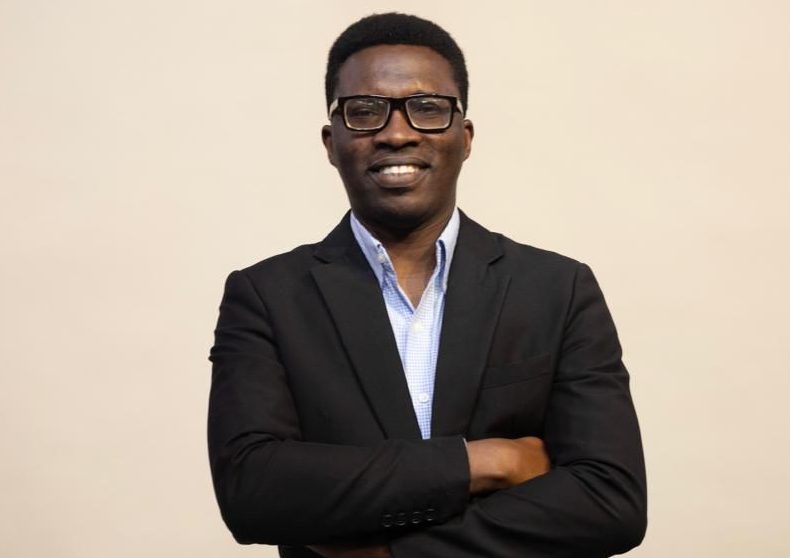
Media and communications expert, Olufemi Olanipekun has explained how the media can navigate through digital revolution and erosion of trust.
He argued that the rise of digital media is not just a technological shift but a cultural one, stressing that without trust, the media cannot fulfill its democratic function.
He opined that: “Technology has always been a transformative—and often disruptive—force in the media ecosystem. From Johannes Gutenberg’s invention of the printing press in 1450 to Samuel Morse’s telegraph in 1837, each technological leap has redefined how information is produced, distributed, and consumed.
“Friedrich Koenig’s steam-powered printing press in the early 19th century, for instance, revolutionized media production, increasing output from 480 pages per hour to over 3,000 by the 1930s.
“Today, we stand at the precipice of another revolutionary change, driven by artificial intelligence (AI) and digital innovation, which is reshaping the media ecosystem in ways that is both exhilarating and concerning.”
Olanipekun, a former Head of Station at Rave 91.7 FM and Western Spring Television, WSTV, explained that the media landscape is undergoing unprecedented disruption.
He said: “AI is altering how news is gathered, reported, and consumed, while also posing existential threats to traditional journalism jobs. CNN’s recent announcement of the layoff of 6% of its TV staff, part of a broader $70 million pivot to digital streaming, underscores this trend.
“As ratings for traditional TV decline, media giants are scrambling to adapt, but the human cost is undeniable. Smaller newsrooms are increasingly automating processes, reducing staff, and relying on technology to cut costs.
“In some television news production in the United States, for example, roles once filled by a team of 10 or more—camera operators, audio technicians, graphic designers, and more—are now being handled by a single director using advanced automation tools. While this boosts efficiency, it comes at the expense of jobs and raises questions about the quality and depth of reporting.
“Newspapers, too, face these existential threats. Each wave of technological advancement—radio, television, and now digital platforms—has been met with predictions of their demise. Yet, newspapers have proven resilient, adapting to survive. The New York Times’ transformation under former BBC Director General, Mark Thompson, who grew its digital subscriptions from 500,000 to over 8 million, is a testament to this adaptability.
“Thompson’s recent appointment to lead CNN signals a similar digital-first strategy. However, the challenges are mounting. Traditional TV and radio are losing advertising revenue to digital platforms, where influencers and podcasters command growing audiences. For instance, the Joe Rogan Experience podcast averages 11 million views per episode, dwarfing the primetime viewership of major US TV networks like Fox News and NBC.
The media researcher and trainer further noted that: “The rise of digital media is not just a technological shift but a cultural one. Social media and podcasts are increasingly central to news consumption, particularly among younger audiences. According to Pew Research, 54% of U.S. adults now get news from social media, while 37% of those under 30 regularly turn to influencers for information.
“This shift is global. In Nigeria, 91% of the respondents of a Reuters Institute survey say they access news online weekly, with platforms like Facebook, YouTube, and TikTok dominating. Politicians and activists are also bypassing traditional media, using social media to communicate directly with the public. Donald Trump’s mastery of Twitter and podcasts during his 2016 and 2024 campaigns exemplifies this trend.
“Yet, this democratization of information comes with its attendant risks. The erosion of trust in the traditional media, fueled by perceptions of bias and censorship, has led many to seek alternative sources. Elon Musk’s acquisition of Twitter (now X) and Mark Zuckerberg’s decision to adopt community-based moderation on Facebook have emboldened conservative voices, challenging what they see as institutional suppression of free speech.
“Meanwhile, scandals like the British media’s failure to adequately cover the gang rape of young British girls scandal have further damaged trust in traditional outlets. Critics argue that political correctness and institutional bias have compromised journalistic integrity, pushing audiences toward unregulated, often unreliable sources.
“The consequences of this trust deficit are profound. As Jeff Bezos, owner of The Washington Post warned, the erosion of trust in traditional media risks exacerbating the spread of misinformation.
“Without credible journalism, the public is left vulnerable to manipulation by unprofessional outlets and partisan influencers. The challenge for media organizations is not just to adapt to technological change but to rebuild trust by addressing concerns about bias, transparency, and accountability.
He concluded that: “The future of the media lies in convergence—integrating traditional and digital platforms to create a unified, accessible experience. The global measurement and data analytics company, Nielsen’s concept of Convergent TV, which blends broadcast, cable, and streaming, offers a glimpse of this future.
“But beyond technology, the media must confront its credibility crisis. In an era of AI-generated content and algorithm-driven narratives, the role of journalists as truth-tellers and watchdogs is more critical than ever.
“The stakes are high: without trust, the media cannot fulfill its democratic function. As we navigate this digital revolution, the question is not just how to survive but how to uphold the principles that make journalism indispensable.”
Disclaimer
Comments expressed here do not reflect the opinions of Vanguard newspapers or any employee thereof.