
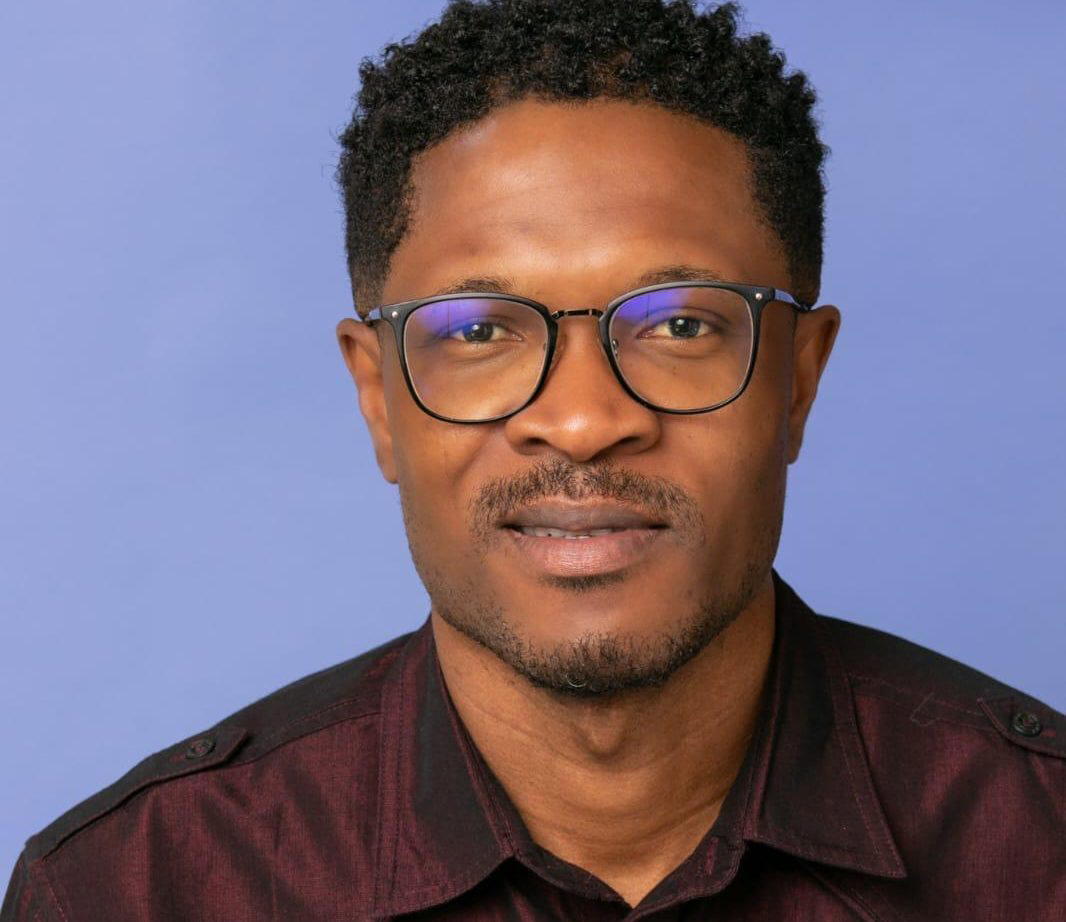
US based Nigerian scientist, Pelumi Adanigbo is charting pathways to new frontiers in analytical chemistry and material science. He says he wants to fabricate a good catalyst that will support the generation and storage of optimum amount of green and cleaner energy and can serve energy for the future. The PhD research student at George Mason University, Virginia, speaks on his research work.
Can you share insights into your journey as a lecturer and researcher, focusing on your contributions at Rufus Giwa Polytechnic and Adekunle Ajasin University?
I would say my journey as a lecturer and researcher are kind of intertwined because as much as you are doing research, you are committing part of your time into teaching students, building the next generation of scientists. So, it’s a laboratory and class kind of involvement. As a graduate student in Adekunle Ajasin, my research traversed both environmental and material science. I was involved in a couple of studies, including the remediation of environmental pollutants with domestic waste (a waste-to-wealth concept) and commonly used Agro-pollutants employed by farmers leach into surface water and eventually get into the body system.
Your present work involves investigating semiconductors based on transition metal dichalcogenides as photocatalysts for energy conversion and storage. What motivated you to explore this area, and what potential impact do you envision?
I have been interested in material science for a long period and this led me to my present research area (investigating semiconductor-based transition metal dichalcogenides (TMDs) as a photocatalyst toward energy conversion and storage).
Transition metal based dichalcogenides have fascinating properties, high surface area, tunable band gap and anisotropic nature. My research is focused on optimizing the innate properties of these materials for performance enhancement and optimal usage in the energy storage and conversion industry. In a nutshell, we are envisioning enhancing the energy industry with our photocatalyst with higher performance and efficiency than other known photocatalysts.
How does your expertise in analytical chemistry contribute to your current research in material science?
My previous research experience in analytical chemistry has been of great help in my present research, especially my knowledge of material synthesis and applications. Presently I am researching a suitable photocatalyst for energy storage and conversion, and it is very enticingbecause now I can explore material chemistry on a nanoscale level. having done some researchon a macro-level before now, I better understand that materials tend to behave differently on a nanoscale level. This experience has been a guide for me because material characterization follows the same route using the same instrumentation.
You are leveraging Scanning Electrochemical Cell Microscopy (SECCM) in your research. Can you explain how this technique aids in your investigation of photocatalysts and what insights it provides?
Scanning electrochemical cell microscopic is a unique and versatile characterization technique that gives you a clearer understanding of the heterogeneity that exists on the surface of your sample. It compares the activity on a particular point of your sample with another. We rely on the power of the microscope (SECCM) to probe the surface of our sample using nanopipette filled with chemical species. This gives the chemical reactivity happening at a single point on your sample, and you can compare that point to another point in the same sample, and it can be used to map the reactivity happening at other regions, giving a comprehensive relationship to tenths of microns. This procedure helps scientists to get clearer understanding of our materials that cannot be gotten using the regular bulk electrochemical processes. With SECCM, we can precisely define that one material has more activity than the other, and also make comparisons between the edge and basal plane of a material. It is also helpful in making inference on the structural activity relationship within our material of interest.
It is interesting to use because it relies on excellent optical microscope to define the region of investigation while approaching the sample with the nanopipette, which can be put into imagery for a clearer understanding of the activity.
As someone skilled in project and team management, can you share an example where you successfully led a complex academic or professional project?
Collaboration is the way forward in science, you must be open to collaborating with great researchers around the world to get great results. As a researcher the goal is to carry out brilliant research with excellent discoveries that are publishable in renowned journals, so being open to collaborations gives you more opportunities to interact with great minds that are interested in your type of research and with different perspectives. As a lecturer in Rufus Giwa Polytechnic, I led a couple of projects with my students. Now as a doctoral student and researcher, I work with many scientists with varying levels of expertise. I currently lead a team of undergraduate researchers which has been enlightening. The experience is quite different from anything I have ever done. I prioritize organization and communication and thrive in an environment that is transparent. We hold weekly meetings and monthly progress reports to discuss hurdles and breakthroughs on the project. Although this process can be overwhelming sometimes, consistency and commitment to the same goal has been the driving force.
Your background spans environmental chemistry, material science, teaching, and project management. How has this versatility enhanced your ability to tackle complex research problems?
I would say diversity is a spice to life. I have always been open to exploring different areas of research to broaden my horizon. I have a background in general chemistry and obtained a bachelor’s degree in industrial chemistry. Upon graduation, I joined a production company where I worked as a quality control scientist, here, I worked majorly as an analytical chemist before I proceeded to pursue my master’s degree in analytical and environmental chemistry.During my time as a master’s student, I had material synthesis research on the side which widened my understanding of material science. I also love to teach, which is an advantage to mebecause it means I am always studying. I am conscious of the fact that students will sometimes ask some real life-application questions that will leave me pondering various ideas. All these, I believe, are great points that enhance my versatility and provoke my critical-thinking ability to tackle complex research endeavors.
Given your history of collaborations, how are you engaging with other researchers in your current field of analytical/material science to drive impactful results?
Presently, I am collaborating on a couple of research projects that should be published soon. It is a learning curve, and I am always open to learning new techniques. Collaboration allows me to do this, while also building a great network of friends, enhancing my skill set and expertise.
There is a lot of work involved in a seemingly small research project from material preparation to characterization and analysis. Although personal commitment and zeal are my major driving force, willingness to work with great minds has been helpful in achieving a feat in such a shortamount of time. This is because collaborators bring fresh perspective to your ideas and act as constructive critics that drive the research to successful completion. It is reassuring to know that other researchers in your field think highly of your project and are interested to see how it goes, while also suggesting ideas that sometimes make the work easier. I am grateful for this.
Transitioning into a new research area can come with challenges. How have you approached publishing high-quality research in analytical/material science, building on your previous success in environmental chemistry?
I would not call it transitioning, but rather refer to my process as a means to enhancing my research prowess and experience. Every of my research has revolved around analytical chemistryand working with macro materials. I am only now adding nanomaterials to my interest because of the opportunity I got, and the support from my principal investigator. I have always believed in myself and never felt there was something great that I could not achieve. This attitude hashelped me a lot. Publishing high quality research is inclined on having broad research experience, great collaborations, and excellent writing and communication skills to describe your research findings in a manner that is fascinating and easily understandable.
How have your certifications, such as the OSHA professional qualification and PRINCE2 methodology in project management, contributed to your career progression?
Certifications are and will always be important. I am an advocate for people getting relevant certifications in their field. No knowledge is a waste, and I believe everything learnt will eventually be useful. There are a lot of free certifications that can be taken online. The Occupational Safety and Health Academy (OSHA) Training is a online free training, you only have to pay for the certificate. The OSHA professional is a free 132-hours extensive training that teaches industrial and laboratory. The project management course taught me how to better handle projects and make the best of my time while working on each stage of the project. Both training have been instrumental in my career progression, and I am happy I took the step to get enrolled for them.
Looking ahead, what are your key goals in analytical/material science, and how do you see your work contributing to advancements in sustainable energy solutions?
We set a lot of goals and trust God to achieve the goals. My work is committed to enhancing the energy industry through sustainable energy. I am working to fabricate a good catalyst that will support the generation and storage of optimum amount of green and cleaner energy and can serveenergy for the future. This amongst other research projects will improve the material science scope and the world at large and pave a headway in the age-long search for sustainable energy. Ihope to publish this research in high impact journals that will be accessible to other scientists in the quest for achieving clean and sustainable energy in the future.
Disclaimer
Comments expressed here do not reflect the opinions of Vanguard newspapers or any employee thereof.