
By Jimoh Babatunde
African countries have been urged to be strategic in changing the narratives on debt from a debt sustainability challenge to a debt productivity opportunity.
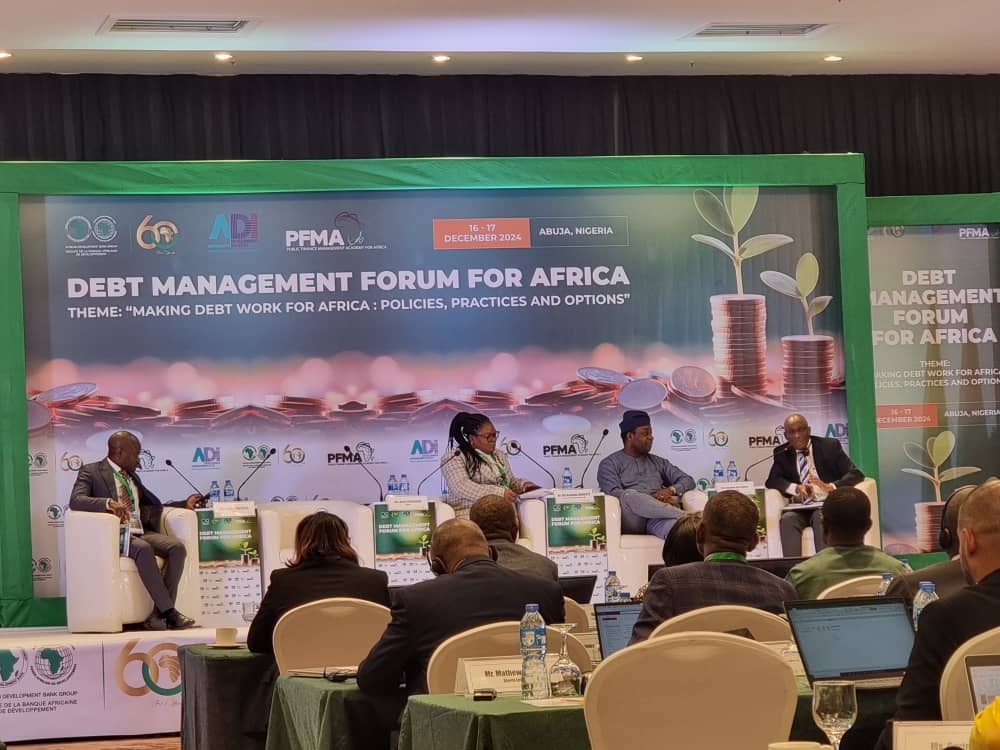
The Vice President and Chief Economist, Economic Governance and Knowledge Management, African Development Bank Group, Prof Kevin Chika Urama, made the call in Abuja, Monday, at the launch of the Debt Management Forum for Africa (DeMFA) and Inaugural Policy Dialogue on “Making Debt Work for Africa: Policies, Practices and Options.”
He said through investments in strategic pro-innovation industrial policy reforms with the right policy mix to boost factor productivity, manufacturing value added and inclusive economic growth, debt financing can become a key driver of accelerated structural transformation in countries.
“Tried and tested policies such as local content, franchising and preferred procurement could go a long way in boosting investments in value chains of competitive advantages in countries, create jobs and boost economic prosperity.
He added that industrial policy on its own is not a magic solution to slow growth, employment creation, and poverty reduction.
“Rather a pro-innovation policy mix that prioritizes strategic value chain development in key competitive sectors can help to boost inclusive economic growth and sustainable development in countries.”
To make debt work for sustainable development in Africa, Urata said the African Elites and development Practitioners – Policymakers, Debt Management Officers, and Development Partners must be prepared to think without a box.
“For as Albert Einstein rightly noted, we cannot use the old map to chart the new world. If we continue to do the same thing over and over, we should at best, expect the same results.
“I therefore encourage us to have the audacity to think originally, be brutally frank with ourselves regarding the current models, policy options and tools that inform decisions to borrow, what we borrow for, where we borrow from, in what currency and more importantly, how we deploy the borrowed resources.
Prof. Urata said with over 70% of Africa’s publicly guaranteed debt being US dollar denominated, the high levels of volatility in the foreign currency markets and heightened inflationary pressures in several African countries, borrowing short-term high interest debt presents several challenges that must be carefully considered for informed sustainable borrowing policy decisions depending on specific national contexts.
“We must apply the underpinning principles of economics and development finance policy, both theories and practices learned from the African experience, to craft relevant and implementable home-grown solutions to Africa’s debt challenges, amid the rising uncertainties and multi-polarization in the global economy.”
While noting that the continent should continue to advocate for reforms of the global financing and debt architectures, he said it is imperative for Africa to learn from each other’s experiences and from continents outside its shores to craft home-grown solutions to its persistent debt sustainability challenges.
Prof. Urata said Africa can build and strengthen its own fiscal buffers, and address the perennial challenges posed by the global debt markets that have engrained debt sustainability challenges in African countries.
“For example, experience has demonstrated that, by boosting domestic resource mobilisation and strengthening macro-economic policy frameworks, countries can make their domestic as well as regional financial systems more resilient.
He added that Africa needs to learn from the recurrent debt conundrums that results from growth contractions during global shocks and uncertainties.
“Some of those contractions come from increased misallocation of capital across sectors in uncertain times.
“We need to refocus on fiscal discipline, improve capacity in public finance management, and facilitate more efficient resource allocation that spur growth both in good and lean times.”
He said structural reforms to promote domestic and foreign direct investment can help lower borrowing costs and reduce funding needs.
While summarising key reasons for the inauguration and effective operationalization of the DeMFA, Urata said Africa’s public debt has surged by 170% since 2010 due to both structural issues in the global debt architecture, recent global and domestic shocks, and weaknesses in Africa’s macro-economic fundamentals.
“The heightened debt burdens weigh on public finances, diverting resources away from infrastructure investment, thus constraining future GDP growth and economic transformation.”
He noted that most of the debt were contracted during a protracted period of low-interest rate regimes in the global market.
“This trend has changed since the post-Covid-19 pandemic fiscal consolidation policies in countries. Tighter global financial conditions, the ensuing elevated sovereign debt spreads, and exchange rate depreciations have raised borrowing costs and shut most market-access countries from international capital markets.
“The average sovereign spreads in Africa have soared—to three times the emerging market average since the beginning of the tightening cycle.
He explained that the establishment and the inaugural meeting of the Debt Management Forum for Africa (DeMFA) is another key milestone in the African Development Bank’s efforts to build Africa’s capacities and provide institutional frameworks and instruments for the Continent to address its persistent debt sustainability challenges.
“The Debt Management Forum for Africa provides the platform for high-level dialogue by African Leaders, Experts and Practitioners on how to make debt work for Africa’s development.”
Disclaimer
Comments expressed here do not reflect the opinions of Vanguard newspapers or any employee thereof.