
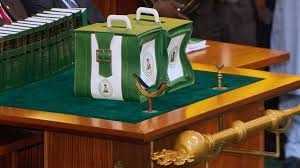
File image
…warn against budget padding
By Gabriel Ewepu
ABUJA – CIVIL Society Organizations, CSOs, Monday, demanded accountability and inclusion in the implementation of the proposed 2025 budget in order to ameliorate the hardship Nigerians are going through.
In reaction to the proposed the ₦49.7 trillion Budget tagged ‘The Restoration Budget: Securing Peace, Rebuilding Prosperity’ presented by President Bola Tinubu to the joint sitting of the National Assembly on Wednesday December 18th, 2024, the CSOs, Civil Society Legislative Advocacy Centre, CISLAC, and ActionAid Nigeria, AAN, in separate press statements made available to Vanguard pointed out some salient issues that they drew the attention of the Federal Government to for proper consideration and possible adjust while making their recommendations on the best way possible that the budget would positively impact the lives of Nigerians after about two years of strangling hardship.
Prioritize transparency, accountability – CISLAC
The Country Director, CISLAC, Awual Rafsanjani,said the Federal Government needs to prioritize transparency, accountability, and issues that align with the needs of Nigerians.
Rafsanjani also cautioned against budget padding and the inclusion of questionable allocations, which he said the Budget contains funds for scrapped Ministries including the Ministry of Niger Delta Development, and Ministry of Sports.
He said: “We condemn the recurrent practice of certain legislators exploiting the budget process to allocate resources for constituency projects lacking a legal framework for monitoring and accountability.
“These projects are often implemented without adherence to public procurement regulations and fail to address the genuine needs of citizens.
“We caution against budget padding and the inclusion of questionable allocations, such as funds designated for scrapped ministries like the Ministry of Niger Delta and the Ministry of Sports, and such is indicative of inadequate needs assessment and a disregard for accountability, therefore, we call for urgent reforms to restore public trust.
“Drawing from the Auditor-General’s report, irregular payments totaling over ₦197.72 billion across Ministries, Department s, and Agencies (MDAs) between 2020 and 2021. These violations, including systemic lapses in financial compliance and procurement processes, were cited as alarming examples of mismanagement.
“We call on the Public Accounts Committees of the National Assembly to act decisively in addressing these irregularities and recovering misappropriated funds.
“The National Assembly should also conduct the budget process with integrity amid widespread allegations of extortion and fraudulent insertions of budget line items in ministries and parastatals.
“To clear the allegations against them, members of the National Assembly must ensure the 2025 budget is transparent, credible, and free of malpractice.
“The Auditor-General’s recommendations must guide this process. Nigerians deserve a budget that aligns with the President’s objectives, not one marred by scandals, allocations to non-existent entities, and project duplications.
“We also recommend improved legislative oversight, as we urge members of the National Assembly to move beyond limited engagement during budget presentations and address the misuse of funds by unaccountable agencies.
“Anti-corruption agencies, including the Economic and Financial Crimes Commission (EFCC) and the Independent Corrupt Practices and Other Related Offences Commission (ICPC) should monitor the budget process, investigate fraudulent activities, and enforce compliance with procurement laws.
“The impact of this budget must be felt by Nigerians, not lost to fraud and padding.
“As the nation anticipates the implementation of the 2025 budget, CISLAC demand for a fiscal plan that reflects the aspirations of Nigerians, and the critical need for accountability, transparency, and disciplined execution to ensure the budget delivers measurable benefits to the people.”
2025 budget demands inclusive implementation and accountability – ActionAid
The Country Director, ActionAid Nigeria AAN, Andrew Mamedu, said the 2025 budget when passed into law by the National Assembly and assented by the President, demands inclusive implementation and accountability.
Mamedu said: “ActionAid Nigeria has reviewed the recently proposed 2025 Federal Budget tagged ‘The Restoration Budget: Securing Peace, Rebuilding Prosperity’ presented by President Bola Ahmed Tinubu to the joint sitting of the National Assembly on Wednesday December 18th, 2024. While the ₦49.7 trillion budget demonstrates ambition in addressing Nigeria’s economic challenges, it also reveals a 74.18% increase in nominal terms from the previous year. Several key areas on the budget requires critical attention to ensure the budget effectively impacts the lives of Nigerians, particularly the poor and marginalized.”
On the economic context and key concerns about the 2025 proposed budget, he said, “The 2024 budget faced implementation challenges, with early reports indicating delays in fund disbursement and underutilization in key sectors, prompting an extension of its implementation period into 2025 to address gaps and unmet targets.
“Nigeria’s economic challenges are evident in the rising inflation of 34.6% in 2024, significant naira devaluation to an average of ₦1,200/$, and sluggish GDP growth of 2.9%. With a public debt burden exceeding 40% of GDP and a projected budget deficit of ₦13.08 trillion, fiscal sustainability is under threat. Debt servicing alone accounts for 33% (₦15.81 trillion) of the budget, constraining investments in essential services.
“The 2025 budget allocates ₦4.91 trillion to defense and security, representing approximately 9.88% of the total ₦49.7 trillion budget. This substantial investment should in turn enhance national security, particularly benefiting farmers by improving safety in rural areas, thereby boosting agricultural productivity.
“Additionally, budget for defense should translate to safety for citizens and reduced kidnapping incidents, which have led to ransom payments totaling ₦2.23 trillion between May 2023 and April 2024.
“The proposed 2025 budget which aims to reduce inflation to 15% and achieve four per cent GDP growth, the rising cost of living and inadequate funding for social services risk perpetuating inequality and poverty. Vulnerable populations, particularly women, persons with disabilities, and rural communities, face the highest risk of exclusion if implementation gaps persist.
“The 2025 budget sets ambitious targets, including reducing inflation from 34.6% to 15%, improving the exchange rate from approximately ₦1,700 to ₦1,500 per US dollar, and increasing crude oil production to 2.06 million barrels per day but with the ₦15.81 trillion allocated for debt servicing, concerns persist about the adequacy of funding for essential services like healthcare, education, and social safety nets.
“Impact on the Poor and Excluded; The proposed reduction in inflation is a positive step, but without addressing structural issues such as food production inefficiencies and supply chain bottlenecks, the cost of living may remain high for many Nigerians.
“With 33% of the budget allocated to debt servicing, funding for essential services like healthcare, education, and social safety nets for vulnerable populations remains inadequate.
“The 2025 budget allocates ₦10.39 billion (0.02% of the total ₦49.7 trillion budget) to women affairs, highlighting a minimal investment in gender-focused initiatives despite the critical role of women in driving economic and social development, raising concerns about the adequacy of resources to effectively address gender inequality and empower women across Nigeria.”
Meanwhile, according to the AAN boss’ recommendations for effective implementation, “To ensure the 2025 budget achieves its intended goals, ActionAid Nigeria recommends; Inclusive implementation: We urge the President to strengthen mechanisms to ensure allocated resources reach the local and community levels while institutionalising gender-responsive budgeting to address the needs of women, children, and marginalized groups effectively. Budget should focus on people, driven by people, influence by people, consider people’s need, benefit people, protect people.
“These are hallmark of good governance and resonate with the section 14 of the constitution of the Federal Republic of Nigeria, which clearly emphasizes that sovereignty belongs to the people and Article 21 of Universal Declaration of Human Rights (UDHR) to buttress this point.
“It becomes sacrosanct, the involvement of all stakeholders in the different stages of the budgetary processes, more importantly, from the planning stage to implementation, monitoring and evaluation.
“Accountability and transparency: We recommend an adoption of transparent mechanisms to track fund allocation and utilization, particularly in high-priority sectors like education, health, and agriculture and foster active citizen engagement in budget monitoring and implementation processes.
“Sector-specific actions: We call on all sectors to strengthen systems and provide necessary requirements for implementing this budget. Implement programs that prioritize accessible infrastructure and skill development for Persons with Disability. Debt Management: Develop a comprehensive debt management strategy to reduce reliance on borrowing and prioritize investments in poverty-reducing sectors.
“A moratorium on new debts, especially foreign debts, except there are exceptional circumstances justifying the new debt and this should be in accordance with the provisions of the Fiscal Responsibility Act (FRA) 2007. Set a debt ceiling in accordance with S.42 of the Fiscal Responsibility Act. This ceiling should be defined inter alia in the relationship of debt to revenue.
“Ensure transparency and accountability in security spending;
The Ministry of Defense must ensure the defense budget is fully accounted for by creating mechanisms for civil society organizations and individuals to monitor and track its implementation, fostering transparency and preventing misuse of funds.
“Prioritize funding for gender equality and women’s empowerment: The government should significantly increase the allocation to women affairs and institutionalize gender-responsive budgeting to ensure adequate resources are directed toward addressing gender inequality and empowering women effectively.”
However, in AAN’s call for action, the Ministers of Finance, Education, Health, Agriculture, and Women Affairs were called upon to ensure that allocated funds are efficiently utilized to address the pressing needs of Nigerians.
Also the government to foster collaboration with civil society organizations to monitor the implementation of critical social interventions., and added that the citizens should also be given the opportunity to review the proposed 2025 budget by organizing Town-halls across the six geopolitical regions, which also should serve as a model the state governments are expected to adopt to make the budget more impactful to the people.
“The 2025 budget presents an opportunity for Nigeria to rebuild prosperity and reduce inequality”, he added.
Disclaimer
Comments expressed here do not reflect the opinions of Vanguard newspapers or any employee thereof.