
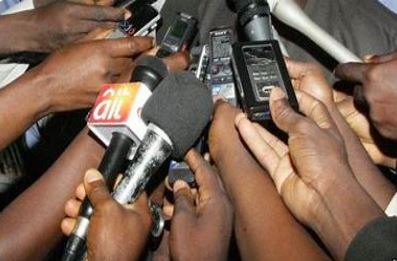
File image.
By Dayo Johnson, Akure
Media and civil society experts have urged journalists to guard against misinformation during the upcoming governorship election in Ondo State on Saturday.
This advice was shared at a webinar titled “Misinformation and Elections: Journalists, Public Educators and Opinion Shapers,” organized by Corporate Accountability and Public Participation Africa (CAPPA) in collaboration with the European Union Support for Democratic Governance in Nigeria (EU SDGN) II.
Speakers at the event included Akinbode Oluwafemi, Executive Director of CAPPA; Ms. Joke Kujenya, Executive at the Media Mentors Journalism Centre; Lanre Arogundade, Executive Director of the International Press Centre (IPC); and Timothy Bamidele, Programme Manager at the Centre for Media and Society (CEMESO).
Akinbode Oluwafemi highlighted the crucial role of the media in reporting accurately, particularly in the era of fake news. He emphasized that “news reports should promote peace and not violence,” stressing that the public relies on the media for reliable information and perspective.
He advised journalists covering the election to remain vigilant and prioritize their safety, noting that taking precautions is essential for those monitoring polls in the field. “We’re doing this to promote nonviolent elections in Nigeria,” he added. “Our goal is to educate and engage the public so that we vote with our thumbs, not with guns or cutlasses. The media’s role is critical in this engagement.”
Ms. Kujenya from the Media Mentors Journalism Centre distinguished between misinformation and disinformation, emphasizing journalists’ responsibilities in election coverage, the importance of fact-checking, and monitoring social media. She urged journalists to verify information, educate the public on media literacy, critically analyze information, and foster informed engagement.
“Journalists should understand local issues and verify claims before reporting,” Kujenya stated, encouraging collaboration with fact-checking organizations to ensure accurate reporting.
She also recommended that journalists closely monitor platforms like Facebook and WhatsApp to detect emerging narratives and remain vigilant about potential disinformation spread by trolls.
Lanre Arogundade noted that 18 political parties in the state had signed a peace accord to promote a nonviolent election, and 41,000 security personnel had been deployed for public safety on election day. He reiterated the importance of journalists taking their security seriously and urged them to employ conflict-sensitive reporting.
Arogundade also encouraged journalists to use I-Verify to fact-check their stories, underscoring the need for accuracy in reporting.
Disclaimer
Comments expressed here do not reflect the opinions of Vanguard newspapers or any employee thereof.