
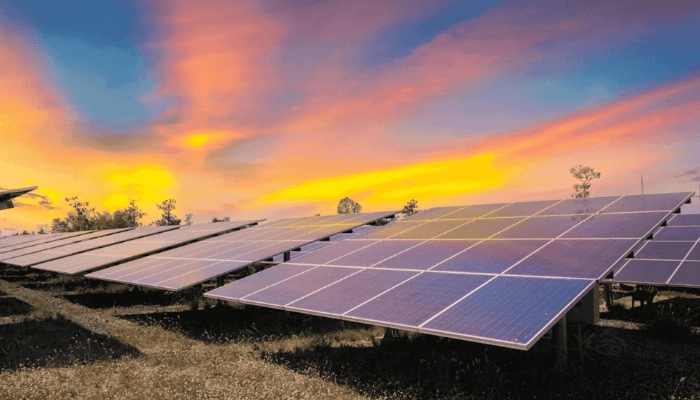
Stock image.
By Yinka Kolawole
The Manufacturers Association of Nigeria (MAN) has called for collaborative strategies among various stakeholders to facilitate the provision of adequate and sustainable energy supply in the country.
This is against the backdrop of unreliable power supply and high energy costs that has bedeviled the manufacturing sector in Nigeria.
To this end, MAN last week, in Lagos, hosted the Manufacturers Energy Security Summit with the theme, “Power Supply Adequacy for Industrial Growth in Nigeria”.
In his opening remarks, President of MAN, Francis Meshioye, emphasized the need to deploy cutting-edge technologies, policy frameworks, and financing models to tackle the nation’s energy crisis. Meshioye noted that adequate and sustainable power supply was critical to enable the industrial sector to contribute more significantly to the country’s Gross Domestic Product. .
He said that within the challenges facing the manufacturing sector were opportunities for innovation, job creation, and sustainable growth.
“In shaping the future of manufacturing in Nigeria, let us work together to foster collaboration and knowledge sharing and identify innovative solutions to accelerate the journey towards energy security for manufacturers.
“We must promote sustainable manufacturing practices and support policy reforms that encourage investment in renewable energy to help reduce energy cost,” he stated.
Also speaking at the summit, Director General of MAN, Segun Ajayi-Kadir, said the focus of the gathering was to explore possible solutions to infrastructure and other business environment challenges militating against power supply adequacy and access to funding.
“Inadequate infrastructure and limited access to financing has in no small measure hindered manufacturing growth and competitiveness in Nigeria.
“The urgent need to address these challenges and find lasting solutions is the reason for our gathering,” he said.
In his own remarks, Chairman of the Nigerian Electricity Regulatory Commission (NERC), Sanusi Garba, noted that while electricity was the oxygen for industrialisation and economic growth, it required long term investments.
Garba who was represented by Musiliu Oseni, Vice Chairman of NERC, said the Electricity Act 2023 has provided the foundation for improving the Nigerian power sector.
He said while the Nigerian power sector currently struggled to meet customers’ expectations due to a myriad of challenges, huge capital was required for investments to guarantee sustainable supply.
“Powering the Nigerian economy requires huge investments but resources are limited hence the need for a deliberate policy approach.
“Nigeria needs a powering industry policy that deliberately seeks to improve power supply to industrial clusters supported by existing regulatory instruments,” he said.
Also speaking, Managing Director, Association of Nigerian Electricity Distributors, Sunday Oduntan, noted that Nigeria’s power supply was heavily dependent on gas, with frequent disruptions in supply, limiting diversification and sustainability.
He said the country should diversify into wind, solar and increase investment in other energy sources to reduce dependence on fossil fuels.
In his remarks, Minister of Power, Adebayo Adelabu, assured that the government is working hard to deliver sustainable solutions that will enhance industrial productivity and foster economic growth.
Adekabu who was represented by Abdulkareem Yerima Gwam. Asst Director, Power Investment, highlighted key reforms that have been undertaken by the government aimed at repositioning Nigeria’s power sector.
These, according to him, include enhancing generation capacity; strengthening transmission infrastructure; distribution and regulatory reforms; adopting renewable energy and Off-Grid solutions; partnership with manufacturing sector; and seeking Public-Private Partnerships (PPP) and targeted investments, among others.
Disclaimer
Comments expressed here do not reflect the opinions of Vanguard newspapers or any employee thereof.