
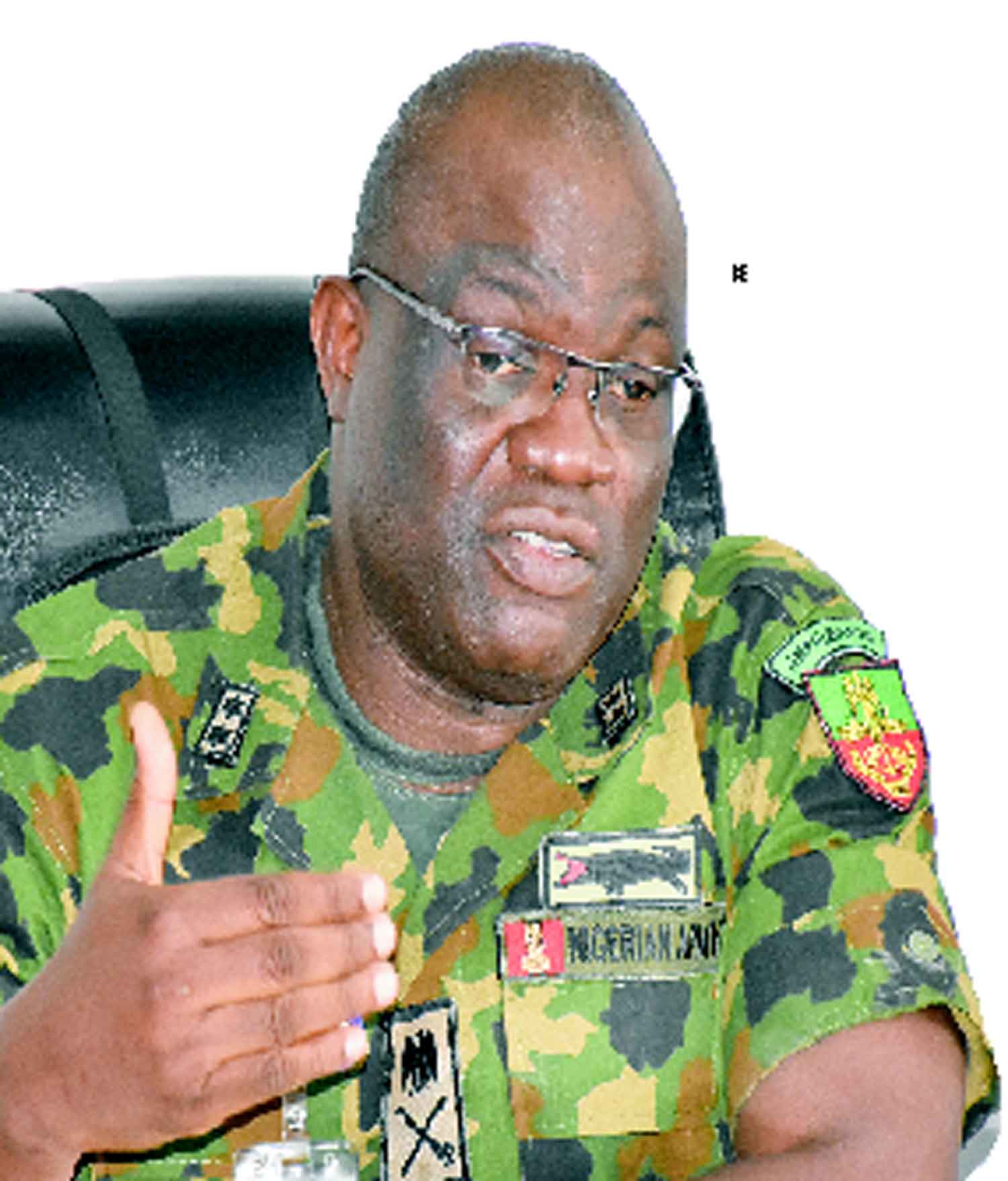
Adeniyi Oyebade
Major-General Niyi Oyebade, retd, is a former GOC, Division 1 of the Nigerian Army, Kaduna and ex-Commandant, Nigeria Defence Academy, NDA. In this interview, Oyebade reveals high points of his career, insecurity in the North-West and other issues of governance. Oyebade also speaks on the Shiite crisis and its origin.
How does it feel adjusting to civilian life after retirement?
I retired five years ago from the military. I can tell you it has been pleasurable and restful. The opportunity to explore new cultures, interact with people and their ways of life has been enriching. No more pressures of military life, especially at the senior command levels, of which I was privileged to be part. I am enjoying the gift of life with my family and friends, reflecting on our dear country, and exploring ways that I could be of further service to our fatherland.
Looking back, especially in the last years of your military service where you had very sensitive command positions, were there things you think you would have done differently?
In the military hierarchy and structure, the things you could do differently are simply anchored on the style and quality of your leadership. The end is clearly defined by the Army High Command, its left to the commander to interrogate the ways and means through initiatives to achieve the end state. Ultimately, it is about getting the job done for the stability, peace and security of our country. I was privileged to be appointed as GOC 1 Division by then-Chief of Army Staff, Lieutenant General TY Buratai. My Division covered the entire North-West and parts of North-Central. On the completion of my two years tour of duty, it was a rare privilege to be appointed as the 28th Commandant of the Nigerian Defence Academy where I started my military career in 1982. I ultimately ended my service in 2019 at the same place. These last two appointments defined the hallmark of my military career. It was an honour to be commended by the Minister of Defence, Maj Gen Magashi, retd, Chief of Defence Staff, Gen Olonisakin, and my Chief of Army Staff for a job well done.
Talking about your command position as the General Officer Commanding 1 Division, one of the striking things was your ability to stem the insecurity in your area of responsibility and the way you handled the issue of the Shiites. The North-West, which was your area of operation at the time, is now under serious security threat. What do you think is responsible for this degeneration?
I strongly believe with the benefit of hindsight that the degeneration of security is largely anchored on the inadequacies of governance, especially at the state and local government levels. Myriad socio-economic problems like poor education provide the oxygen for criminals, insurrection, terrorism and banditry across the North-West and North-East zones. My Division, working in unison with other security agencies, ably reduced insecurity to the barest minimum. It was a tough call because insurgents in the North-East were crossing over to the North-West. There were external drivers such as the ISWAP from the Sahel region, Libya and so on. Control of illegal minefields by criminal gangs also fueled these problems. You mentioned the Shiite crisis in 2015. You may recall that the violence was triggered by an attempted assassination of then-Chief of Army Staff who was in Zaria for an official programme at Depot Nigerian Army. The Army prevented a large-scale violence which could have engulfed the entire North-West with loss of lives and properties. Our operation was in furtherance of national security and stability in the region.
Looking back at all the things that happened, do you think you were high-handed?
Not at all. On the contrary, we did everything within our control to prevent the crisis from degenerating into violence. Unfortunately, the violence was triggered by the failure of the Shiite leadership to appeal. And intervention by some religious leaders and senior citizens helped a lot. I recall the numerous efforts by the Kaduna State government and the Army Command to calm the tension which was met with utter intransigence. You may recall that I was with President Buhari who was in Kaduna to attend an official function when the violence broke out in Zaria on the first day. As an operational commander, the first thought was the safety of Mr President, not knowing what could be playing out. It was a very fluid situation. But, by and large, we learnt some operational lessons in handling religious extremism in the country. Like I said before, officers and soldiers who served under my command carried out their duties very efficiently, within the rules of engagement. The then governor of Kaduna State, Mallam Nasir El-Rufai, the late Emir of Zaria, religious and political stakeholders in Kaduna State provided the needed support in stabilising the situation
Despite the investment government has made in fighting insecurity, there seems to be an emergence of threats in other places. How do you explain the burgeoning insecurity in the country?
Do not forget that the role of the military is to protect the country from external aggression and the defense of the territorial integrity of Nigeria. Additionally, the military is constitutionally mandated to provide support to civil power when there is an insurgency or armed criminality in any part of the country to ensure peace and stability. The military is deployed in every state of the country conducting security operations as ordered by the President.
The primary purpose of government is the security and welfare of the people. How do you provide security?
It is not just about physical security. Security has a wide umbrella: Human security, food security, physical security, environmental security, and all of that. The governors and federal government are to provide sound security through good governance. When you have prevalence of serious socio-economic problems, it provides oxygen to banditry, insurgency and armed rebellion. Simply take a look at the statistics of the number of out-of-school children, running into millions. What do you want them to do? They need to go to school, farm and vocational training. They are in dire need of support to be provided with the basics of life. We do not have a social security net. Fortunately, and thankfully, the administration of President Tinubu is already taking steps in that direction. I am happy that today, any young person can easily go to any public university, either federal or state, by easily accessing loan to go to school, so there is no reason for any young person not to go to school because the facility is already there. That is one big plus for President Tinubu’s administration. Importantly, there are also skill acquisition centres that government intends to use to train many people across the country.
Were you alarmed that after leaving the NDA the security of that place was breached?
Yes, I was alarmed. I must confess it really shocked me, given that hundreds of cadets, military and civilian staff are resident in NDA. As then Commandant, I invested a lot in technology to provide a security umbrella in Afaka, the new site of the NDA. I established a modern drone surveillance squad that provided nearly 24-hour aerial security of the NDA including vehicles to provide physical security.
However, there is no finality in security, it is a continuous process. The commandants who came after me did well. it was unfortunate that we had that breach. Gladly the commandants since then took steps to strengthen the security architecture. Hopefully, nothing of such will happen again.
Kidnapping has assumed an epidemic level. How do you think this can be curbed?
I worry about kidnapping, banditry and so on. There are some areas that we need to critically look at. Every phone user has his or her data with the Nigerian Communication Commission. The question is, if somebody made a call to ask for ransom, why is it not quickly tracked to the source? When monies are paid to accounts controlled by kidnappers, do we need to do more to routinely track down where funds are going? To a large extent, many of the kidnappings we see in Nigeria are selfish and internally driven. As GOC 1 Division, I knew of cases of kidnapping within families: A son organising the kidnap of his father or his uncle. When hundreds of millions of Naira are collected as ransom and taken to the forest, what is the use of money in the forest? Where is that money going? The intelligence agencies must continuously collaborate with our contiguous states to check cross border crimes. As the GOC 1 Division, I discovered that some of these so-called District Heads were aiding and abetting kidnappers either deliberately or by threats. So, when you have appointees of the state like District Heads being part of the criminality in society, then something is fundamentally wrong. It goes back to what I said earlier on the issue of governance. To a large extent, I can tell you that the military and the security agencies have done a lot to check the tide of kidnapping. Of course, it is still happening here and there, but it’s not as much as it was in the recent past.
One of the things that happened recently is the protest against hunger and bad governance. If you were to advise government, how do you think these issues that led to the protest can be mitigated?
The issue about hunger is simply inadequate investment in mechanised farming for high yield. Some blame it on insecurity, but it is not entirely true. There are vast areas of land across this country where there is no form of insecurity. Why are the state governments or local governments not investing heavily in agriculture? These are state and local government functions. Every month, every state gets billions, including local government areas. Why are they not investing heavily in agriculture and infrastructure? When I say investing, I am not talking of subsistence farming. Our population is increasing faster than ever before. It’s heartwarming that at last the CNG programme to reduce transportation costs has been rolled out. Hopefully, the cost of energy would reduce considerably.
Would you say food insecurity is largely because of the failure of some state governments?
The states could do more than what is on the table now. We are not doing enough, given the resources available to states on a month-to-month basis. Run a check on how much money has gone to the states over the last six months. I am sure if you go to your local government, there is probably little or nothing to show for all the billions it has collected since 1999. Recently, I listened to my friend, the Minister of Agriculture and Food Security, Senator Abubakar Kyari, about the import waiver on food by the Federal Government in the next four months or so. He mentioned that about 300,000 or 400,000 metric tonnes of food would be imported every month to flood the Nigerian market with enough food while awaiting the harvest coming up around November or December.
Looking back at your service, which of the assignments did you find most challenging in your military career?
First, as a young officer, Economic Monitoring Group, ECOMOG, peace enforcement in Liberia in the 90s was very challenging because we were directly in combat fighting against rebels. The toughest time was as GOC of Division I. It was a tough call. Thankfully, we were able to discharge effectively and efficiently the assignment given to us by the Chief of Army Staff. As Commandant, Nigerian Defence Academy, which is an institution for training of future military leaders of our armed forces, that had its own character and tough challenges as usual with young men and women cadets. But on scale, my tenure as GOC was the toughest challenge but it was also exciting. I loved being with my troops on operations perhaps as a result of my first baptism of fire in Liberia and Sierra Leone.
Some people have raised an alarm that the political interference is affecting the quality of recruitment and admission of cadets. What do you have to say?
It is not true. As Commandant of the Nigerian Defence Academy, it is near impossible to take any candidate who is not qualified. We have a layered system. Every candidate must pass medical, physical and aptitude tests. All candidates who passed these stages are presented to the Armed Forces Board to make the final selection for the armed forces. At this level, every candidate is qualified but, then, we cannot take everyone because of the slots available for that year. So only the best of the best with applied variables such as equal quota for each state, gender equity not equality are taken. Our selection is near perfect, probably 97 or 98 per cent because there are some things that are beyond human control.
Not because you want to bend the system, but probably they just happen. For instance, when I was in NDA, I remember the first month the new cadets came in, I lost one or two on medical grounds. Their medical issues were not evident during the medical screening. Those things happen. Some ailments do not show until training starts.
Do you sometimes not have any fear about the continued unity of this country?
I hear people express apprehension about the unity of this country. The challenge we have in Nigeria today is largely a challenge of not providing for our people as much as we should, given the resources we have. Somebody who is fairly fed will not pick up arms tomorrow to fight against the state. Somebody who has access to social safety nets will not pick up arms against the state. What we are experiencing in Nigeria is largely misgovernance from over 30-40 years ago. These are the issues bedeviling Nigeria. The guy in the farthermost part of the North, who is hungry, and does not have access to healthcare or school, is not different from another Nigerian in Ogbomoso, Uyo, Ibadan or Enugu experiencing the same thing. The pangs of hunger in the stomach do not recognise religion or tribe. People naturally want to take care of themselves. With all sense of responsibility, the Tinubu administration has done well in terms of rolling out all empowerment initiatives; if followed through conscientiously, it will go a long way in alleviating the pain of a lot of our young people across this country. Aside from that, the selection of appointees and election of political leaders is deeply flawed, coupled with brazen stealing of our commonwealth. Stiff punishment such as life imprisonment, long jail terms and death penalty for economic and financial crimes must be legislated expeditiously. But most people agree that Nigeria is not moving at the speed of development that we desire.
Disclaimer
Comments expressed here do not reflect the opinions of Vanguard newspapers or any employee thereof.