
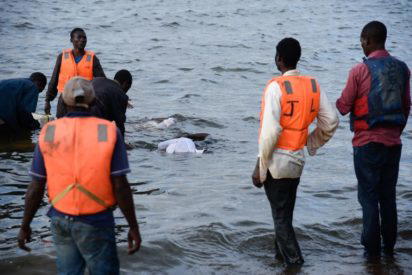
File image
By Godwin Oritse
The recent surge in boat accidents across Nigeria has raised alarms in the water transport sector, with stakeholders attributing the problem to a legislative clash between the Nigerian Maritime Administration and Safety Agency (NIMASA) and the National Inland Waterways Authority (NIWA).
The agencies are responsible for regulating inland water transport, yet they are more focused on generating revenue than enforcing safety measures, putting commuters at risk.
Stakeholders in the water transport sector are raising alarms that the frequency of these accidents will likely persist if immediate corrective measures are not taken. Both NIMASA and NIWA, as regulatory bodies, are tasked with enforcing the rules that govern inland water transport in Nigeria. However, both agencies are reportedly more focused on the revenue generated from the sector than on the safety of the people who rely on the waterways daily.
Captain Ade Olopoenia, a former Director of Safety at NIMASA, noted that unless the federal government intervenes by declaring an emergency in the sector, boat accidents would continue, resulting in preventable loss of lives, destruction of property, and damage to the marine environment. He attributed the root of this issue to the ongoing confusion between NIMASA and NIWA, stating that the situation has reached a crisis point.
Olopoenia pointed to Section 259 of the Merchant Shipping Act of 2007, which places NIMASA in charge of non-conventional vessels that weigh less than 500 gross tonnage.
NIMASA, NIWA
According to this provision, NIMASA is responsible for creating rules to ensure the safety of such vessels. However, he explained that many of the boats currently operating on Nigeria’s waterways lack certification from a competent authority, rendering them unseaworthy. The failure of both agencies to enforce safety regulations has resulted in a dangerous environment for commuters.
“The people at NIMASA don’t seem to grasp the significance of ensuring that these watercrafts go through the necessary certification processes,” Olopoenia said. “These certifications are essential for commuter safety, yet NIMASA and NIWA have neglected this responsibility over time.”
He went on to criticize the agencies for prioritizing revenue over safety, asserting that maritime administration should focus more on protecting lives than on generating income.
“These vessels are supposed to undergo annual surveys and inspections, including crew certification, but these processes have fallen by the wayside. Safety awareness campaigns, which were once organized by NIMASA in different states to promote the safe operation of small crafts, have also been discontinued,” he added.
NIWA, meanwhile, is mandated to ensure that the inland waterways are safe for navigation. This responsibility includes dredging, surveying, and marking navigable routes, as well as determining the locations of jetties and producing relevant charts for navigable waters.
However, like NIMASA, NIWA has also been criticized for not doing enough to safeguard the waterways.
Olopoenia cited several key reasons for the increasing number of boat accidents, including the operation of unsafe boats, inexperienced operators, overloading, lack of basic equipment, nighttime sailing without precautions, and the absence of enforcement of safety regulations.
Marine Surveyor and President of the Center for the Marine Surveyors in Nigeria, Engr. Akin Olaniyan, also weighed in on the issue. He emphasized that standardization, safety, and certification are essential to preventing boat mishaps in Nigeria. Olaniyan called for NIMASA to assist NIWA in establishing a functional safety department to promote safer navigation on the waterways. He stressed that both agencies must standardize their operations if they are to address the problem of boat accidents effectively.
“I maintain that the solution lies in standardization, safety, and certification. NIMASA and NIWA are both asleep. NIMASA is responsible for the operations and enforcement of waterway regulations, while NIWA, sitting on a goldmine, doesn’t know what to do with it. This mine is loaded with explosives that could destroy the marine and blue economy Nigeria is working to develop,” Olaniyan said.
He also noted that a more efficient water transport system, particularly for the movement of goods such as agricultural products, could generate significant employment opportunities if the sector were properly regulated and safety measures enforced.
Casualties
Data from the Lagos State Waterways Authority (LASWA) showed that 156 people lost their lives in boat accidents in 2022, and 189 in 2023. While figures for 2024 are still being compiled, preliminary data suggest that the number of Nigerians commuting via waterways is increasing, underscoring the urgency of the situation.
In light of the recent boat accident in Niger State, which claimed many lives, FTAN President Mr. Nkerweuwem Onung urged boat operators to adhere strictly to safety regulations to improve water transport safety in Nigeria.
The Managing Director of NIWA, Mr. Bola Oyebamiji, confirmed that the manager of the boat company involved in the Niger State accident had been arrested, and a manhunt for the boat operator was underway. Preliminary investigations revealed that the overloaded fiber boat collided with a wooden boat, leading to the tragedy.
NIWA has promised to enforce accountability in the aftermath of the accident, setting a precedent for stricter adherence to waterway safety regulations. However, the broader issue of regulatory conflicts between NIMASA and NIWA continues to endanger the lives of commuters on Nigeria’s waterways.
Disclaimer
Comments expressed here do not reflect the opinions of Vanguard newspapers or any employee thereof.