
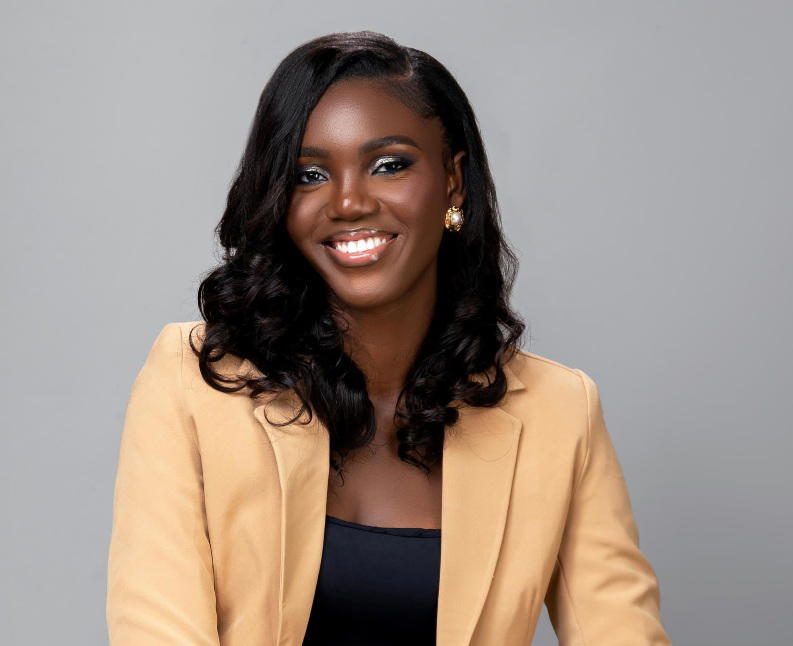
Olunaike Oyinkansola is a passionate product designer with a strong commitment to creating user-centered solutions that blend functionality with inclusivity. With several years of experience in the tech industry, Olunaike is driven by a desire to solve real-world problems and improve the lives of users across the globe. Throughout her journey, she has consistently pushed boundaries, tackled design challenges across diverse cultural contexts, and made strides in advocating for more inclusivity within tech spaces.
In this interview with Esther Onyegbula, Olunaike urges the government to champion policies that promote gender parity in STEM education and the workplace as she shares her inspiring journey, insights into diversity, and her vision for impactful design.
Can you share your journey of becoming a product designer and what inspired you to pursue a career in tech?
My journey into product design started with a fascination for solving problems through innovation. I’ve always been drawn to how things work and how design can shape user experiences. My decision to pursue a career in tech was driven by a desire to create impactful, user-centered solutions.
Over time, I realized that design in tech careers is about creating experiences that are inclusive and meaningful. The rapidly evolving tech industry inspired me to constantly challenge myself and explore new ways to integrate diverse perspectives into product development, while also considering how these perspectives impact businesses.
What legislative policies would you advocate for the government to implement to encourage more women into tech?
I would advocate for policies that mandate diversity in hiring and retention strategies within the tech industry. I would also support policies that promote gender parity in STEM education and the workplace, such as offering scholarships and mentorship programs specifically for women in tech.
Additionally, I would push for workplace anti-discrimination legislation to address bias and gender pay gaps while encouraging corporate incentives for companies that demonstrate a commitment to diversity and inclusion. Finally, I would advocate for policies that promote flexible work arrangements and childcare support, as these can greatly reduce the barriers women face in balancing career and family responsibilities.
What challenges have you faced as a woman in the tech industry, and how did you overcome them?
One of the biggest challenges has been breaking through the unconscious biases that persist in the tech industry. Being one of the few women in rooms dominated by men can often feel isolating.
I’ve overcome these challenges by building a network of mentors, seeking out inclusive work environments, and advocating for myself and others in spaces where diverse voices are often overlooked.
How do you ensure your designs cater to diverse user experiences, especially in a global context?
In my design process, I prioritize empathy and user research. I make a conscious effort to engage with users from different backgrounds, cultures, and abilities. Understanding the unique challenges different groups face allows me to design products that are accessible, intuitive, and adaptable.
I also collaborate with diverse teams to ensure multiple perspectives are incorporated, which is essential for creating products that resonate globally.
How do you think being a woman has influenced your perspective and approach to product design?
Being a woman in tech has sharpened my sensitivity to inclusion. I understand the feeling of being an outsider, which has deeply influenced my design philosophy. I approach each project with the mindset that no one should feel excluded from an experience.
This awareness translates into making more deliberate and intentional choices that accommodate a broad range of user needs, from accessibility features to considering cultural nuances.
What role do you believe diversity plays in tech, especially in product design?
Diversity is essential in tech because it brings in a wide spectrum of experiences, which leads to more innovative and inclusive solutions. In product design, a diverse team means more comprehensive user research, fewer blind spots, and a greater capacity to understand and meet the needs of various user demographics.
When we prioritize diversity, we design not just for the majority but for everyone, resulting in products that make a meaningful difference across communities.
What kind of global opportunities are you most interested in, and how are you preparing yourself to pursue them?
I’m particularly interested in opportunities that allow me to work on products with a global impact, especially in areas like accessibility and tech for social good. I’m continuously learning and staying updated on emerging technologies like AI, IoT, and sustainability-focused design.
Engaging in global networks, attending conferences, speaking at conferences, and collaborating with diverse teams also helps me prepare for these opportunities.
Can you share an example of a project that pushed your boundaries and helped you grow as a product designer?
One project that stands out involved designing a B2B platform for businesses and users in North Africa, where most of the users speak Arabic and French. As these languages are not my strong suits, I had to adapt quickly.
Additionally, writing and designing in Arabic is very different as users read from right to left, so the designs had to take this form. The project pushed me to balance high-tech innovation with simplicity and accessibility. I had to navigate cultural and language barriers while ensuring the product could work efficiently under constrained conditions, ultimately enhancing my skills in inclusive design and adaptability.
How do you stay updated with design trends and integrate them into your work?
I stay updated by following leading design publications, attending industry conferences, and engaging with global design communities. I also make it a point to collaborate with younger designers who bring fresh perspectives.
While I stay informed on trends, I always ensure that they align with user needs and not just aesthetics. My approach is to integrate trends that enhance usability, inclusivity, and functionality.
What advice would you give to young women aspiring to enter the tech or product design field?
My advice is to believe in your abilities, seek mentorship, and never underestimate the power of networking. Tech is a fast-paced field, but it is important to carve out your space and be confident in your unique perspective. Surround yourself with a supportive community, stay curious, and be resilient in the face of challenges.
Above all, stay true to your passion and purpose—it will be your anchor throughout your career.
How do you handle imposter syndrome, especially in environments where you may be the only woman in the room?
I’ve learned to reframe imposter syndrome as a sign that I’m challenging myself and growing. Instead of seeing it as a limitation, I use it as fuel to push harder and prove to myself that I belong.
Building confidence has also come from surrounding myself with supportive mentors and peers who remind me of my strengths. Self-reflection and celebrating small wins help me maintain perspective.
How do you advocate for inclusivity in your work, whether in team dynamics or in your design output?
In team settings, I actively promote inclusivity by encouraging diverse opinions and ensuring that everyone has a voice, regardless of their role. When it comes to design output, I champion user-centered design principles, ensuring that all users, regardless of ability, background, or geography, are considered.
What’s a significant lesson you’ve learned about balancing creativity with user needs during your years of experience?
The most significant lesson I’ve learned is that creativity should never come at the cost of usability. It is easy to get carried away with innovative ideas, but if the end product doesn’t solve the user’s problem or make their life easier, it’s not successful.
Balancing creativity with user needs requires constant feedback and iteration—creativity thrives best when it is aligned with real-world user experiences.
What projects or achievements are you most proud of from your career so far?
One of my proudest achievements was leading the redesign of the internal tool of a major digital bank in Nigeria to improve accessibility and functionality for its internal users and staff.
The project received recognition within the company not only for its design but also for its positive impact on how seamless and efficient it was for the users.
In what ways do you think product design can be used to create positive social impact, especially for underrepresented communities?
Product design has the power to address social inequalities by creating tools that are accessible, affordable, and relevant to underrepresented communities. By involving these communities in the design process, we can develop products that cater to their specific needs.
Whether it’s designing for differently-abled individuals or building platforms that amplify underrepresented voices, thoughtful product design can break down barriers and drive social change.
Disclaimer
Comments expressed here do not reflect the opinions of Vanguard newspapers or any employee thereof.