
By Jimoh Babatunde
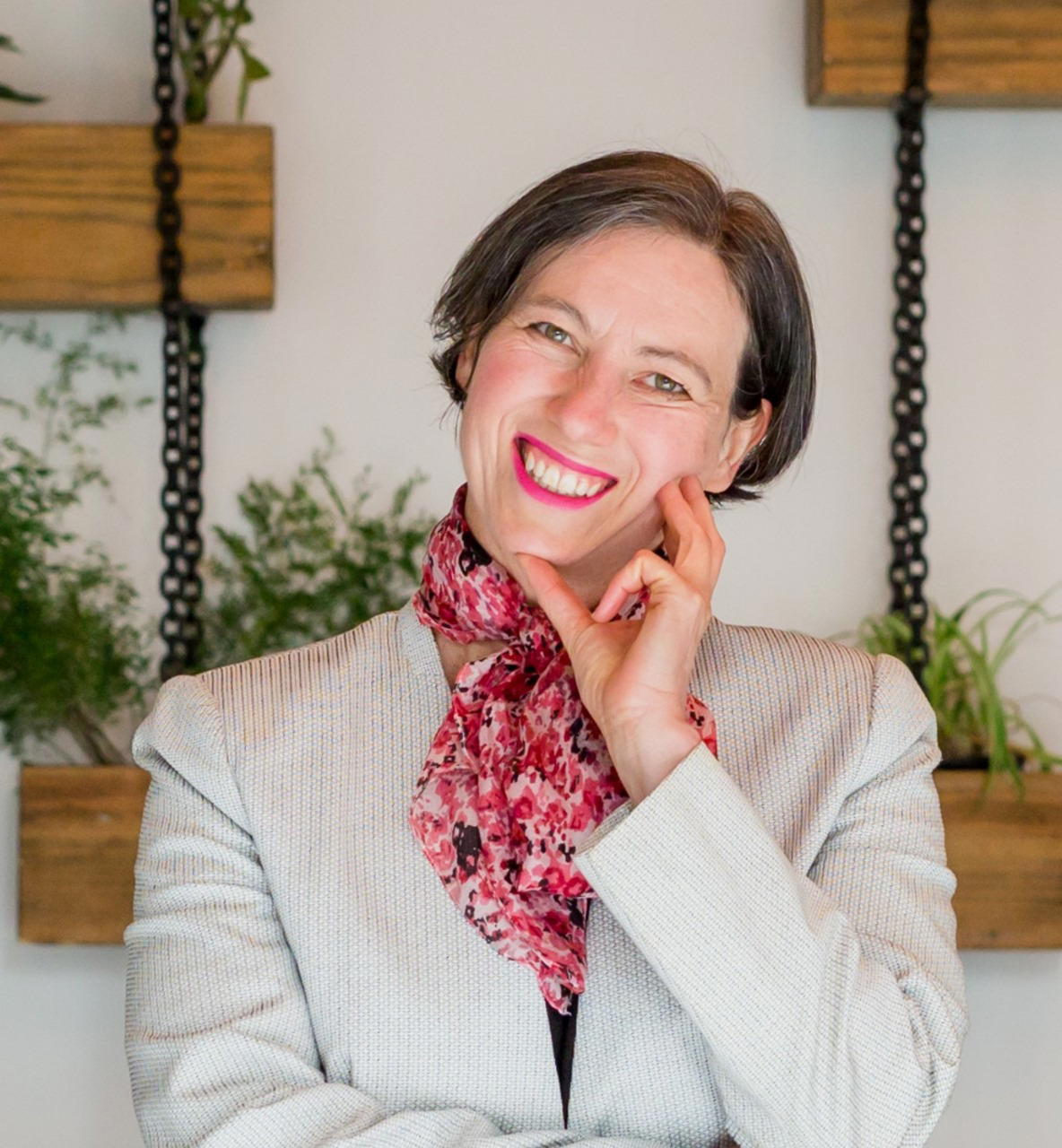
Like many who go to universities to study courses their parents want them to study, Rachel Buchner, the General Manager of the Delborough Hotel in Lagos, had to abandon her degree in English Language to follow her passion for cooking.
The South African had to apply to study at the prestigious Le Cordon Bleu School of Cooking in Cape Town, where she honed her skills before working for hotels in her native South Africa, Mozambique, and now Nigeria.
In this interview, Rachel Buchner, who has spent 32 years in the industry, shares her experience in the hospitality industry, and her passion for cooking and Nigerian food.
Here is an excerpt
When she joined the Delborough Lagos
My joining the hotel is a complicated story, because I worked with Dr. Stanley Nwachukwu, the chairman of the hotel, before the hotel was opened for about three years when there was still some planning to do. With kind of the touches in the hotel, like in the room and so on.
So, I gave him a document with some of my proposals, some were used and some were not used and they brought their own ideas and so on, which was also good.
How she came into the industry industry
I’ll tell you how I got into the hospitality sector. I was doing my Bachelor of Arts degree at the University of Cape Town, South Africa and found that I didn’t see where that was going to lead me. At the time I thought, I wanted to follow my passion, which was cooking.
So, after I finished my degree, which I was not interested in so much, I finished it to please my parents and then I applied at the Cordon Bleu School of Cooking in Cape Town called Silwood Kitchen, which is affiliated with Cordon Bleu in Paris.
From there I did my third year training at Singita, which at the time was a start-up company, but they ended up being the number one hotel in the world for many, many years running.
Even now there was an award list that came out yesterday. Top 50 hotels in the world and two South African hotels, Mount Nelson, which is in Cape Town, and Singita, were on there.
So I worked for them for 12 years from inception and start-up for a very long time that is how I got into the industry.
Where she has worked
Yes, yes. I’ve worked in Mozambique. I’ve worked in mostly Mozambique and South Africa, but I have worked also briefly in America, but just for a very brief period. I was sort of doing catering for a company that makes parts for Boeing for their Christmas events and so on.
If she cooks growing up
Very much so. So my favorite person in the whole world was my grandmother. And I cannot remember a time when I was so young that I wasn’t following her around in the kitchen.
She was a very good cook, very well-known for her cooking, and very industrious as well.
So she was always making jams and biscuits and rusks and various things in her kitchen. And she cooked a proper meal every day for lunch and for dinner.
She used to get up at 4.30 in the morning to make sure she got breakfast for the family ready because it was cooked breakfast with fruit salad, like a hotel, basically.
So that was her passion. And from very, very small, I used to follow her around and learn from her and watch her and spend time with her in the kitchen.
So that’s how I got to that being a passion.
Life in the hospitality industry
Look, the hospitality sector is only for people who have a passion for it. Because it’s one of those jobs, like being a doctor, a nurse, a policeman, even a pastor or an artist.
There are certain jobs where the hours required are more than in the average jobs. So a doctor, I think, even when they’re at home, they’re not off duty.
They’re always probably thinking about one or two patients. It’s a bit like that in the hospitality industry, the 24-7 industry. You have guests every hour of the day.
It doesn’t end at 5 pm. and you go home and you shut the office door. So it’s a different type of business to many. Same for nurses firemen or policemen. It’s not restricted to business hours.
And so unless you have a passion for it, you can probably find it’s too much. But luckily I have a passion for it, so I love it.
Hospitality industry in South Africa and Nigeria
Well, it’s much more developed in South Africa. South Africa is actually world-renowned for its hospitality and also a lot of South African trainers will train, for example, at hospitality schools in countries like Dubai and so on, because we have a strong hospitality sector that is formalized.
And it goes back decades and decades. So, for example, the Cordon Bleu School where I went to, they’ve been there since like 1952 or something like that. And internationally known.
And there’s now a newer cooking school in South Africa that’s ranked in the top ten in the world, for example.
So it’s a very well-established industry in South Africa and very competitive and very much competing on the world stage.
Also very diverse because of the South African bush lodge industry and so on.
Having said that, with this property and because I haven’t worked in others in Nigeria, what I found very interesting is the passion, the drive and the work ethic of Nigerians, which I find very refreshing. I won’t say more.
But Nigerians are very proud, hardworking people, who truly don’t mind putting in more, you know, for them it’s more about the outcomes than the hours. They are very committed staff and very, very hardworking and happy with it. So I find it very interesting.
I think if this is a microcosm of Nigeria, the world better watch out for Nigeria.
Desirability of luxury hotels in Nigeria today
I remember when the housing market crashed, I think it was 2008 and everyone was panicking and suddenly people lost so much of their net worth. Yeah. So it wasn’t maybe hard cash, but maybe their house worth, I don’t know, $50,000 and suddenly it was only worth $10,000 and everyone was panicking.
Do you know that the rich people are always rich? They still use the luxury market. The luxury market is the most resilient against that kind of hardship. Now, I’m not going to have a moral view on it.
And I’m sure people will have a moral view on it, but the luxury market is more resilient against economic fundamental problems that affect the man in the street in a very dire way.
So I’m aware that the Nigerian economy is in a very dire strait and that there are lots of people truly suffering. So I saw an article just, I think, yesterday in one of the newspapers where they were showing the cost of a meal for a family of four per day and that kind of thing.
So I know in Nigeria, the vast majority of Nigerians are just trying to make it through at the moment.
Niche of Delborough Lagos
So our niche is not necessarily dining, accommodation or conferencing, but it’s for the 1% of the 1%. That’s our niche.
Also, you’ll see we’re boutique. We don’t have a huge conference hall. We’ll have just the boardroom for the C-suite executives. We won’t have a huge dining room. It’s only for the people who want to wear their Sunday best clothing and come.
So also the rooms are, because they’re very luxurious, they’re not within reach for everybody.
We’re an aspirational product. We would like every Nigerian to experience it some time in their life, to aspire to get to a place in life where they can come to a place like the Delborough and they don’t have to travel to the UK or Paris or London. They can come to their five-star hotel in Nigeria.
The aspiration of the hotel moving forward
Well, we want to expand as a group and we have travelled to Angola to meet the President.
He stayed here, he loved the product and he said he really wants to replicate it in his own country where we have a plot of land already to build the next Delborough
So our aspiration, our personal vision for the brand is to export this type of hotel, this product to all over the world. Starting with Angola.
And I know that some of our staff, for example, who are very faithful to the brand and loyal to the brand, often talk about when we open the Delborough in London can I go? So that’s how the staff see the future.
This is what we’re all working towards. Soon Delborough won’t be a stand-alone hotel in Lagos. It will be in London and as a Nigerian when you travel there, you might choose to stay there as a hotel brand from your country.
Experience with Nigeria food
For me personally. I have very limited food experience. I don’t go out much because I’m looking after the product at the moment. But from the restaurants that I have sampled and the food that I have eaten, I’ve been very pleased. I’ve enjoyed myself.
Also, some of the Nigerian dishes that I’ve tried, I really like them. I don’t, unfortunately, personally, I don’t like jollof rice. But what I love, for example, is fried sweet potato with egg sauce. I really like that and I eat it often.
There are things, part of the Nigerian food traditions that I really love. And I can even see that I can understand why jollof rice is good because it’s got a real flavour to it. Yes. It’s a very full-flavoured flavour.
Yes, the flavour that attracts people nearer to it. Yes, definitely. So I can even sometimes imagine that if I ate it more often, would I learn to love it? I can imagine I could.
Because it’s very robust in its taste.
What she appreciates in the hotel
What I appreciate is the detail, the level of detail to which we’ve gone as a company to make sure that our guests experience the ultimate luxury.
So you not only get slippers, you get pyjamas as well. You not only get one towel, you get several towels. You not only get a light switch, you get a smart technology light switch. You can lie on your bed and you can open and close your curtains using smart technology.
We give guests even a tablet for their use in the room. We have a very well-stocked minibar, which people can enjoy. We do beautiful turndowns.
So it’s just lots of, there’s not one big thing. It’s lots of little details that combine to create a luxurious experience. Thank you
Disclaimer
Comments expressed here do not reflect the opinions of Vanguard newspapers or any employee thereof.