
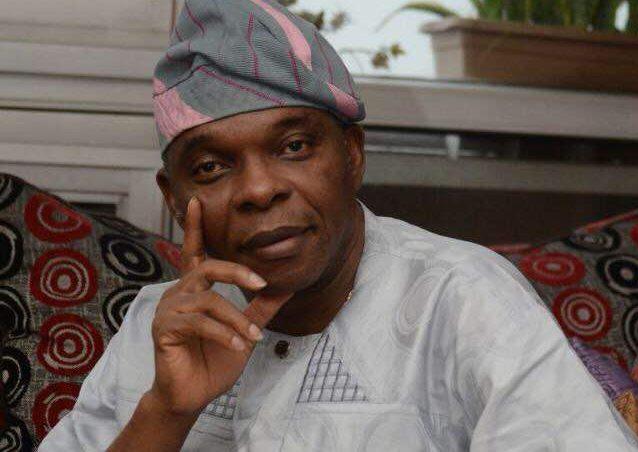
Muyiwa Adetiba
Some forty years ago, the state of our hospitals was one of the reasons given for the coup which toppled the Shagari government. Nigerian hospitals, declared the spokesman for the coup plotters, had become mere consulting clinics. Many of those who planned that coup are gone. Some however, are still alive. If they thought things were bad enough then to cause a change of government, I wonder what they would say about the state of our hospitals today.
I also wonder if they would say their stay in power moved the needle positively. Forty years ago, we had qualified professionals in many fields of medicine who were experienced but were largely hamstrung by lack of facilities and bad administration. Forty years ago, we had young doctors who were reasonably well paid and didn’t consider emigration as their only way out of poverty and frustration. Forty years ago, hospital bills were largely affordable with many companies and institutions picking up bills on behalf of their staff.
Forty years ago, pharmaceutical drugs were largely available and even the low income earners could afford many off the counter drugs. Yes, things were bad forty years ago, enough maybe to be cited as a reason for a coup. But nobody, not even the pessimists thought things could degenerate to this extent. This degeneration which had been steady over the years, took a sharp decline in the past ten years with the ‘Japa syndrome’. Almost every young medical personnel I meet these days wants to leave the country.
Today, our hospitals are worse than consulting clinics because we neither have experienced professionals nor facilities in critical numbers. What has remained, like a bad cancer eating the system up, is bad administration. Or worse, indifferent administration. What has remained is our laid back attitude – and this cuts across the ranks – towards urgent matters of life and death. I hope the recent high profile but preventable deaths, including that of a high ranking police officer, would shake things up a bit. But I have my doubts. Not when those in charge of policy and the purse strings have their physicians abroad.
Wrong diagnoses can happen anywhere in the world. Which is why people are usually urged to seek a second opinion whenever possible. Last week, I met a lady I hadn’t seen in over ten years. She was looking very good for a 70 year old. I couldn’t help but remember that she was diagnosed with breast cancer some fifteen years ago only to be told in the UK that what she had was not cancer. I wonder what would have happened if she didn’t have the means to go for a second opinion abroad. Recently, the social media was awash with the story of a younger colleague of mine who believed God gave him a second chance given his medical travails.
According to him, he drove himself to the hospital for a corrective procedure. One wrong procedure led to another and he found himself battling for his life. Despite connections that got the CMD (Chief Medical Director) involved, his respite only came when he travelled abroad. You can imagine the plight of the average Joe who neither has the connections nor the money to travel. While wrong diagnoses are more likely in smaller private hospitals given the relatively young level of experience of their personnel, the issue of bed space is endemic in government hospitals. You will need a lot of connections, and luck, to get a bed space at any government hospital in Lagos. Another development is paying separately for a care giver for those who are too ill or too old to take care of themselves while on admission. You wonder if our nurses are no longer trained for, or disposed to, care giving.
But by far the most worrisome is the prohibitive cost of Medicare in Nigeria. The bills, from tests, which government hospitals insist on at every turn, and which must be done at specific centers, to consultation fees, to admission and drugs, cost and arm and a leg. What the private hospitals, especially those new, big, shining ones, charge patients is best left to imagination. One thing is clear; the poor have no chance in hell of surviving a serious illness within Nigeria’s healthcare system today. Even the rich, unless they have medical insurance, would reel under the charges except they have very deep pockets.
Just last week, a friend told me we are all one illness away from poverty. She was not joking. In the past fifteen months, five people close to me had to be admitted in private hospitals. None of them paid less than fifty million Naira for admissions ranging from three weeks to three months. The only one who survived to tell his story, was not among the two who voluntarily went to their hospitals because they felt funny. To spend an average of 50 million Naira for unplanned medical treatments and still die is a bit scary. That is not to gloss over the fact that very few people are even worth that amount in the country.
Monday is the 23rd anniversary of the day God gave me a second chance at life. Five days after people lost lives at the 9/11 terrorist attack in New York, I was battling for my own life in Lagos. It was a day God reminded me there are good people in Nigeria. The okada man who stopped to carry me where I had been abandoned after being shot by armed robbers and took me first to the nearest private hospital and then to LUTH did not ask for a kobo – there was none to give anyway.
The doctor who left his hospital because he felt I would not make it alone to LUTH alive did not ask for a kobo. More than that, he had the presence of mind to stop for a police report and enough concern to talk to cynical nurses who saw me bleeding yet abandoned me with ‘who will pay for this one’. He still felt concerned enough to find a phone – there was no GSM then – to call my home. Of course there was no bed space until my wife’s brother who had his postgraduate training at LUTH came an hour later. I remain grateful to St Nicholas, a private hospital which eventually performed the necessary surgeries after the initial attitude at LUTH had led to a loss of confidence.
At this period every year, I reflect on many things including what I have done with the second chance God gave me – a close friend couldn’t survive from a fairly similar incident ten years ago. I also wonder if I would have survived had it happened today – though my doctor friends say facilities have improved in the bigger private hospitals. Or if my survival would have resulted in penury considering the current cost of medical care. Maybe that coup forty years ago using the state of our hospitals as one of its reasons, was premature. We are in a state of emergency to use a medical term.
Disclaimer
Comments expressed here do not reflect the opinions of Vanguard newspapers or any employee thereof.