

By Akose Enebeli
In today’s digital era, where the internet and social media dominate, people are questioning norms and challenging old paradigms.
One topic that often comes up is the size of bathrooms and toilets, especially the windows, sparking the inspiration for this article.
Let me start by saying that these are my personal observations and opinions, and I welcome conversations on this topic. Historically, toilets were often detached or located at the back of buildings, likely because they were primarily seen as places for waste disposal, with concerns about odor being a significant factor.

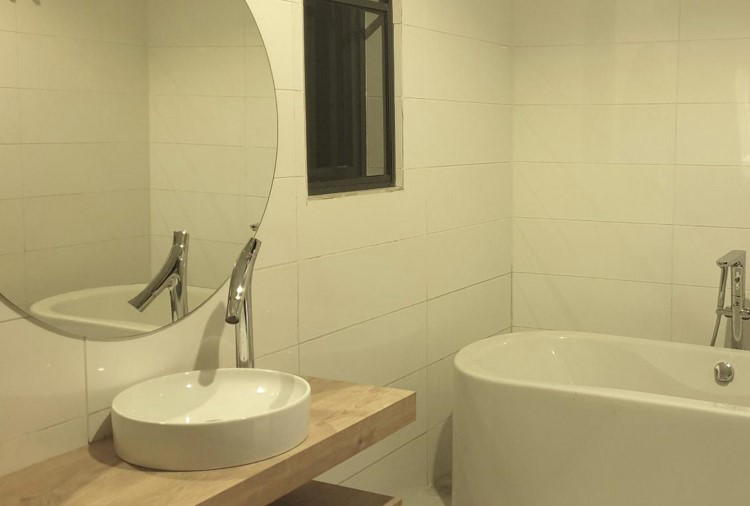
However, times have changed. Nowadays, some see the toilet as a sanctuary for relaxation and introspection. Many even claim their best ideas come while “doing their business” in the bathroom.
As an architect and designer, celebrating the evolution of the toilet is important. It’s crucial to understand and meet your client’s needs, but also to recognize the limitations that come with designing spaces in different parts of the world. While it’s tempting to compare our spaces to those in more developed countries, certain factors, such as climate and resource availability, impact design decisions here. For instance, in some countries, I’ve observed that many bathrooms don’t have windows. Initially, I found this strange, but I realized that with stable electricity and the use of artificial lighting and extractor fans, this setup can work well.

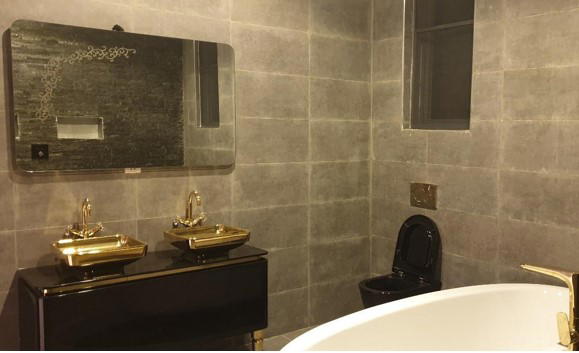
So, why are many toilets and bathrooms small, and why do they often have tiny windows? Here are a few reasons:
- Preference: Some people prefer smaller bathrooms because they see them as functional spaces for quick tasks—showering, using the toilet, and brushing teeth—where time spent is minimal. Small windows add a sense of privacy.
- Priority: For many, living spaces take priority over bathrooms, as more activities occur in the living areas. Consequently, less space is allocated to bathrooms and toilets.
- Cost: Finishing a bathroom can be expensive, so keeping it small can help reduce costs. This also applies to window sizes, as glass is often costly.
On the other hand, there’s an increasing demand for larger bathrooms, often for reasons opposite to those listed above. For example, in recent times, I have been asked by a couple of clients to include a separate toilet cubicle within or outside the master bathroom (note that these are bathrooms with a toilet bowl and bidet already) and of course, I had to know the reason for the request: I was made to understand that in some instances when a couple want to “do their business” at the same time, one person may not be able to tolerate the other. Hence the decision. Could this be a growing trend? Perhaps!
In conclusion, bathroom sizes are often a reflection of personal preferences, priorities, and cost considerations. Whether small or large, a well-designed bathroom should cater to the needs and comfort of its users.
Disclaimer
Comments expressed here do not reflect the opinions of Vanguard newspapers or any employee thereof.