
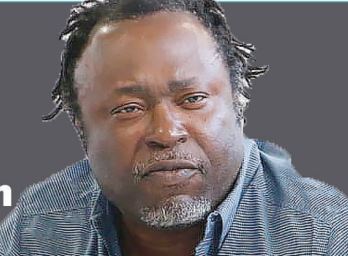
Obi Nwakanma
By Obi Nwakanma, Columnist, Arts Editor
As things go, I might be right now, the longest-running columnist on the Sunday Vanguard, still probing the contours of Nigeria, and plumbing the craft of opinion journalism in what must be Nigeria’s most piquant newspaper, the Vanguard. Time does fly.
Read Also: Vanguard @ 40: How it all began
Time certainly has been on the wings of the “Orbit,” my column on the Sunday Vanguard, because it does feel only just like yesterday, when I came to the Vanguard after a very brief stint at the Guardian as a rookie, and as a Staff writer on The Sunday Magazine, TSM, where I had been shown the door “for intellectual arrogance.” And this is not a joke: the door-showing letter sacking me from the TSM by the publisher, the beautiful Chris Anyanwu, plainly said I was removed for “intellectual arrogance.”
My ouster had caused quite a rift between Chris Anyanwu, and the Editor of the magazine, the late, very unforgettable, Ely Obasi. But that is a matter for my memoirs. Incidentally, Ely himself was a veteran of the craft, and a pioneering member of Vanguard’s editorial team. Incidentally also, Uncle Sam, the world’s greatest publisher by my own very estimation, did not mind a bit of intellectual arrogance. He was ex-Ughelli. I was ex-Umuahia.
Those two Government Colleges often did duke it out at Cricket, in those years of the “Western Tours,” when Nigeria still had a very robust, very sophisticated, very well organized system of public education. We had met one evening at the home of the late Torch Taire. In those days, he used to take a dip in Torch Taire’s swimming pool.
I told him I could write a cricket column for the Vanguard. He took a quick look at time, and put on his skeptical face, but asked me to send him some sample pieces. Which I did. He invited me to the Vanguard, and asked me what I knew about features. I gave him an outline of what I could do with the Features pages of the Vanguard. The next week, I got a letter appointing me as Group Features Editor of the Vanguard.
I reported to the paper one Monday morning, in January 1994, and Uncle Sam took me by hand to Frank Aigbogun’s office, and said, “I want him to be my features editor…” in this off-handed way that was both open-ended and final. Then he left. Frank sat me down, and we talked about this and that – mostly newsy stuff from the still evolving drama of the post June 12, 1993 elections.
Then I left, to find my paces. I was looking forward to editing the features pages. I had plans. I was roiling with ideas. The Investigative features. The magazine. The Life pages. The literary life of the nation. I was even already toying with a new thrust in city life reports that might just extend Tony Okonedo’s very lively society page. But this would be social history from down-up, not from up-down. Tony wrote about the high-and-mighty. I had ideas to balance it with a new kind of society page.
A lively, weekly social reports of the bars and shebeens of Lagos; the dark spots; the places of hedon; the interesting lives of the common man in his social habitation. I wanted to call it the “Ajegunle Notes” or just borrow the title of Cyprian Ekwensi’s “People of the City.” It was not just going to be another “Wakabout”, it was going to be pretty literary stuff; a literary report of city life that would appeal to the serious reader, and provide some context to the social history of the city. It was going to be, as I said, social history from the bottoms-up. I had just discovered Eric Hobsbawm, and I was reading Howard Zinn’s A Peoples History of the United States, and I was getting very fascinated with the idea of how ordinary people made history, rather than history made by iconic statesmen or heroes. I was raring to go. I had started making notes of the people I wanted to ask to come to Features to make my team.
I had a model – the English weekly, The New Statesman – which luckily, was still being delivered to the Vanguard newspapers library. But it was not that easy. I soon discovered that Vanguard had its complicated network of loyalties. My first week in the Vanguard was marked by hostility. I was coming to take Mideno Bayagbon’s job! Folks like Blessing Okpowho were not going to have any of it. They showed me pepper.
They made it so clear that I was persona non grata, should I dare. My first week at the Vanguard left me reeling and feeling literally like an impostor, and I was unanchored. One day ended in fisticuff at the Features office. Yes, we journalists can throw punches too. This was when I became friends with the now late Yereba Kina, who pulled me aside, and said, “It is tough out here. But don’t let it get to you.” He was right in the end. I would later become great friends with Blessing, and saw the other side of him too.
But the matter was resolved very craftily by the editor, Frank Aigbogun, who called me to his office a week later, and told me to be wise to the situation. I was in the middle of some high-wired editorial politics. I was to leave Features be, but he broke the Literary page from it, and made it its own editorial line unit, and appointed me Group Literary Editor. But it was also then that Fola Arogundade – jolly good man – editor of the Sunday Vanguard, stepped in. He would take me. He wanted me assigned exclusively to the Sunday Vanguard, and that is how it all began. I could never have been luckier to have a more supportive editor. Fola Arogundade was not only a master of his game, he was clubbable and worldly. Very open-minded. I literally worked as Assistant Editor of the Sunday Vanguard from then. He trusted my judgment.
I think I brought something he always cherished to the editorial conferences of the paper: a discernment, and a sense of drama and idealism, as well as some intellectual rigor. We had a good team. Sonny on the subs, Dayo, John (Nwokocha), Kunle Oyatomi was political correspondent, and the inimitable cartoonist, Dada Adekola, whose “Sarge” character first found home on the Sunday paper, just as I was arriving. The most vital member of that team, however, was our “Rebellious” or “Able” Abel – the Copy Assistant – who organized us all.
I loved the Vanguard newsroom. It was full of spirit. I think Vanguard stood out in originality, and in its approach to news. There were no better sports pages in any Nigerian newspaper than Vanguard sports, under the editorship of the redoubtable Onochie Anibeze, without question, dean of Nigerian sports journalism; Vanguard’s contribution to Labour reports is without compare – Owei Lakemfa and Funmi Komolafe are national treasures, and Joe Ajaero, now President of the Nigerian Labour Congress, was a fierce Labour reporter while I was there. Okoh Aihe, took Tech and Communications report to new levels of insight, and literally presaged the digital revolution which later swept through Nigeria at the end of the military dictatorship. On the Society page, Tony Okonedo, dapper and always finely turned out, who later moved on to Shell, was without compare. He turned scandal and social gossip into high art.
The late Ogbonnaya Amadi – restless and complicated – was on the ground when Nollywood began, and with the now equally late Yereba Kina, brought the entertainment industry into the consciousness of Nigerians. I think in all humility, that my contribution to the Vanguard was that the Sunday Vanguard Literary Pages became the benchmark for literary and art journalism in Nigeria through much of the 1990s.
I organized it, and gave it a memorable touch. From our feedbacks, the Arts and Literary Vanguard on Sundays was the go-to place for readers looking for fresh, readable, incisive reports and discussion on contemporary Nigeria arts and literary culture. Why? Because Vanguard was conceived as a people’s paper. It was accessible and serious. It was for the educated professional, and middle class reader, as well as the general reader looking for both information and entertainment.
It did not have the pretentions of marbled, highfalutin, la-di-da policy-wonking papers with their narrow audiences. Yet, its words were usually on marble. It reached the core of Nigeria, and was read both at the bougie recesses of Ikoyi, as well as the open markets and streets of Alaba-Suru.
I had the opportunity, not only to define the Arts and literary pages, which I then handed to the novelist Helon Habila and the now late Macphilips Nwachukwu in 1999/2000, when I left the scene. I began writing the “Orbit” column in January 1994, raised holy hell, and escaped some really hairy moments in the Abacha years.
I should say, I with Pini Jason, Alhaji Animashaun, and Dele Shobowale, and joined later by Chuks Iloegbunam, made the Vanguard tickle. I am proud of the work we did in the Vanguard, with some of the most exciting journalists of any era. The Canal – the pub by the Lagoon – with its sumptuous Monday editorial lunches and the “beering,” did help to fuel our energies.
I think the publisher of the Vanguard, Sam Amuka, took it quite literally, that the best brains were preserved in alcohol. Uncle Sam remains the best publisher any journalist could have. I observed him at work: his reach, his diplomacy, the hard knuckles that came with the soft touch. I feel lucky and blessed for the opportunity he gave me to shine and show my paces at the Vanguard.
Disclaimer
Comments expressed here do not reflect the opinions of Vanguard newspapers or any employee thereof.