By Prisca Sam-Duru
Hot on the heels of two international awards this year from Germany and the Netherlands, KininsoKoncepts continues to showcase its commitment to excellence and innovation in the world of theatre, media, and film.
Coming in a season filled with concerts, film shows, and diverse events, KininsoKoncepts lures stage lovers into a refreshing detour from the ordinary, embarking on an unparalleled journey with “Waterside” a live and digital theatre project that promises to be a breath of fresh air.

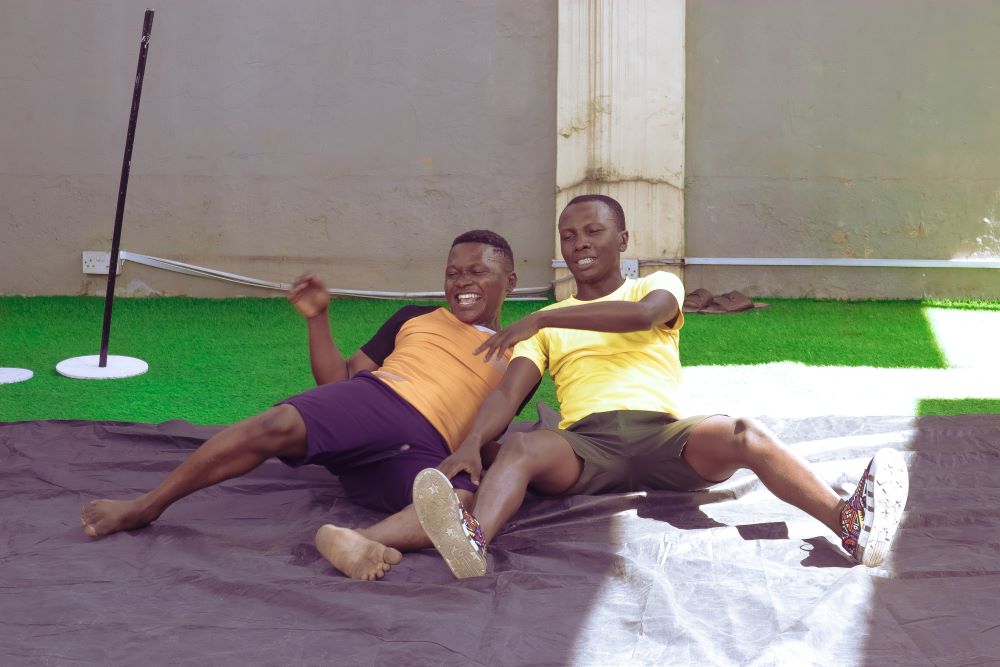
Amidst the series of December events, “Waterside” stands out as a unique and unprecedented experience; it is hilarious, magical, and emotional. The play was written and directed by Joshua Alabi, a phenomenal director, writer, concept creator, and creative strategist who uses storytelling to create exceptional stories with deep-rooted research into culture and history.
Waterside, which is produced by Angela Peters, features Moshood Fattah from the ‘Far from Home Television’ series and Stanley Okeke.
The play narrates the story of two friends, Osarume and Oghenovo who grew up under the same roof as brothers. They have killed a chicken which turns out to be the totem of Pa Barclays, a community elder. The man has died and his family will stop at nothing until the culprits die of the same fate as their Father. Oghenovos Mother has gone to beg the priest and she has a choice to pick one child to live and one to die among the 2 brothers. Growing up in a Christian family, she prevents them from learning the culture.
This play unravels the culture of totemism and taboos, plagues in the Niger Delta, and the significance of culture, family, memories, and dreams, delving into historical issues of oil exploitation and struggles of Nigerian youth as well as unemployment.
Waterside, staging 2nd, 3rd, 9th & 10th December 2023 at the Agip Recital Hall, Muson Centre, Onikan Lagos, 2 pm & 6 pm (2 shows daily), is a call to witness a narrative that transcends the norm. It offers the audience a chance to be immersed in a story that intertwines tradition, technology, and the rich cultural tapestry of the Niger Delta.
The play, set in the Niger Delta region of Nigeria explores its story from the eyes of 2 main characters through the theme of memory, family, poverty, and childhood. But its core concept hinges on the subject of taboos and totemism, forest trees, animism, the links between the sky and earth, symbolism, and links between the spiritual world of ancestors and people. Rituals and ceremonies that draw on these symbols often serve to link people with their cultural heritage, as well as their ancestral past. In some cultures, there is a strong belief that a child’s development is closely tied to the growth of a tree. If the tree’s growth declines, people believe that the child’s health is at risk and may call upon a healer for help. When a child falls sick, they are brought to the tree for treatment.
When the tree begins to bear fruit, it is believed that the child has come of age for marriage. In such cultures, there exists a close bond of life and fate between a person and an animal or natural object. This bond is so strong that if one partner is injured, sick, or dies, the other is believed to face the same fate.
There are ideological, mystical, emotional, reverential, and genealogical relationships of social groups or specific persons with animals or natural objects, the so-called totems. People generally view the totem as a companion, relative, protector, progenitor, or helper, ascribe to its superhuman powers and abilities, and offer it some combination of respect, veneration, awe, and fear. Most cultures use special names and emblems to refer to the totem, and those it sponsors engage in partial identification with the totem or symbolic assimilation to it. There is usually a prohibition or taboo against killing, eating, or touching the totem.
This play unravels the culture of totemism and taboos, plagues in the Niger Delta, and the significance of culture, family, memories, and dreams, delving into historical issues of oil exploitation and struggles of Nigerian youth as well as unemployment.
Waterside, staging 2nd, 3rd, 9th & 10th December, 2023 at the Agip Recital Hall, Muson Centre, Onikan Lagos, 2pm & 6pm (2 shows daily), is a call to witness a narrative that transcends the norm. It offers the audience a chance to be immersed in a story that intertwines tradition, technology, and the rich cultural tapestry of the Niger Delta.
The play, set in the Niger Delta region of Nigeria explores its story from the eyes of 2 main characters through the theme of memory, family, poverty, and childhood. But its core concept hinges on the subject of taboos and totemism, forest trees, animism, the links between the sky and earth, symbolism, links between the spiritual world of ancestors and people. Rituals and ceremonies which draw on these symbols often serve to link people with their cultural heritage, as well as their ancestral past. In some cultures, there is a strong belief that a child’s development is closely tied to the growth of a tree. If the tree’s growth declines, people believe that the child’s health is at risk and may call upon a healer for help. When a child falls sick, they are brought to the tree for treatment.
When the tree begins to bear fruit, it is believed that the child has come of age for marriage. In such cultures, there exists a close bond of life and fate between a person and an animal or natural object. This bond is so strong that if one partner is injured, sick, or dies, the other is believed to face the same fate.
There are ideological, mystical, emotional, reverential, and genealogical relationships of social groups or specific persons with animals or natural objects, the so-called totems. People generally view the totem as a companion, relative, protector, progenitor, or helper, ascribe to it superhuman powers and abilities, and offer it some combination of respect, veneration, awe, and fear. Most cultures use special names and emblems to refer to the totem, and those it sponsors engage in partial identification with the totem or symbolic assimilation to it. There is usually a prohibition or taboo against killing, eating, or touching.
Disclaimer
Comments expressed here do not reflect the opinions of Vanguard newspapers or any employee thereof.