
By Dickson Omobola
A Civil Society Organisation, Human and Environmental Development Agenda, HEDA Resource Centre, has bemoaned the rate at which Nigeria’s wealth is being siphoned, saying the statistics to back it up is staggering.
The group stated that the Nigerian system encourages corruption, adding that graft is the major impediment to national growth in the country.
According to them, if corruption cases in Nigeria were not given the same attention as election petitions, the nation would continue to decline in all facets.
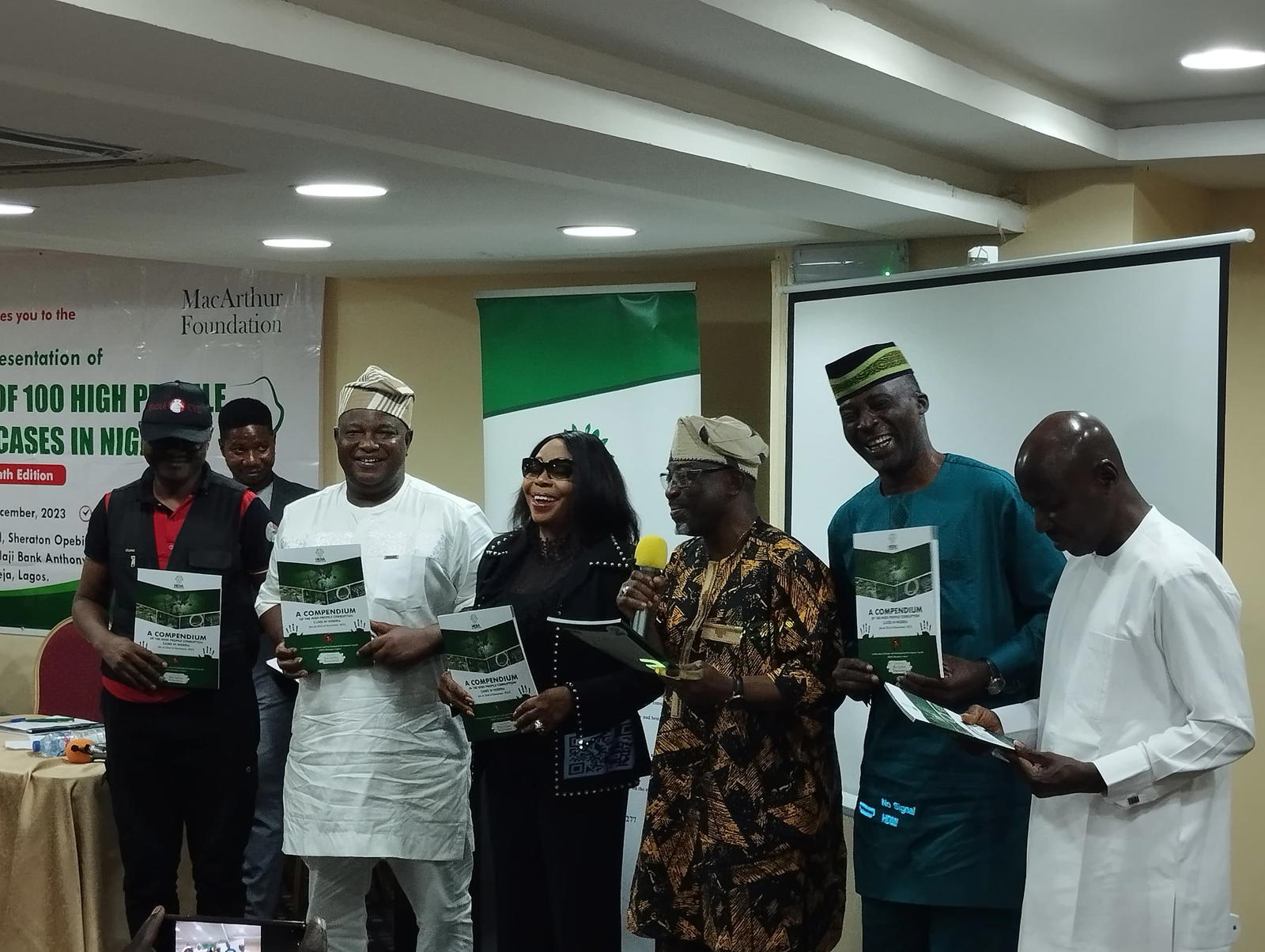
HEDA spoke at the ‘Public Presentation of the Seventh Edition of the Compendium on 100 High Profile Corruption Cases in Nigeria’, in Lagos.
The event, which was supported by MacArthur Foundation, had stakeholders in the anti-graft war and senior legal practitioners that include the Commissioner of Justice and Attorney-General of Lagos State, Mr Lawal Pedro, SAN; Mr Wahab Shittu, SAN; Justice Mojisola Olatoregun, retd., in attendance.
Shittu, in his keynote address, said: “The single most critical impediment to our developmental process in Nigeria today is corruption. Majority want to profit where they did not sew. So, we need to resolve to fight corruption.
“Why can’t we replicate what is taking place in election petitions with anti-corruption cases? Why can’t we have a law that states that no anti-corruption case can take more than six months? It is shameful for a case of corruption to last up to six, seven, eight and 10 years. What kind of country is that?
“When there are consequences for criminal infractions, corruption will reduce. Our resources are being pilfered by very few. If we look at the statistics of our wealth that is stolen, it is amazing and we need to do something about that. We need to put a mechanism in place for our stolen wealth to be recovered.”
Also speaking, Pedro said: “Corruption cases must be given the same attention as election petitions. Our laws should be reviewed and brought in line with global practice. Each and everyone of us must be part of the fight against corruption in Nigeria.
“We cannot leave it all to the EFCC or security agencies. When you hear or see something that is corrupt-related speak out. Fighting corruption should also be in accordance with the rule of law. For anybody to achieve justice, he or she must do so in accordance with the law.”
Speaking, Chairman of HEDA, Olanrewaju Suraju, said: “We are yet to really see the direction President Bola Tinubu intends to go on corruption. It is not just about appointments, there must be a loud statement that would tell Nigerians that there is a commitment to ensuring that corruption isn’t accepted.”
In addition, Olatoregun, who spoke on the compendium, said: “As we all know, corruption undermines the very fabric of our society, eroding trust, hampering economic development, and obstructing the path to justice and equality. It is important to note that the annual publication of this compendium is not merely a compilation of legal cases, it is a chronicle of our ongoing battle for justice and accountability.
“It represents a beacon of awareness, an instrument of change and a catalyst for reform within our justice system. Each case documented within its pages tells a story – a story of our judiciary’s resilience, the determination of law enforcement agencies, and the unwavering commitment of legal professionals. We are reminded of the challenges we face in the ongoing fight against corruption.
“This compendium serves as a repository of factual information on 100 high profile corruption cases. It details the parties involved, case numbers, nature of offenses, amounts implicated, filing years, court proceedings and current status. Beyond the documentation, it stands as a testament to our collective commitment to tackle corruption and its detrimental effects on our nation’s development.”
Meanwhile, the Executive Chairman of the Economic and Financial Crimes Commission, EFCC, Mr Ola Olukoyed, represented by Mr Michael Wetkas, said: “For us at the EFCC, we remain committed to working with the corruption prevention template recommended by United Nations Convention against Corruption, UNCAC.
“In driving this prevention focus, the Commission under my watch will prioritise these focal areas: collaboration and synergy with local and foreign law enforcement agencies, professionalism and strict adhererice to rule of law as the absolute minimum in all activities of the Commission.”
Disclaimer
Comments expressed here do not reflect the opinions of Vanguard newspapers or any employee thereof.