
By Dele Sobowale
“Those who do not remember the past are condemned to repeat it.” – George Santayana, 1863-1952
President Tinubu reminds me of the man struggling with alligators in a swamp. He can be forgiven for forgetting that his first objective was to drain the swamp. His “friend” Atiku, had just added to his worries in life. Being accused of certificate forgery is very serious matter for any official. For a President, it is politically fatal. Trust is the most important attribute a leader can have. To lose that is to lose everything.
While we all wait to see what the Supreme Court will do with the new evidence, it is important to point out that as President, Tinubu still has some duties to perform. To be candid, the particular assignment, the 2024 budget, would have proved a daunting task for any successor to Buhari. New governments with new people in charge of ministries, frequently experience difficulties developing budgets which are feasible, address the election promises of the President and can be implemented by them. It is not always easy.
Tinubu, and Buhari before him, made difficult work a lot tougher in three ways. They failed to appoint their ministers as soon as they came into office. One minister, appointed in 2015 by Buhari, confessed to me that he nearly resigned. He had never worked so hard in his life; but, he knew that the stress would have been much less if they were appointed sooner. Two, the large number of ministers meant more people trying to see the President for clarifications. In the end, most of them turned the matter to the Permanent Secretaries to sort out. Three, the longest delays were experienced in new ministries. Whereas long-established units could rely on past experience to help them, new ministries were often at a loss regarding how to budget. Tinubu has repeated all the mistakes of the past; and he has added more causes for error.
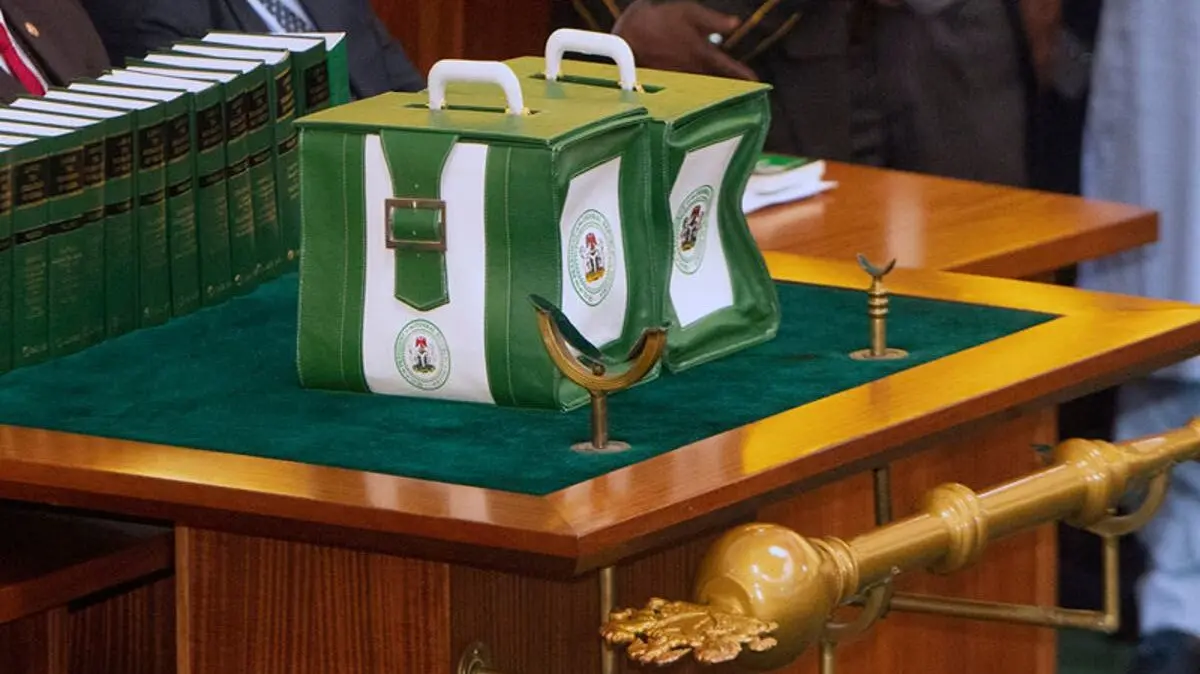
The 2024 budget should by now be nearing completion; outlines of it should by now be filtering into the public space before the package is delivered to the National Assembly, NASS.
What has happened to MTEF?
The Medium Term Expenditure Framework, MTEF, a regular feature of the Obasanjo and Jonathan administrations, has apparently been discarded by the Buhari government. This is another demonstration of the incompetence of the last government. MTEF, usually covering three years enable governments to budget projects and programmes which cannot be completed in one fiscal year. This approach to budgeting, if faithfully followed, reduces the incidence of abandoned projects because the sources of financing are identified in advance and arrangements are made accordingly. By now, NASS should have MTEF for 2024, 2025 and 2026. But Mr Wale Edun is new to Abuja and he has inherited a monumental mess. Like Tinubu, he can be forgiven for not remembering that the MTEF precedes the budget for next year.
If, however, the FG decides to release the MTEF, then they will be well-advised to avoid the errors of the past. Invariably, the package starts with certain vital assumptions: the volume of crude oil expected to be exported per day, per month, per year; the average global crude price ($); the crude revenue ($); the projected exchange rate ($); other sources of revenue and expected income ($,N); projected average interest rates for each year; inflation; GDP growth rate for each year; gross expenditure; recurrent expenditure and capital expenditure; expected deficit (-) or surplus (+); and how to finance the deficit – which invariably results from all operations. MTEF precedes the budget; and the current year projection seldom varies from the budget itself. Right now, we have no MTEF from the Tinubu administration. Thus, we have no idea what to expect next year and in the next three years. But, we should learn several lessons from previous MTEFs submitted to the NASS from 2012. They were, at best, academic exercises; and at worst, grossly misleading. Consequently, economic growth has been slower than population and our national descent into abject poverty is certain. The last time Nigeria’s GDP grew by over 5 per cent was in 2013. Since then, it has been averaging about 2 percent.
All the MTEFs submitted to the NASS since 2012 have been grossly optimistic. The budgets which follow MTEFs have gone the same way. Invariably, they started with an assumption that Nigeria would produce and export 2.3 million barrels per day, mbpd, without bothering to check how much the nation could actually produce and officially export. Negative variances, with regard to crude oil exports, develop from January 1 and continue till December 31. In no single day since 2012 has Nigeria been able to export 2.3mbpd of crude. Oil rigs and stolen crude have invariably constituted the limiting factors preventing the nation from earning projected oil revenue. The budget was saved from total disaster when the price of crude exceeds our estimates. But, even that is always a mixed blessing as the price of imported fuel nullifies any advantage from higher crude prices. Nigeria remains the only oil exporter which does not benefit from higher crude prices.
Estimates of revenue from other sources have also been over-optimistic. Ministries, Departments and Agencies, MDAs, routinely fail to meet their annual revenue estimates – some by as much as 80 per cent. The situation went from bad under Obasanjo; to worse under Jonathan; to worst under Buhari. From 2015 to 2023, MDAs averaged 67 per cent in revenue target achievement. About half the MDAs were net negative revenue providers to the Federation Account. They took out more funds than they earned.
Budget implementation: An annual disaster
“The Budget is good; the only problem is the implementation.”
How many times have Nigerians read that statement by so-called experts each year a new budget is released? That has been the annual national self-deception. Unlike other economists, since 1988, I have analysed the annual budgets and found only five good. There was one under Babangida, one under Abacha, two under Obasanjo and one under Jonathan. The rest, were either bowls of vegetable soup full of illusions; or, they were outright hogwash. We just ended eight years of Buhari hogwash and we can see the results everywhere in Nigeria.
Starting with unrealistic revenue estimates, against which the FG sets expenditure projections, the deficits expected always fall far short of the actual deficits each and every year. The implications have been grave. For more than 11 years, we have not experienced a single year which ended with any government executing up to 80% of its budget. Recurrent expenditure is exhausted or exceeded every year; capital expenditure lags behind and infrastructural deficit widens. Budgeted deficit spending is exceeded; borrowing surpasses budget and it is mostly for current consumption not investment.
As usual, every one of our former leaders was guilty. Under Obasanjo, we had debt relief of $12 billion, but disposition of $13-16 billion collected for power supply remains a mystery. We were promised 10,000MW by Engineer Lyel Imoke before 2007. Why are we still struggling with 4000MW in 2023?
Contrary to conventional wisdom, I don’t believe that we have had a realistic budget in a long time; so poor execution has only made matters worse. Any government planning to spend 78 per cent of budget on recurrent expenditure cannot expect Nigeria to grow at 6 per cent. It is impossible.
What will Tinubu do differently? He has already started on the wrong foot.
Disclaimer
Comments expressed here do not reflect the opinions of Vanguard newspapers or any employee thereof.