
…says currency speculation by business elites, cabals causes of retrogression
By Ishola Balogun
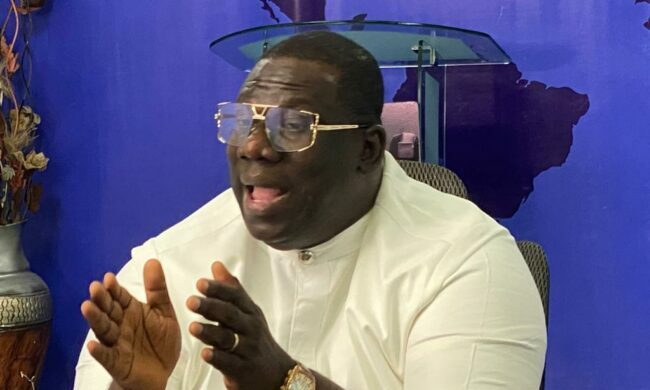
The Group Managing Director and Chief Executive Officer (CEO) of Confederated Facilitators Limited (CFL) Group of Companies, Lai Omotola, has given reasons why the Nigerian economy is in a state of hulk, as the naira is going from an unprecedented N1200 to N1500 a dollar with no end in sight for the free fall.
Omotola, whose company marks 25 years in business, identified currency speculation by the business elites, corruption, economic crimes, and the reversed business mentality of the elites as major causes of economic retrogression.
Excerpt of the chat:
Economy and business in Nigeria
In Nigeria, the government is not pro-business. They don’t know that anyone who sets up an office, by reason of the fact that he employs people, saves families, and pays taxes, does not get the same compliment for contributing to the economy. The infrastructure and the chaotic environment make a lot of people run away from doing business in Nigeria. The truth is that there is hardly any country in the world that has the same profit margin as Nigeria. If we commit to feeding ourselves, it is a multi-billion-dollar project. There is also a housing deficit of 28 million. From providing at least one million houses to the movement of goods and services in order to make the economy mobile, these are some of the ways we can grow the economy. Because if we cannot give ourselves shelter and if we cannot feed ourselves, then we have not started. We should be able to eat big chickens, not because we are rich but because we have them in abundance. But the problems we have in this country are the so-called elites, who only have the reverse mentality of what business is all about.
A typical Nigerian businessman is not an entrepreneur and is not adding any value to the economy. He is just a contractor who was told to do roads and thereafter embezzle the money together. I don’t know why the government needs contractors to do roads when there are engineers in all the ministries. They have been doing the roads for donkey years, and there are no good roads. What the government should be looking at is a private-public partnership when there is a need to do a coastal road of very long kilometers and not call Julius Berger to do a 10-kilometer road.
Another unfortunate thing is that the Buhari government spent N2.7 trillion on agriculture, yet rice is still N45,000–N60,000 per bag in Nigeria. It is not Buhari’s fault, but that of the so-called businessmen. They will tell the government they have 500 hectares of land somewhere for the agriculture project and sign a lopsided agreement with the government. They will collect money from the government, put some little things in place, and divert the remaining money. When it is time for harvest, they will hire some hoodlums to cause a crisis in the neighborhood and declare force majeure. That is the mentality of an average elite businessman in Nigeria.
Cabals are holding the economy down via currency speculation.
The president has warned the political cabals, but it will be pretty difficult to stop them from holding this nation down. How are they holding it down, you may ask? Very simple. I have never seen it, but only in Nigeria, where the only business the elites do is speculate on their currency. That is the only business they do. Some of them may have a manufacturing plant, there is no doubt, but you know, they will tell you their manufacturing plants need N10 dollars. The truth of the matter is that they collect the $10 million from the CBN, use only $1million dollars for their plants, and divert the remaining to sell at the black market. Their underlying business is currency speculation. When you have a gap of N300 to $9 million, you are making N270 million without having a staff. It is just in and out. That business is sweeter than the drug business, and that is why all of them are locked into it. That is why we have the naira moving to N1200 per dollar.
When this present government was floating naira, it was meant to close the gap between the two currencies, at least not more than N2. The government did that without having dollars in the CBN to mitigate it and stabilize the policy. If there are more people looking for a particular substance, its value will go up. That is the basic law of demand and supply. But when you allow the naira to float, yet you don’t have dollars, guess what? The dollars are with the market. One fundamental error everybody makes is that the Nigerian economy is not powered by market forces. That is the mistake. Regulating this currency has moved from the CBN to the market. If the CBN needs like $100 million, it does not have it, but go to the cabals; they have it. They will just release like $50 million into the economy and watch what happens, and as demand rises, prices go up too. The cabals always have dollars.
Again, the elites will argue that they cannot leave their money in naira. In every nation, the need for dollars is meant for raw materials and student fees abroad. But in Nigeria, two things contribute to the need for dollars. One is corruption, and the other is speculation. Productive means for dollars is not up to 40%. This is a challenge, and it is difficult to fight against this behavioral pattern. If you traveled to London and returned with some pound sterling, where would you go to change your money—the bank or the parallel market, considering the rates at each point? Nobody will see the difference in rates and go to the bank. The truth is that as long as you go to the parallel market, you are contributing to the problem.
Another thing is that if you request for $1million dollars in the bank, even if they have the money, the bank won’t give it to you, but when you see the black-market people, you will get it. It is just like when you look for brand new notes in the bank, the bank won’t give you any, but when you go to parties, you will get new notes. I really don’t know why citizens will be trading in their currency.
No businessman with a global presence
The mentality of the business elites in the country is not to do real business, and that is why there are no businessmen with global presences like Nokia, Netflix, etc. in Nigeria. They don’t have it because this nonsense they are doing is not permissible outside of this country. They can’t try it in Ghana; they can’t even do it in Cotonou. But here, the government will say they are giving them a waiver. Waiver what! They are just milking us, doing nothing to help the economy.
Look at Nitel those days; the same license Nitel had was given to MTN, Airtel, and Glo. The combination of the existing three has a total market capital of N10 trillion, and they have employees and pay taxes. If those who managed Nitel were good, there wouldn’t have been any need for MTN today. But because of their shortsightedness and corruption, we lost our patrimony, giving way to people to carry their profits away from the country. The same way with NNPCL, if you take it away from the hands of politicians, NNPCL can be a $500 billion company, chasing Aramco in global ratings. People collected refinery licenses; it was not the refinery they were looking at, but the crude in the name of building refineries. That is the way Nigerian businessmen think. The way out of this is that the government must think business and make businesspeople do real business.
Possible solution
Here is a fundamental problem. The people in government know the solution, but who bells the cat? On election day, politicians spend dollars, businessmen bring billions to the preferred candidate, and nobody is asking where he gets the money from. Is it the same person you want to turn around to stop him from getting his money? Any politician who is powerful today has three things: cash, access to tugs, and the judiciary. It is not because he is intelligent, but because he has those three things, he becomes a powerful politician. My prayer is that if everything should collapse in Nigeria, the judiciary should not collapse. As long as the judiciary does not collapse, Nigeria will continue to exist. But sadly, too, the judiciary is on its way to collapse. The truth is that, going by the pressure that the politicians are bringing forth, it is just a matter of time, the judiciary will give way.
Disclaimer
Comments expressed here do not reflect the opinions of Vanguard newspapers or any employee thereof.