
By Kenneth Oboh
Over the past 15 years, African governments and international education partners have increasingly relied on evidence-based analysis to inform policy decisions. Among the analysts influencing this shift is Sierra Leonean policy specialist Victoria Egbetayo, whose work spans regional economic integration and large-scale education financing.
Her public policy career began in 2008 at the African Union Commission, where she worked in the Economic Affairs Department during a period of renewed interest in continental market integration. She contributed to the analytical groundwork that informed early discussions on a continent-wide free trade arrangement. The modelling she produced enabled senior officials to compare projected trade gains across different scenarios and assess the long-term implications of a unified African market. These assessments supported ministerial discussions and helped shape the draft frameworks that guided the technical teams preparing the initial roadmap.
Egbetayo also contributed to the Action Plan for Boosting Intra-African Trade, which examined the structural and operational barriers affecting regional commerce. Her work on value chains, border processes, and production constraints helped inform several findings later reflected in the Assessing Regional Integration in Africa series and the Economic Report on Africa. These publications became widely used reference materials for planners and policy-makers seeking to understand the drivers and challenges of regional integration, including those working in Nigeria’s planning institutions.
In 2014, she moved to the Global Partnership for Education (GPE) at the World Bank, where her focus shifted from macroeconomic policy to the financing and governance of national education systems. During the development of GPE’s 2018 Financing Campaign, she co-led the design of the domestic financing commitment mechanism, which became the campaign’s centrepiece. Evidence from subsequent Results Reports shows that countries adopting the mechanism recorded a median increase of 1.6 percentage points in their domestic education budgets. This translates to an estimated USD 3.4 billion in additional annual financing across participating countries. These increases supported national efforts to improve teacher development, classroom resources, and foundational learning conditions.
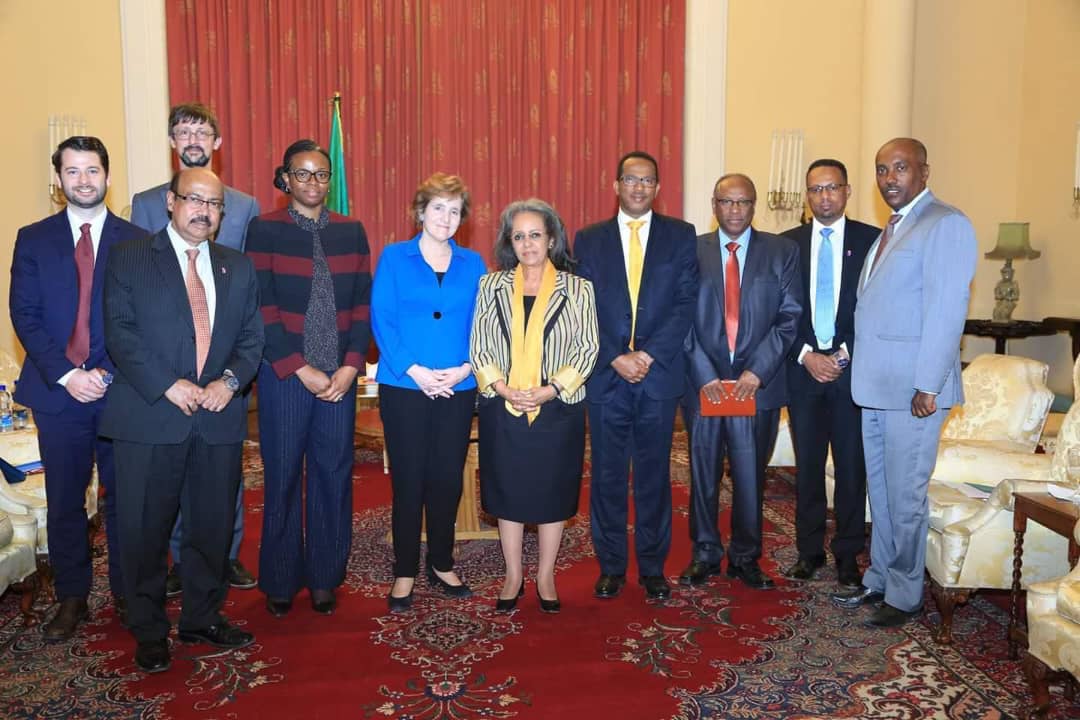
Building on this work, Egbetayo was appointed to lead GPE’s domestic financing campaign for its 2021 Financing Campaign, providing strategic leadership and coordinating high-level political engagement across partner countries. As part of the campaign, which Kenya’s President Uhuru Kenyatta led as a global education champion, she worked closely with the offices of Heads of State, Ministries of Education, and Ministries of Foreign Affairs to elevate domestic education financing in national and regional policy agendas. The campaign mobilised commitments from 20 Heads of State to prioritise education spending and, at the 2021 Financing Summit, a further 25 countries submitted individual obligations to protect and improve the volume, efficiency, and fairness of education financing.
Egbetayo also contributed to the development and review of the Joint Sector Review Framework, which offered governments a more structured approach to analysing progress in their education sectors. By 2023, the framework had been used by more than 40 countries to organise policy dialogue among ministries, development partners, and civil society organisations. This helped strengthen the quality and consistency of education sector reviews across multiple regions.
Her work in advocacy and regional engagement expanded steadily during her time at GPE. She worked directly with ministers, senior officials, and regional organisations in Africa and the Asia-Pacific to support domestic financing reforms and to strengthen political commitment to education. These efforts also contributed to substantial financing mobilisation during GPE replenishment cycles. The combined commitments across partner countries during this period exceeded USD 100 billion.
By 2023, Egbetayo’s work had become part of a broader movement to strengthen foundational literacy, improve resource allocation, and advance evidence-based decision-making in national education systems. While her contributions primarily occurred within technical and analytical teams, they increasingly encompassed leader-level political coordination and campaign leadership, influencing decisions that shaped the education landscape across several regions. Her background in economic analysis continued to inform her approach, enabling her to connect education financing reforms to broader questions of national development.
Taken together, her work at the African Union and the Global Partnership for Education reflects the evolving role of African analysts in shaping public policy outcomes. Through careful modelling, strategic coordination, and sustained collaboration with governments, including formal engagement with Heads of State and presidential offices, her contributions demonstrate how evidence-driven approaches are reshaping economic and educational reforms across the continent.
Disclaimer
Comments expressed here do not reflect the opinions of Vanguard newspapers or any employee thereof.