
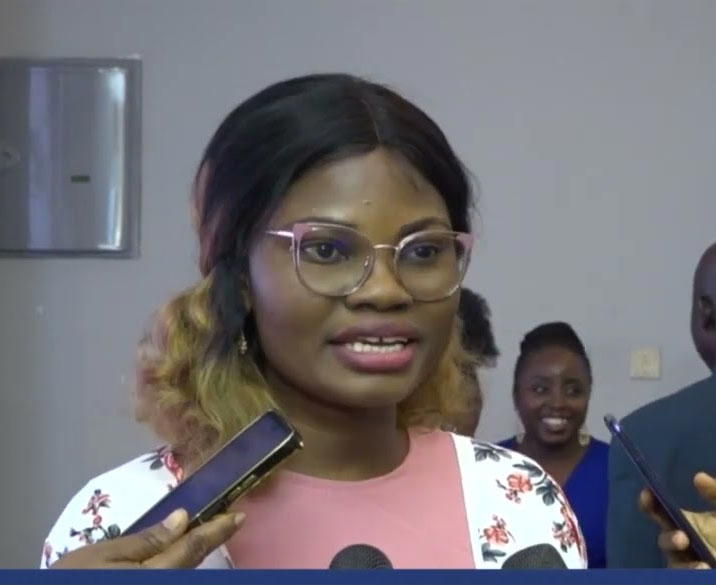
Publisher of BONEWS, Blessing Olagundoye
By Elizabeth Osayande
Media experts have emphasized the need for editors and managers to intentionally include female journalists as heads of desks.
This call was made at a virtual training organized by award-winning investigative journalist, Juliana Francis, under the auspices of the Wole Soyinka Centre for Investigative Journalism, WSCIJ, under its Report Women News and Newsroom Engagement Project, sponsored by the Bill and Melinda Gates Foundation.
The facilitators included the Chief Producer, Voice of Nigeria (VON) and Co-chair, REWON, Olufunke Fayemi, the Publisher of BONEWS, Blessing Olagundoye, and the Deputy Executive Director, Media Right Agenda, Mr. Ayode Longe.
They all noted that investigative journalism was not exclusive to male journalists and called on female journalists to be open-minded and focused on doing investigative reports.
They also highlighted the importance of gender mainstreaming in journalism, noting that it changes the narrative about women and enhances rapid nation-building.
Speaking at the training anchored by a presenter with TVC, Abosede Adediran-Aderemi, Francis, who is the Deputy Editor of the Eagle Online, and the Publisher of Securitynewsalert.com, spoke on “Rudiments of Investigative, Gender balanced Reporting.”
She noted that the goal of investigative journalism was to get justice, among other things.
“Investigative journalism is not features or news. It is deep, a marathon, and demands research, and balance. The central idea is to get justice;
“Again, doing investigative reports, we should look get the views of women, men, and children; and the impact of the issue on all of them.
“In Nigeria, we do not have enough female investigative reporters, let alone a body where ideas and experiences are shared. Having more female investigative reporters in the newsroom means having equal representation in our newsroom.
“Media houses and editors should become intentional about putting female reporters on the investigation desk, and other desks. They need to ensure that fresh female graduates in the newsroom get mentorship from experienced investigative reporters.”
For Fayemi, who spoke on the “Issues affecting gender mainstreaming in Journalists’ reports,” some of the factors militating against gender mainstreaming in Nigeria, were cultural, and ownership policies, absence of mentorship, patriarchy, and religion, among others.
Fayemi to female journalists: “Investigative journalism is time-consuming, and you must be ready to go the extra mile to develop, train, and retrain yourself. Do not expect organisations to train you, always due to funding challenges.”
On gender mainstreaming the chief producer, VON explained that: “Gender mainstreaming is the consciousness of the fact that any drive for a balanced newsroom which does not incorporate both men and women based on gender equality and merit, will keep lagging in their response to developmental gender reportage, that enhance rapid nation building.
“Gender mainstreaming is important because it changes the narratives about the peculiar cases, issues, needs, policies, beliefs myths and more about women.” She affirmed.
Olagundoye also shared her views on “Intentional, Gender Sensitive Reporting of PWDs.
According to her: “Women in society face discrimination based on their exposure, status, and class, but when we come to persons with disabilities, they are worse discriminated against and cannot get out to make their voices heard.
“As such, it is important to be deliberate in mainstreaming women with disability in our reportage.”
The BONEWS publisher called on journalists to seek mentorship, and network to make significant impacts. In his session, Longe expanded on the theme: “Using FOI to enhance investigative reports.”
The Deputy Executive Director, Media Right Agenda, noted that the FOI Act was a tool to hold the government accountable by asking for relevant information to achieve equality, diversity, and inquisitiveness.
“The FOI Act gives us legal rights and has become a vital tool in a journalist’s hand. The heart of reporting is the ability of journalists to get information, as contained in the FOI Act. Besides, you can request the FOI Act as an individual, journalist, non-governmental organisation, or through a lawyer.
“By systematically using the FOI Act to target certain types of information and materials, the media and individual journalists can help reveal corruption, abuse of public trust, abuse of power, or other wrongdoings. Ultimately, this can help to push back on corruption and improve accountability.
“FOI requests can be used to find out whether public authorities, and private bodies covered by the Act, are complying with or enforcing applicable rules, standards, regulations, and codes. This is particularly relevant for regulatory bodies and agencies.”
Disclaimer
Comments expressed here do not reflect the opinions of Vanguard newspapers or any employee thereof.