
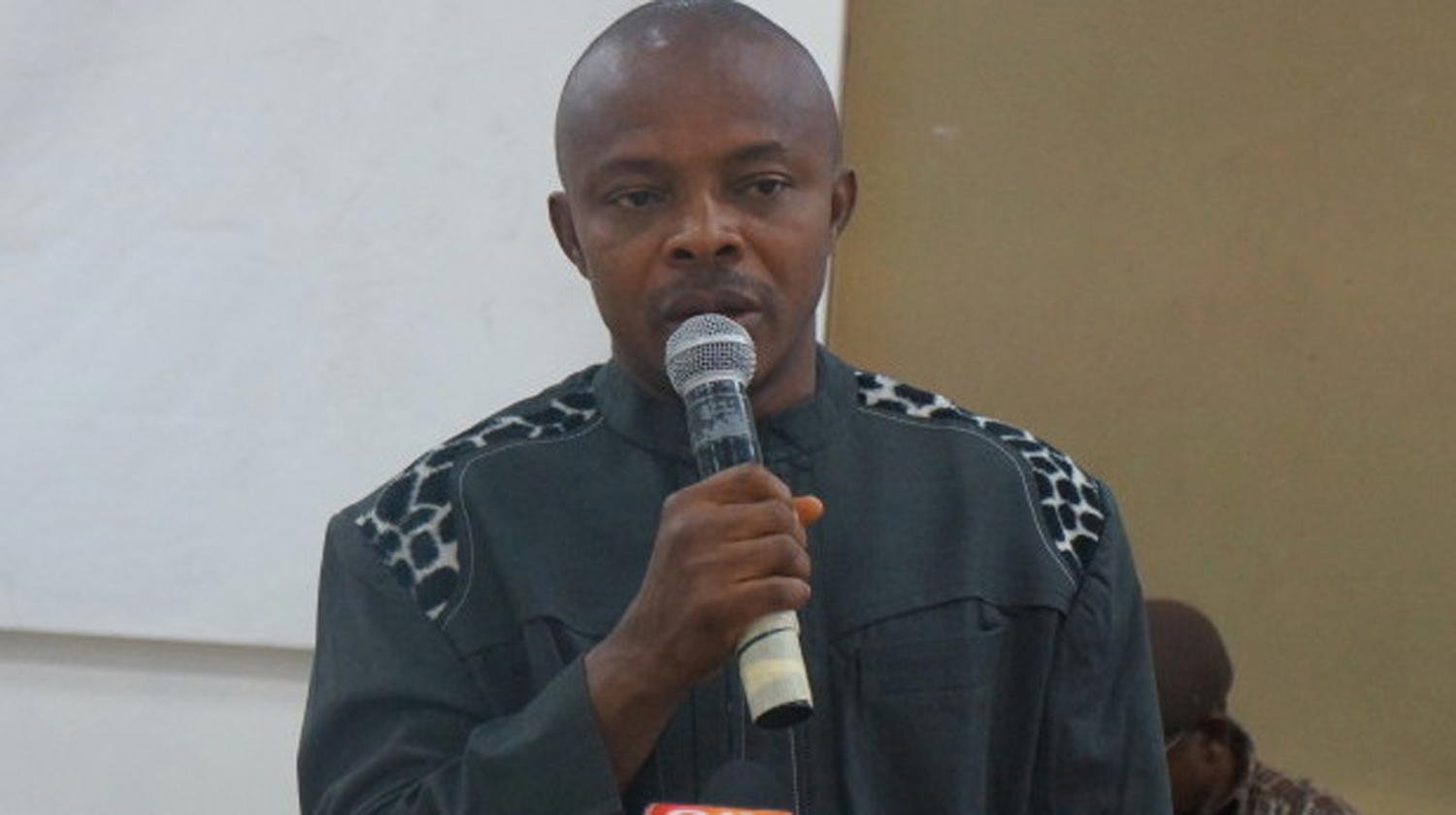
Joe Ajaero
By Victor Ahiuma-Young
One of the grievances of Organised Labour in the suspended nationwide strike that would have started October 3, is the government’s agent’s occupation and take-over of the National Secretariat of the National Union of Road Transport Workers, NURTW in Abuja and the Road Transport Employers Association of Nigeria, RTEAN, in Lagos.
Recall that while the Nigeria Labour Congress, NLC, is battling the police occupation of NURTW national secretariat in Abuja, the Trade Union Congress of Nigeria, TUC on the other hand, is battling the Lagos Government for the occupation of Lagos secretariat of RTEAN as well as seizure of its two buses parked at the RTEAN secretariat.
Though part of memorandum of understanding, MoU that led to the suspension of the planned nationwide industrial action is for the Ministry of Labour and Employment to assume its responsibilities on the matter, but the issue has put Nigeria on the spotlight of the global trade union body.
Specifically, the International Trade Union Confederation, ITUC, through its African region, has among others, raised the alarm over the country’s interference and disruption of the NURTW’s operations, as well as its attacks on legitimate leadership, constitute an alarming abuse of power in favour of vested interests.
In a statement, ITUC’s General Secretary, Kwasi Adu-Amankwah, noted that Nigeria is duty-bound to uphold the fundamental principles of democracy and the civil rights of its citizens.
According to him: “The African Regional Organization of the International Trade Union Confederation (ITUC-Africa) is deeply concerned about the current attempts in Nigeria to undermine and encroach upon the democratic and civic rights of Nigerian workers.
“We have received reliable information from the NLC that the Federal Government is planning to exert control over trade union organisations and their leadership through various means, including the potential use of coercive and deadly force by the Nigeria Police Force, NPF.
“Article 40 of the Nigerian Constitution (1999) explicitly guarantees the right of citizens to peaceful assembly and association. However, regrettably, we have observed these rights being violated. For instance, there are documented instances where the NPF forcibly prevented members and leaders of the NURTW from conducting their legitimate activities.
“The Nigeria Police Force’s unwarranted interference and disruption of the NURTW’s operations, as well as its attacks on legitimate leadership, constitute an alarming abuse of power in favour of vested interests.
“We strongly condemn these actions against unarmed and vulnerable workers. Tragically, the Federal Government’s deployment of a publicly funded institution against Nigerian workers resulted in the violent death of one worker, who was fatally shot by the police.
“We demand a thorough investigation, prosecution and appropriate sanctions for the police personnel involved in this heinous crime to help combat impunity effectively.
“It is also disheartening to witness the government’s disinformation regarding trade unions in Nigeria, branding them as “enemies of the state” with the aim of tarnishing their reputation. This unwholsesome tactic is exacerbated by the government’s misguided perception of trade unions as a political opposition entity due to the significant support garnered by the Labour Party in recent elections.
“ITUC-Africa asserts that attempts to weaken trade unions and diminish their influence are counter productive and directly contravene internationally recognised labour rights and principles.
“Therefore, we call upon the Nigerian government to immediately cease these attacks and engage in constructive dialogue with the labour movement for the betterment of Nigerian workers’ rights and interests and those of the nation as a whole.
“We remind the Nigerian government, especially in its capacity as the current Chair of the ILO Governing Body, of its obligation to uphold and respect its ratified ILO Conventions. The persistent disregard for these conventions is not only regrettable but also tarnishes Nigeria’s international reputation as a champion of labour rights.
“Additionally, we wish to underscore that this antagonistic approach towards trade unions undermines their essential role in advancing industrial harmony and productivity. It also contradicts the principles of democratic governance and social dialogue.
“Since the advent of democracy in 1999, Nigeria has made significant strides on the path of liberal democracy. This progress owes much to the tireless efforts and sacrifices made by workers, organised labour and the Nigerian populace as a whole.
“It has long been the people’s conviction that their rights would be preserved, their well-being genuinely considered and their welfare substantially improved under a thriving democracy.
“Nigerian workers, in unity, have fervently believed that an independent and democratic state would better secure their rights, both in the workplace and the community, contributing to the nation’s overall progress.
“This conviction has driven them to stand resolutely against colonialism and military rule, much like their counterparts in other parts of Africa.
“The Nigerian constitution firmly upholds the right of all Nigerians, including workers, to political participation.
“Therefore, the involvement of Nigerian workers and trade unions in politics, democratic processes and their affiliation with the Nigerian Labour Party are not unusual or objectionable. It is worth noting that similar relationships exist in other democracies.
“For instance, the Congress of South African Trade Unions, COSATU, is in alliance with the ruling African National Congress, ANC, the British Labour Party enjoys the support of British workers and the Trade Union Congress of the United Kingdom (TUC-UK),the Democratic Party in the USA is supported by organised labor through the American Federation of Labor and Congress of Industrial Organizations (AFL-CIO), and the ruling Workers Party of Brazil also enjoys the full and open support of the Central Union of Workers in Brazil (CUT).
Disclaimer
Comments expressed here do not reflect the opinions of Vanguard newspapers or any employee thereof.