
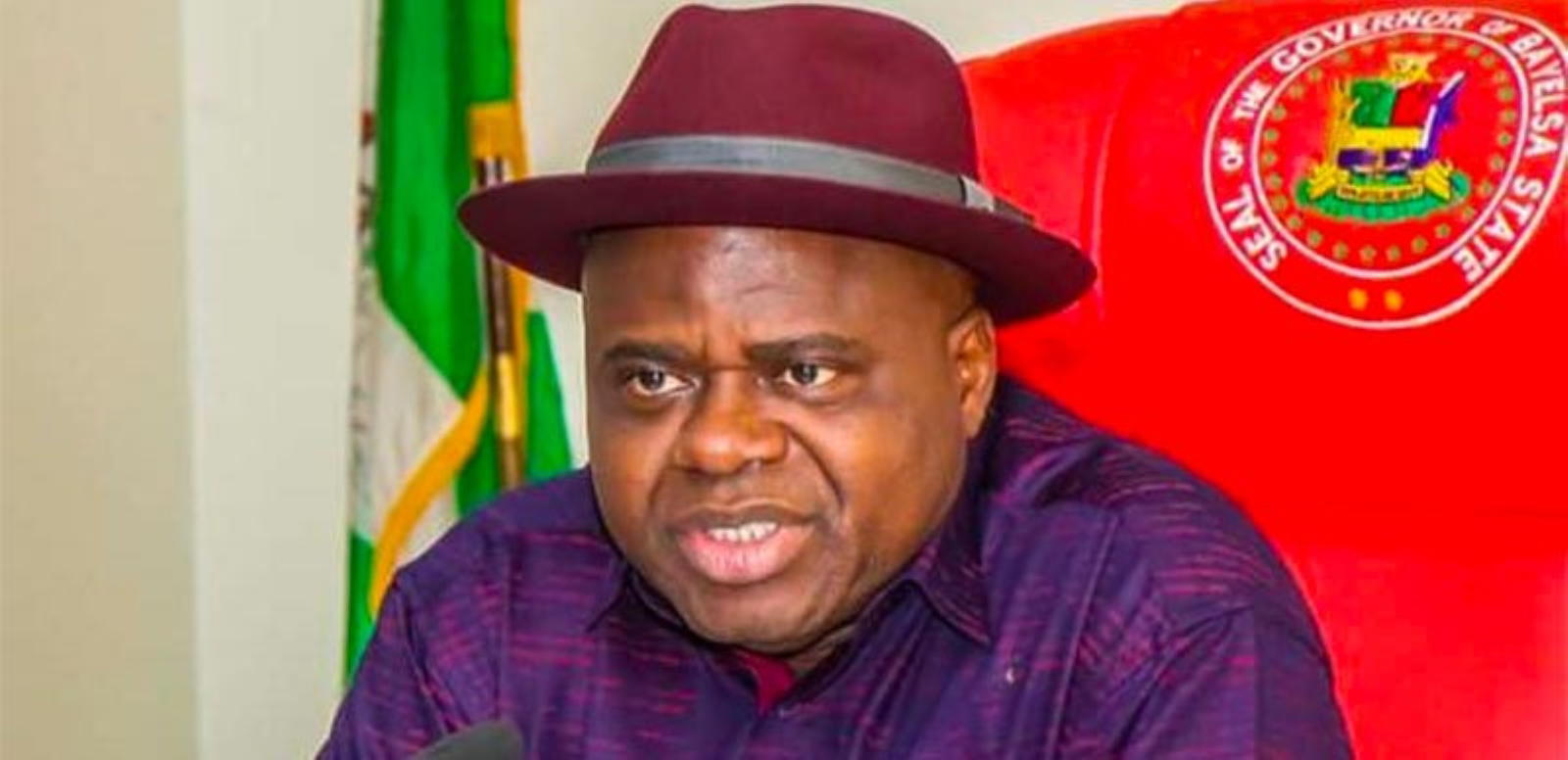
Gov. Diri
By Braeyi Ekiye
Chief Harold Dappa-Biriye, Nationalist and Minority king Pin once told me in a press interview in May 1987, that his concept of history is that, it is a tool that makes human society aware of social and political experiences of the past.
He said this affords society and political actors a silent instrument for case studies and a means of making forecasts and predictions for a sustainable socio-economic development.
Going by Chief Biriye’s postulation, one can safely say that the Governor of Bayelsa State Senator Douye Diri has fast learnt the ropes of governance and with penetrating hindsight, come to terms with history pivoted on developmental politics for sustainable development. And this was amply displayed by Chief Melford Okilo in his eventful and productive governance of old Rivers State from October 1, 1979 to December 31, 1983.
The posted results on the scoreboard of the Federal Electoral Commission (FEDECO) 1979 governorship election in Old River State were as follows: Chief Melford Obiene Okilo of the National Party of Nigeria (NPN) 619, 215 votes; Barrister Nwobidike Nwanodi of Nigeria Peoples Party (NPP), 169, 592 votes and the poll result of Okilo’s re-election in 1983 was even more outstanding: NPN’s Okilo, 1,886,261 with 80.78 percent of total votes cast, with his closest rival of the NPP, Chief Kemte Giadom scoring 259,002 with 11.08 percent of total votes cast.
No doubt, Okilo’s success story at the 1983 re-election poll was linked to this performance bond, well acclaimed by the people. Through result-oriented programs, policies and visible functional projects, Okilo’s political image and that of his government were deep-etched in the minds and hearts of majority of the electorate in the state just under three and half years in office.
These significant achievements, added to the palpable presence of the National Party of Nigeria (NPN) in Old Rivers State, put other contending parties in a state of bewilderment, causing candidates of opposition parties to desperately hold on to reeds faintly rooted along the sea shores and greatly disturbed by the fast and fierce moving political current. Okilo was Tried, Tested and Trusted by the people even as the on-going electioneering campaign of Governor Diri have proved. His projects and policies speak for themselves, assuaging the discerning electorates to give a nod to his second term bid in office.
The Peoples Democratic Party (PDP) can be said to be palpably present, deep rooted in the political landscape of the state as opposed to other political parties with little showing and acceptance by a greater majority of the electorate. And that is a fact. Little wonder, all of these variables have put the PDP and her candidates over and above other contestants for the governorship seat in the forth-coming 11 November 2023 poll. And this assessment and ultimate verdict is purely borne out of the political electoral realities as it relates to the strength of the various political parties and their candidates in the forth-coming 11th November gubernatorial elections in the State.
Now let’s look at some of these projects, programs and policies that have endeared Diri’s administration to a majority of the electorate and has thus garnered considerable support for the Governor’s re-election bid.
For example, the audacious construction of the long neglected three Senatorial roads in the state; the Brass/Nembe Road in the Eastern flank and those of the Western and Central Senatorial zones: 22.2 kilometre Yenagoa-Oporoma Road (in Southern Ijaw LGA), the 42 kilometre Sagbama/Ekeremor Road in Sagbama/Ekeremor LGAs and the 21 kilometre Nembe/Brass Road in the Brass and Nembe LGAs.
These achievements, are in addition to other massive infrastructural development projects, empowerment and inclusive programs for her citizens scattered across the State. There is also the revolutionary educational system crafted with focus on Science, Mathematics and Technology for purposeful utilisation of the value chain of human capacity development to face the new challenges of state and national development. Also the state government has shown great interest in sports development. This practical demonstration has led to the provision of modern sporting facilities and procurement of equipment and kits, the training and re-training of committed sportsmen and women which has led to Bayelsa state clinching significant laurels at national and international competitions the past three and half years or so.
There are also well thought out policies and programs for worker’s welfare, food security programs, and projects as means of diversifying the state’s economy and empowering farmers, including that of tackling head-on, healthcare delivery service for the well-being of her citizens.
Some other strategic achievements of the Diri administration include the relative peace and security in the state, political tolerance (politics without bitterness), zero tolerance for cultism and political violence and thuggery, prompt payment of salaries and entitlements and pensions to long-suffering retirees.
From the foregoing, it is evident that the Okilo/Diri connection in pushing for developmental politics for the socio-economic growth and development and infrastructural transformation of the state is on course. Conscious of this fact, it is hoped Governor Diri would not relent in his passion and dedication to the development of the state when he returns for a second tenure as it is evident, barring any unforeseen circumstances.
What now remains to be said and resolved are the issues that would determine the outcome of the 2023 gubernatorial election in the State.
The sensitisation of the electorate to make Governor Diri’s supporter walk and work the talk at both wards and polling units is one issue that has to be addressed. The votes that decide the result for or against candidates in an election are found in the wards and polling units. There is therefore the need to clinically interrogate this area in delivering results that will be worth the effort, time and resources put into the electoral process.
There is also the Electoral Umpire (INEC); as to whether the body would rise to the occasion and live up to expectation. Added to these, are the sensitive issues of security and distribution of electoral materials and equipment, including the effective policing of the polling units and collating centres during and after the elections, and not the least, strict adherence to the letters and spirit of the Electoral Act in the conduct of the November 11 gubernatorial election in Bayelsa State.
These variables need to be addressed and effectively too, to avoid any unexpected and inappropriate or inconvenient outcome of the November 11, 2023 governorship election in Bayelsa State.
He should continue to push for developmental politics for inclusivity, people’s affirmation of his government and approval of his leadership for continued peace and rapid development of the State.
Braeyi Ekiye, Publisher of EnvironmentWatch
Tele: 09031594537; Whatsapp: 09094774864
Disclaimer
Comments expressed here do not reflect the opinions of Vanguard newspapers or any employee thereof.