
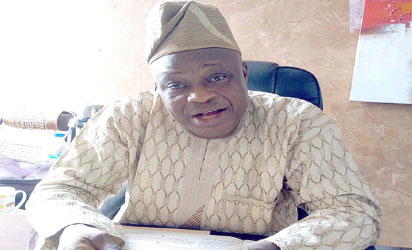
•Barrister Femi Kehinde
By Hon. Femi Kehinde
In this period of global economic conundrums, anger, anguish and angst, it is better to go down memory lane and now remember those things that had put smiles on our faces, and enhanced our moral values, more particularly, in this era of numerous Radio stations. Radio O Y O really stood out then.
Radio services, to the people of Ibadan, is perhaps,as old as mankind. The first Radio Station in Nigeria was established in Ibadan in 1939; the second station in Kano in 1944; both by the Colonial Government.
However, and effectively too, the Colonial Government started the Nigerian Broadcasting service in Oke-Are, Ibadan in 1955 with 2 studios at the Oxford house, Dugbe, Ibadan.
“This is Nigerian Broadcasting Service –B’olubadanba ‘ku ta ni o joye (who is the next king, if Olubadan passes on); ojogededuduinuntakun (he eats an unripe plantain and suffers stomach discomfort); ko so nigbeseni bi lo si le keji( there is no debtor here go to the next house) and Eko je Ibadan lowo 130(Lagos owes Ibadan 130 thousand pounds)” was the signature tune of the Radio Nigeria Broadcasting Service. The signature tune was the drumming ingenuity and creativity, since, 1956, of no other person, than the drummer-King, Oba John AdetoyeseLaoye1, Timi of Ede (December 1946-May 16 1975).
Radio services in the Western Region of Nigeria had been popularized by the government of Obafemi Awolowo in 1955, when he brought Rediffusion boxes, for the listening pleasure, of the people of the Western Region. It was a repeaterone channel radio broadcast signals which brought news, commentaries and general entertainment programmes, for a paltry sum of five shillings at the end of every month, to every subscriber.
The Obafemi Awolowo government also on 31st October 1959 established the Western Nigerian Television(WNTV), being the first Television station in Nigeria and the whole of Africa,at Ibadan. As at the time of its establishment,many countries in Europe had not seen television or known what it was all about.In May 1960, the Radio arm- WNBS of the Western region, was established to complement the WNTV. Ibadan became the beehive of broadcast activities with the heavy presence of Radio Nigeria, that had earlier come on stream on April 4, 1955 with a short wave transmitter located at Oke-are area of Ibadan.
In 1976, the Radio arm of the Broadcasting Corporation of Oyo State (BCOS) was established whilst its television component was founded in 1982 with a robust staff strength of about 4449. In 1978, the Radio 2 arm of Radio O Y O and the first FM station (frequency modulation) in Nigeria was founded on top of the Mapo hill in Ibadan. In 1984, at the advent of a new Military government in Oyo State with OladayoPopoola as military governor, merged the BCOS and Radio O Y O as one henceforth to be known simply as BCOS. In 1976, Engr. Oluwole Dare was appointed as the foundation general manager.
After about 6 months and still on the Acting appointment, he resigned and was succeeded by Chief Adebayo Faleti. At a later time, Engr. Dare reemerged the Sole Administrator of BCOS under the Military Government of Colonel AdetunjiIdowu-Olurin. There were other succeeding GMs like KunleAdeleke, BisiAdesola, PSOTaiwo,John Fademi, who later moved to OsunState as the founding GM of Osun State Broadcasting Corporation (OSBC).BiodunSanda took over from him as GM of BCOS. There were top-notch officers inWNTV,WNBS, Radio O Y O,BCOS, Transmission Service of Oyo State(TSOS) and directors likeAnikeAgbajeWiliams who had earlier worked with the likes of Dr. YemiFaroumbi; an old veteran, Julie Coker, BayoSanda, Ade Adekanbi, WoleOyebamiji, Femi Olajide, DejoOlugbodi, BunmiAyegoro, Engr. Tola Ajani, Prince KayodeAdedire,Ayodeji Iyanda, OlatundeIyanda, Toba Opaleye; who moved to Ogun State Television(OGTV), Akin Akinsolugba; who moved to Ondo State Broadcasting Corporation, LaoluOlatunbosun, BamijiOjo, OloriAbeke Lawore, YanjuAdegbite, AdeolaAlagbe laterHaastrup, Omolara Dada, Prince RopoOgunwusi(father of the current Ooni of Ife, OoniAdeyeyeOgunwusi); who was in charge of the audio section, SegunOyewole(Segeto), Sade Ogedengbe, Biodun Oni, Femi Adefila; now founder of Rave FM, Osogbo, FunmilolaAgboola later Perola, AdeolaAkande later Adedotun, AyobamiLawal, OlusolaAjala, AdesoyeOyetunde, AdemolaOladejo.
However, what makes Radio O Y O through the arrays of these quality and talented broadcast journalists and veterans were beautifully espoused in its radio jingles, ewi and ijala chants, beautiful ewi renditions, philosophical muses and short dramas to educate, enlighten, entertain and disseminate information to its numerous listeners. The Jingles were fully loaded with wisdom, moral lessons, moral rearmament, and moral awareness to create a better and reformed society.
- ‘Baba Bola, mode ileyinlanaebalen je, loonikannaeba le tun je. Eyin o lounje mijueba loni? Dodo atiewaki se ounjealakowenikan, gbogbo e lo da lara.’
‘Baba Bola, I was in your house yesterday, you were eating eba, today also eba. Don’t you have any other diet aside fromeba? Beans and plantain are not educated people’s food only. It is all good for the body.’
Baba Bola’s answer was sharp and direct:-‘Kato rigarriounranko?’ That is, is it easy to even find garrito buy.
That was about 40 years ago when garri was cheap and the common man’s staple. Today,garri apart from being expensive is now also on the rich man’s menu list. The moral lesson of this jingle was to promote and encourage healthy dietary habits and balanced diet. This Jingle was voiced by AyodejiIyanda and BamijiOjo.
- ‘Asiriikookokogbodotowoajatu. Ma se fi asiriidanwohanolufe, ma se fi asiriidanwohanomoileiwe; akimamanseiru eko ma hunni o.’- This was a serious admonition, warning and advisory to teachers and invigilators not to leak examination answers and that it has serious repercussions.-This Jingle was voiced by AlabiOgundepo, the Ijala chanter from Saki.
- ‘Onimotororagbese le, onimotororasare o. Ina pitigbenle, jailekun e. Esinsin je taya e ke. A saretetekokojaile,arigberekokojaona- This was an advisory against reckless driving.-This Jingle was voiced byRonkeOke-Ibadan and OlatundeIyanda. Beautifully, Hubert Ogunde’s music on ‘Onimoto’ would be chipped in.
- ‘Kakokako!(sound of a shoe) Ode tuntiya. Ibo lotun da? EniIjo, olaariya.Awonoremi lope mi, mi o de le maloti won bape mi tori to bakanmi awonna lo ma ba mi lo.- That is, ‘Another party again? Where next? My friends invited me and I have to honour the invitation because when it is my turn they will honour mine too.’ -This Jingle was voiced by Raliatu and RonkeOke-Ibadan.
- ‘E fura! Efura o! Pansa o furapansajona! Aja o furaajajin! Onileti o bafura ole ni o gbelo.Tebafe sun laleketanayiilepo, kesituntiilekungboingboin.E tojudukiao kamabafarawa le ole lowo.’- This emphasises vigilance and security consciousness whenever the night falls to prevent burglary attacks.
- ‘Ejowoniboniileigbonse yin wa?’
‘Awa onintojobaunnibi o.’
‘Bawo lese wa n se?’
‘Bi ka so sojuagbaratabiebaona.’
‘Please, where is your toilet?’
‘We don’t have such thing here o’
‘Then how do you manage, how do you live without a toilet in your house?’
‘We either throw it into a river/streamor by the roadside or wherever’-This Jingle was voiced by OloriAbekeLawore and AyodejiIyanda
‘This was an advice on hygiene and the need to have decent toilet in houses.’
- ‘Iyaaburo se kosinkan?’
‘Kinikan ma nbeleyinnkan.’
‘Mummy, hope there is no problem?’
‘There is always a problem thereafter oooo’ – Was another cautionary message. - ‘Dandanlowoori je, tulasilasoibora.OwoorilafikoMapo…..’
‘Payment of taxes is compulsory. It was tax money that was used to build MapoHall’ -This emphasises the need to pay taxes regularly,as at when due just as necessary as a blanket or cover cloth.After all Mapo hall was built with tax payers money by the colonial government during the time of Captain W.A Ross in 1929.
SanusiAdebisiGiwaIdikan’s act of philanthropy, was demonstrated in his first tax rescue effort in Ibadan. Payment of tax by every male adult was made compulsory by the colonial government. Most Ibadan adults were subsistent farmers who could not afford the payment of tax and thus evaded tax payment. The punishment for tax evasion was detention in Mapo, which also served as the treasury office. A detained tax defaulter usually found it difficult to get someone to bail him out because most adults were tax evaders and an attempt by a tax evader to bail another tax evader will land the rescuer in detention.
This tax problem became such a society anguish that a Balogun of Ibadan, Balogun Ola, a son of Baale Orowusi committed suicide in protest of the detention of Ibadan young men for tax evasion. This valiant self-murder was recognized by the Ibadan people, who named him Kobomoje(the one who displayed gallantly against timidity).
SanusiAdebisiIdikan was perhaps Ibadan’s wealthiest man of his time. The payment of tax became a social symbol and tax defaulters were usually mocked and despised by the popular song –‘Owooritid’ode o, o o’odeo baba waloko san’-payment of tax has come, our fathers were the first topay, the idiots and lazy ones who have not paid are in detention in Mapo’-awon ode ti o le san o won nbelati mole niMapo’.
Adebisi was displeased with the tax situation in Ibadan. His philosophy had always been- (the rich must help the poor who are vulnerable). Adebisi had at this time been one of the set of Ibadan elites, if not the first person, to ride a car, apart from his stable of horses. For effect, he had his horse dispatch rider-Ladimeji, to ride in front of his car on his way to Mapo, to see the chief tax officer for the Ibadan Colonial Office. In his meeting with the officer in the colonial office, he brokered an understanding-‘I want to be paying tax on behalf of every taxable adult in Ibadan.’ The officer was shocked, nonplussed and asked him if he knew the financial implication of his gesture, but Adebisi insisted. Henceforth, the colonial officer would calculate the amount of tax expected from all Ibadan taxable adults and would go to AdebisiIdikan’s residence to collect the money. That was the amazing level of AdebisiIdikan’s kindheartedness and humaneness.
- ‘Oremi, mode office re lanaawooju re to fi soritabili re atikootu re, to gbeko,eyun fi hanwipe o rinjina.’
‘My friend, I was in your office yesterday, your pair of eyeglasses on your table and the coat you hung, showed me you were within the premises.’
‘Ore, e mi ma fi dagbonni. Ona mi tijin.’
‘My friend, I just used that as a decoy. I had gone far.
‘Haa! Eyun o momodaa’- ‘Truancy is not good’
- This was voiced by AyodejiIyanda and late AyobamiLawal
- A lady asked her boyfriend for more money and the man sparked- ‘Is it everyday that I’ll be giving you money, what of the ones I’ve been giving you?’ The woman replied; ‘Se owo to walarinwani receipt ni?’ That is, ‘does the transactions between us require receipts?’ Radio O Y O ooooooo was the signature tune of the Radio station with drums and percussions. I remember SupoKosemani’s 5 minutes to 6pm proverbs, its interpretations and philosophical museswere delivered for 5 minutes before the 6o’clock news, interviews and commentaries. Whenever the program was heralded, he was always at his best elements in explaining Yoruba proverbs, idioms, norms and idiosyncrasies.
However, the Jingles were not always in Yoruba language alone, there were some of its English variants like;
- ‘Attention please! Attention please! Calling all drivers!Calling all drivers! Calling all motor scooter drivers! Excessive speeding can kill, have consideration for other road users’; a sweet rendition byYanjuAdegbite and there will be added music; ‘Aringbereniyomoyedele, asaretetekonimoyekan je’- That is, to be late is better than the late.
- Avoid dirty and unripe fruits.
- Cocaine is a killer.
4.Becareful with fire. - Don’t waste water.
- Don’t jump the queue.
- Don’t park your car just anywhere.
And some many other English jingles:
‘Sleeping on duty?’
‘Sorry sir!sorry sir!’
‘Sorry for yourself, you mustn’t have anaira added to your pay’
It is important to give special recognition again,to the founding fathers of broadcast journalism in Ibadan, Yoruba land and Nigeria-OlaniranOgunyemiOgungbemi, DokunFamubode, Akin Otiko, SanyaOyinsan, YemiFaroumbi, Julie Coker; the first voice on the WNTV as continuity announcer on the 31st of October, 1959, AnikeAgbaje Williams, Adebayo Faleti, KunleOlasope, Victor Adeniyi, Nelson Ipaye,YomiOnabolu, Sam Adegbe, Ayo Ogunlade,KunleAdeleke, TunjiSenjobi, TounAdeyemi, SF Ayo Vaughan, Tunji Marquis, Alex Conde, DipoBibilari, DipoBabalola, LaoluOguniyi, Lola Showunmi, BankoleLaotan, JibolaDededunola, HO Robbins; Foundation GM of NTA, Abeokuta,BiodunShotunji, IsholaFolorunsho, ToluFatoyinbo, Ernest Okonkwo,LaoluOguniyi,LaoluOlumide, YemiOgunyemi, GokeAkinlabi, OlanrewajuAdepoju, TunbosunLadapo, KunleHamzat, FunmilolaOlorunisolaand many other great veterans.
Radio O Y O,rise up and walk again to reinvent and rejuvenate this glorious past as a worthy source of emulation by the numerous Radio stations that have now populated our environments. It is so bad, that our best is in our yesterday. May this giant continually grow and blossom like the oak tree.
•Hon (Barr.) Femi Kehinde, Former Member, House of Representatives,National Assembly, Abuja, representing Ayedire/Iwo/Ola-oluwa Federal Constituency, of Osun State (1999-2003) and also Principal Partner in the Law Firm of Femi Kehinde and Co(Solicitors).
Disclaimer
Comments expressed here do not reflect the opinions of Vanguard newspapers or any employee thereof.