
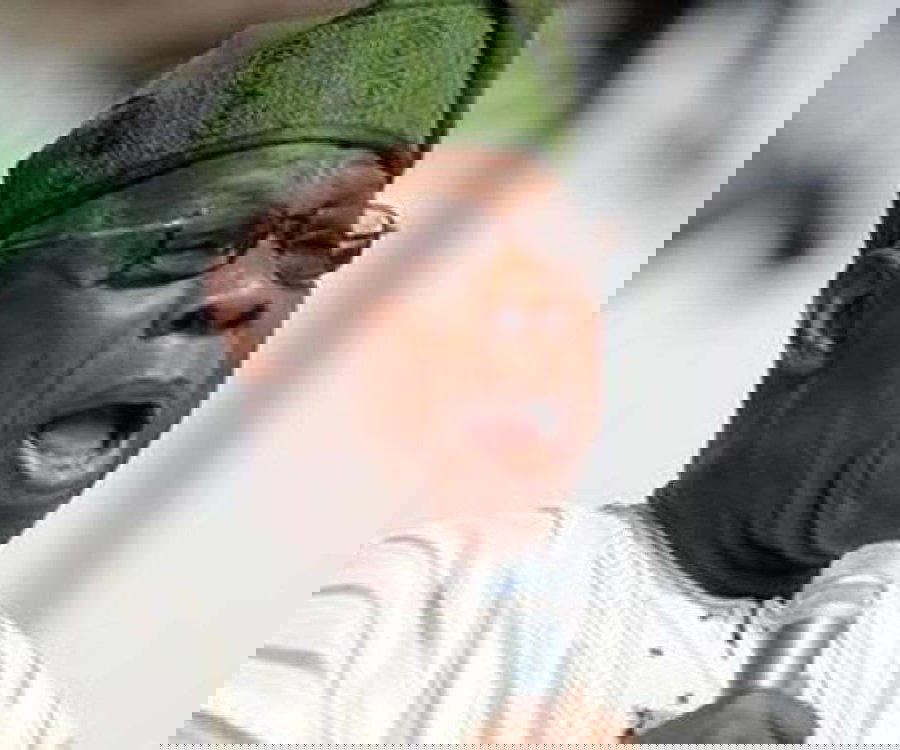
EVEN if he were a regimental sergeant major, former President Olusegun Obasanjo couldn’t have performed better than he did six days ago when he drilled a gathering of traditional rulers from the Oke Ogun, Ibadan, and Iseyin areas of Oyo State in the art of paying compliments and showing respect, ordering them to stand up and pay him homage as a former president.
“E dide/Stand up!” he thundered in Yoruba. And as they all stood with clockwork precision, “E joko, sit down!” he shouted at them again in a manner reminiscent of a quarter guard commander at a military parade. As a former soldier, in fact a general, used to the pomp and circumstance of receiving ceremonial compliments from his subordinates, Obasanjo must know a lot about quarter guards, their commanders and orders.
Did I say he demanded compliments as a former president? Actually, Obasanjo didn’t say he took personal offence at the assumed misconduct of the crowned heads. No, he couldn’t have been that disingenuous being the fox that he is. He only stood up for the governor, Seyi Makinde, who, from the way Obasanjo spoke, was the victim of the perceived insult from the rulers. He must have been slighted for his apparent youth compared to the kabiyesis.
And since Makinde, even as a two-time governor closing in on his sixth decade on earth (he is over a decade older than Obasanjo was as a retired head of state in 1979), is either too inexperienced to recognise an insult when he sees one or was probably too timid to speak for himself, he decided to speak for him. He who takes side with the king is never guilty – Agbe f’oba kii jebi is how that is rendered in Yoruba. The king here is the governor.
We are long past the age of monarchs; it’s now constitutional rule, as in a democracy that has subsumed traditional, monarchical institutions under imported and imposed Western governance structures, no matter how lowly. This is the whole point of Obasanjo’s outburst: the traditional institutions symbolised by the traditional rulers have lost their precedence, and so a state governor is superior to a traditional ruler, no matter how highly placed or revered.
This is also why the traditional rulers are, under extant Nigerian law, placed within their domain under the control of a ‘common’ local government chairperson that is in turn accorded nothing more than grudging recognition as a sidekick of a state governor who could commandeer their monthly financial allocation and get them removed from office should they raise a question about such brigandage. This we recently witnessed in Ogun, where Dapo Abiodun, Lord of the Manor, reigns supreme as the unquestionable governor of the state.
If a governor could sack a local government chair from whom a monarch must obtain permission before they could leave their domain, what would that governor, much more a (former?) president, not do to erring monarchs? Those blaming our revered monarchs must know to what danger they were exposing them when they slammed them for spinelessly yielding to Obasanjo.
Were they not in Nigeria when Abdullahi Ganduje, as Governor of Kano State, kicked the royal stool from under Sanusi Lamido Sanusi, Sarkin Kano, and the former Governor of the Central Bank? Haven’t they realised the importance Obasanjo attaches to ceremonial homage as a self-proclaimed omoluabi and revered champion of Yoruba culture? Have they so quickly forgotten that it was for a similar slight that he cursed Ayo Fayose, a former governor of Ekiti State, at an occasion in 2010 in the Okuku home of former Osun State governor, Olagunsoye Oyinlola?
If you don’t respect the culture, Obasanjo, the no-nonsense disciplinarian, will teach you how to. Once a soldier, always a soldier, abi? “You are a bastard!” Obasanjo barked at Fayose during that memorable encounter. But unlike the timid igbakeji orisa in Iseyin last Friday, Fayose, the original omo oko, the true-born child of his father, served it back hot to Obasanjo.
“You’re the father of bastards!” Osokomale spat back at him, wagging a finger in the face of the Ebora Owu (and you know what that means in the cultural parlance of physical engagement, Naija-style?) before a shocked audience that included former military ruler, Ibrahim Babangida and Alao Akala, a former governor of Oyo State. What happened thereafter? Nothing! All na shakaraoloje in Fela-speak. But the monarchs fell for it.
Had they refused to stand, what would have happened to them? What could Obasanjo, or is it Makinde, have done? We would never know, as nobody was courageous enough to call the bluff of a navel-gazing bully and latter-day cultural nativist with an ego the size of Olumo Rock. Obasanjo hid behind a finger to demand compliments for Seyi Makinde in order to project himself as a leader that must be respected.
He referenced his respect for traditional rulers, mentioning how willingly he prostrated for them, and concluded his vituperation by urging his audience to cherish the Yoruba people’s respect for culture (age and position). In the fashion of a bull? Somehow, he has made Makinde a bystander at his own naming ceremony – the opening of a new road in the College of LAUTECH.
Here, where we are prone to crying more than the bereaved, might makes right, and it doesn’t matter if those who handed us the form of governance that the likes of Obasanjo, a reconditioned dictator, still wear on the sleeves of his dandogo and folds of his abetiaja like a general display their epaulettes; it means nothing to them that those who ‘taught’ us democracy and gave us ‘independence’ have so far maintained and continually reinvented a monarchy, one of the oldest in the world, that has survived for more than one thousand two hundred years.
Our traditional institutions have not only been bastardised but degraded, and this by no other than the custodians of these institutions themselves. This is not just about Yoruba monarchs but across the country, where many of them got to their present positions through foul means and continue to engage in activities that will not bear scrutiny. Among them are suspected or convicted rapists, land grabbers, kidnapper kingpins, wife snatchers, street brawlers, and common murderers.
They are everywhere and anywhere, unseemly gatherings; they should not be. As a long and complicit player in the corridors of power, Obasanjo, like other politicians, should know a thing or two about many of them. This is why, when he was still governor, Nyesom Wike openly reprimanded some of them during a function, as Obasanjo did in Iseyin: ‘You-you,’ he said, pointing at one of them, ‘Stop shaking your head’. Calling him a’small boy’ causing trouble everywhere and decked out in ‘Usman Dan Fodio’ regalia, Wike spoke of security reports on him.
Disclaimer
Comments expressed here do not reflect the opinions of Vanguard newspapers or any employee thereof.