
Omeiza Ajayi
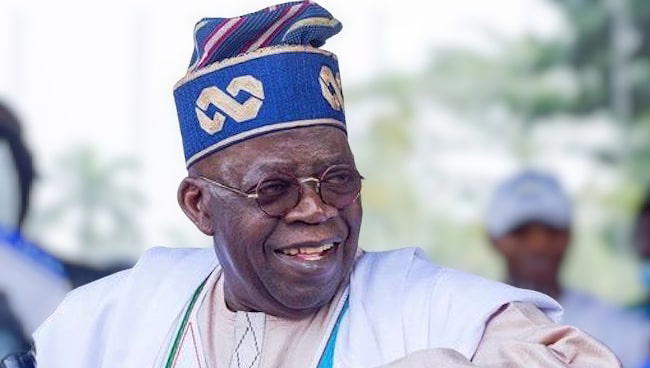
Director, International Institute of Journalism IIJ, Abuja, Dr Emmanuel Usman Shehu, has pooh-poohed the decision of President Bola Tinubu to dole out billions of Naira to states as palliatives to cushion the effects of the fuel subsidy removal.
Dr Shehu spoke at a Policy Roundtable on “New Economic Policymaking for Equitable Growth and Social Inclusion” organized by the African Centre for Media and Information Literacy AFRICMIL in Abuja.
The roundtable which had a former Chairman of the Nigerian Electricity Regulatory Commission NERC and Director, Abuja School of Social and Political Thoughts, Dr Sam Amadi as lead speaker; Policy Analyst and Social Rights Activist, Hauwa Mustapha and the immediate-past Country Director, Action Aid, Dr Ene Obi.
He said; ” I am always suspicious when the West are clapping for us. The World Bank has told you to remove subsidy and they are the ones telling you that in two years, your poverty will go down drastically. We must make up our minds to decide whether to develop or not. If we must develop, then we must do things our own way, look at our own peculiarities. So, you take palliatives because America is doing its own palliatives and you don’t even know where the word palliative originates from. It is a medical term and it is used for people who are terminally ill and area bout to die and you want to reduce that pain so that they die peacefully especially in hospices. And then you bring it into an economic context and you are saying that one percent of the population should take palliatives, which is nonsense because, really, you don’t want these people to die because they are part of your human resources. You are now giving them one bag of semovita. Hos is that a support for them to survive? So, it doesn’t make any economic sense. Then what happens to the 99 percent of Nigerians that you are not giving anything and you don’t even know when this whole pressure will go away?”
Om his part, Dr Amadi said there is nothing wrong with the concept of introducing subsidies and that what is usually wrong is the product or service that a government chooses to subsidize.
“Subsidy is not bad economics. What is bad economics is what you are subsidizing. For instance, if you build a road in a commercial zone and you toll it at 20 dollars and you know the road is critical to your economy, won’t it make sense to subsidize it? If education is important to a country, won’t it be right to invest in education subsidy?”, He queried.
On her part, Mustapha advised that government policies should benefit the generality of the people, not a few.
“For now, most policies favour the rich. Such policies help to expand and maintain their wealth without creating wealth for the mass of the people”.
Earlier in his welcome address, Coordinator of AFRICMIL, Dr Chido Onumah said the roundtable was in continuation of the organization’s efforts to promote democracy, good governance and orderly society.
“AFRICMIL in partnership with the Centre for Public Policy & Research, Social Action, and the International Institute for Journalism with support from Rosa Luxemburg Foundation put together this event for stakeholders to deliberate on policymaking for equitable growth and social inclusion.
“Nigeria today faces many economic and social headwinds. The country has the highest unemployment rate in the world with 33.3 of its employable population not finding work to earn income. The country has a youth bulge which means that many of its citizens are young persons who cannot find work to earn a living. The National Bureau of Statistics NBS reports that about 45% of Nigerians are living in acute income poverty. 143m Nigerians are multi-dimensionally poor, lacking access to basic education and sanitation.
“This dialogue is designed to bring together knowledgeable leaders of civil society and policy community in Nigeria to have a moderated conversation on key issues of economic and social policies that affect the social and economic wellbeing of Nigerian, especially young people.
“The challenge for Nigeria is how to enhance the legitimacy and effectiveness of public policy and the administrative state through mainstreaming young people and the socially excluded into the policymaking framework and ensure that their voices are factored in policymaking. The process should start with introducing them to the issues and challenges of public policy in the era of neoliberalism and how the Nigerian state can tackle poverty and inequality”, he added.
Disclaimer
Comments expressed here do not reflect the opinions of Vanguard newspapers or any employee thereof.