
…SMEs worst hit
By Dickson Omobola
Two months after the removal of fuel subsidy and harmonisation of foreign exchange rate, businesses in Nigeria, particularly Small and Medium Scale Enterprises, SMEs, are struggling with many on the brink of collapse, Sunday Vanguard learnt.
The negative impacts arising from the two policies are hampering their operations in several ways.
While small businesses are grappling with instabilities, large organisations are not insulated, leading many to adopt survival strategies.
Recently, British multinational drug maker and biotechnology company GlaxoSmithKline Plc, GSK, announced that it was drawing the curtain on its Nigerian subsidiary to a close after many decades of operation.
The disclosure came on a day GSK Nigeria published its half-year 2023 financials, which showed an immense decline in revenue from N14.8 billion (2022) to N7.8 billion (2023).
GSK is not alone as companies like Nigerian Breweries, Airtel Africa plc and Guinness Nigeria Plc among others have been negatively affected, especially by the forex policy in several ways.
For instance, Nigerian Breweries reported a net loss on foreign exchange of N70.6 billion in the second quarter of 2023, taking the year-to-date exchange rate loss to N85.2 billion.
Airtel Africa plc also said it lost $151m due to the harmonisation of foreign exchange rates in Nigeria.
Guinness Nigeria Plc incurred N49 billion in exchange rate losses, according to information contained in its full-year results for the period ending June 2023.
Seplat Energy reported a 51.7 percent decline in operating profit to $118.4 million in six months of 2023 from $245.3 million in six months of 2022.
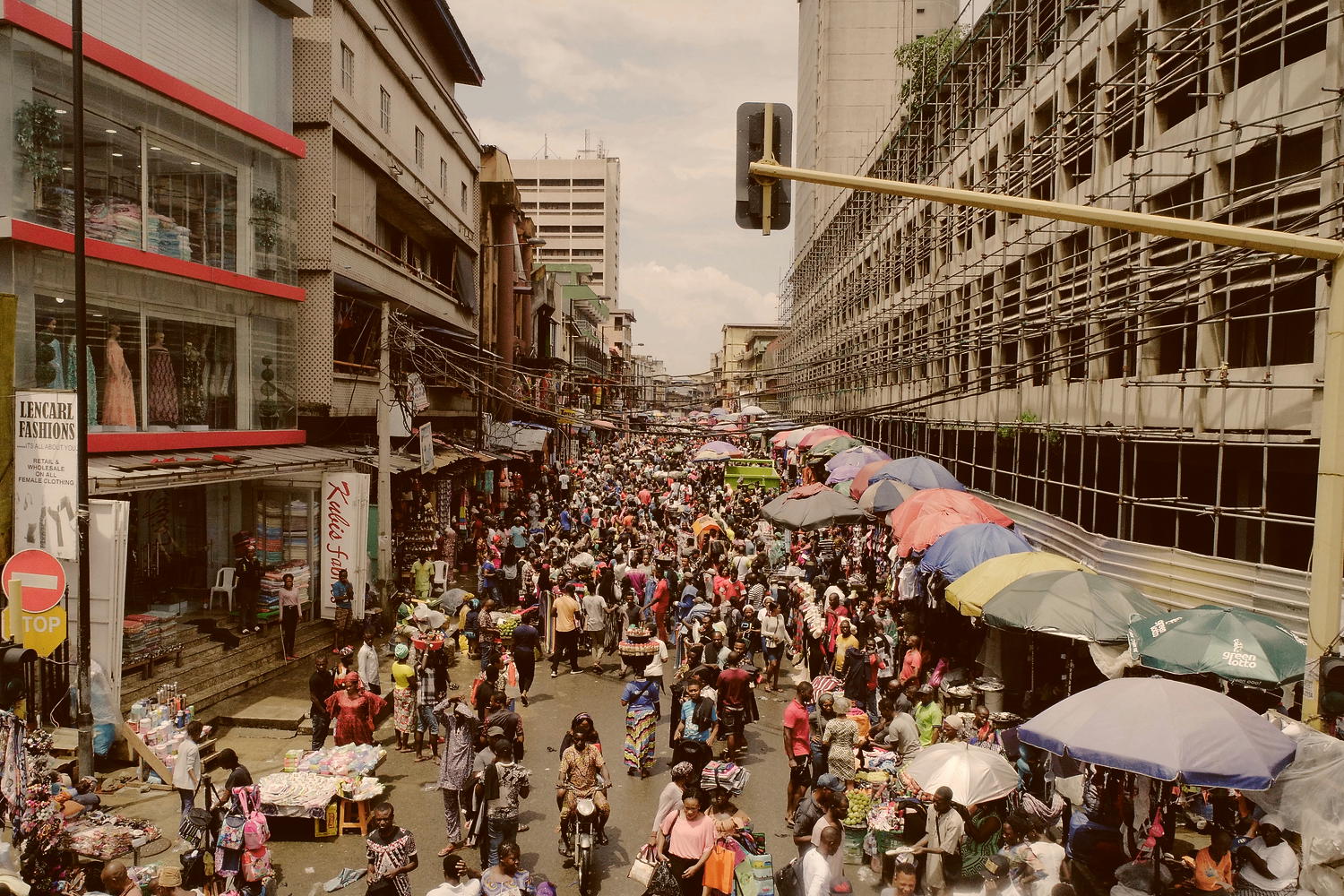
For the informal sector, which accounts for more than 55 percent of the economy, the losses are more devastating as businesses are already shutting down.
Sunday Vanguard observed that the development has led to several survival strategies across the country.
Damage control.
Speaking on the matter, economic analyst and Vice Executive Chairman, High Cap Securities Limited, Mr David Adonri, said: “A lot of enterprises are embarking on cost-cutting measures, which include reduction of working hours. Many businesses are migrating to virtual channels of business transactions and it has helped in watering down rising inflation. Companies, especially the import-dependent, are trying to readjust their activities in a manner that currency risk, which has crystallized, would not damage their businesses.
“They are doing damage control pending when they can transfer the depreciation of the naira and the inflation arising from it to their customers. The shock that the economy is experiencing now is temporary because sooner or later, the economy will readjust to the new price level and normalisation of activities will start.
“The enterprises are suffering from the short-term impact of the structural adjustment policies. These policies would repair the imbalances in the economy, making it market-driven.
Inflation
“Resources in the economy will be allocated through market mechanisms, leading to an increase in the overall efficiency of the economy.
“Inflation is still rising, meaning the purchasing power of consumers reduces considerably. When this occurs, the consumer pulls for the goods and services of Small and Medium Scale Enterprises, SMEs, resulting in a reduction in turnovers and profitability. Second, the high cost of producing their goods and services also constricts the profit of SMEs. However, because a lot of SMEs are flexible, they should be able to reduce costs to cope with the dislocation.
“For most enterprises, the critical thing now is to have staying power for them to survive until the economy readjusts. The situation can last for a year. It is a short-term discomfort, not long-term.
“For instance, in 1979, when I bought my first car, the cost of fuel per litre was 20 Kobo. However, the economy has transited from 20 Kobo to N500 without collapsing. Though it is not a good thing, these things are happening because of the wrong economic policies we have practised overtime.”
Tax relief
On his part, a senior lecturer at Lagos Business School, Dr Austin Nweze, added: “Businesses are crying because there is no tax relief. It is a high tax regime, particularly in Lagos where local government touts are on the rampage to collect one form of tax or the other. This has not allowed businesses to build up capital.
“Currently, business survival depends on their ability to manage costs, thus there must be no frivolous expenditure. In addition, due to cost management, when members of staff resign, they are not being replaced. Taxes of those who leave are pushed to those in the organisation. Companies are also not employing except when necessary.
“For the big businesses, they have bigger financial muscle, hence the ability to afford some luxuries due to past savings. However, small businesses don’t. Small businesses manage their costs and ensure that they get savings from their sourcing (where they get their raw materials), which they can transfer to consumers to be able to save their goods.
“As a result of inflation, purchasing power has been wiped off. The circular flow of income is distorted, people are not spending. Consumption is the major economy because people must buy. Only government can determine how long the situation will last but all it does is short-term. There is a need to go to the middle-term and long-term.
“The economy managers and policymakers are still confused as they have a big challenge hanging over them which is legitimacy. For now, they cannot do anything that is long-term until that is sorted out. The political aspect has to be concluded before we know whether the economy will pick up or not.”
Erosion of margins
Sharing insight, immediate past Director General of the Lagos Chamber of Commerce and Industry, LCCI, Dr Muda Yusuf, said: “It has been challenging for businesses because cost has gone up significantly and not many businesses can cope with the increasing cost. The situation has been further complicated by the fact that purchasing power is getting weaker by the day. If as a business your cost is going up and you cannot pass it onto the consumer, then the business is at risk.
“What many businesses have been facing is a serious erosion of their margins. While some of them are just managing to break even, some are selling at a loss just to be able to generate some liquidity and get some cash. It has been extremely tough. The transport cost has increased. Foreign exchange situation has also contributed to the challenges of businesses because they import a lot of materials.
“Once there is an issue with exchange rate, it becomes an issue for many businesses. While businesses are trying to look at the portfolio of their products to determine which is viable or not, some are adjusting the prices of their products to make them more affordable and some are reducing quality so that it can remain affordable.
“It has been difficult for small, medium and large businesses. Many of these big companies have been posting losses – MTN, Unilever, Nestle among others – because of the exchange rate revaluation in their books. We are hoping that before the end of the year, things will begin to stabilise.
Losses
“On the exchange rate front, we expect that, before the end of the year, the rate may stabilise at a much better level. We expect that the level of confidence in the economy will improve. We also expect some of our domestic refineries to have started functioning by the end of the year. All these problems are a result of the fact that we are in a transition phase in terms of economic reforms.
“This is not a legitimacy issue. It is about the shocks that a new policy direction is inflicting on the system. Once the macro-economic environment stabilises, the level of confidence will grow. If we can stabilise our oil production, stabilise our foreign exchange market and get our refineries working, many of these challenges will subside.”
Buffer
Also speaking, Spokesperson of Small and Medium Enterprises Development Agency of Nigeria, SMEDAN, Mr Moshood Lawal, said: “Some of the major causes of high cost of running business for the micro and small businesses include power and transportation, which the increase in fuel price has affected.
“What we have right now is a shift in the level of the challenges they face with respect to production in Nigeria. Definitely, there are measures being taken by government to act as a buffer to some of these challenges.
“The situation has affected them adversely in two ways. One, the purchasing power of most of their customers has reduced because people who should patronise them no longer do. They only do when these products fall under their basic needs.
“Two, it has led to an increase in cost of production, thus resulting in price increase. With the increase in price, there has been a drop in sales.
“However, government has promised to pump funds into nanobusinesses. If these businesses can get the N50,000 promised; it will serve as a booster, leading to an increase in production. Second, once transportation becomes easier, they will be able to move from one location to the other. If these measures are well implemented, it will lift the production process and MSMEs will smile.
Clusters
“For some of the MSMEs, they have already been advised to join cooperatives and move into clusters. Right now, they are surviving as groups rather than individuals. Some of them have associations that assist them in getting loans.
“Currently, they also do their production together. They produce and distribute together. For instance, instead of one person owning a generator, they share a generator. They also share warehouses for storage and share transport facilities. These strategies are helping in reducing cost. At the moment, we can say there is a lull in production, but MSMEs are surviving.”
Disclaimer
Comments expressed here do not reflect the opinions of Vanguard newspapers or any employee thereof.