
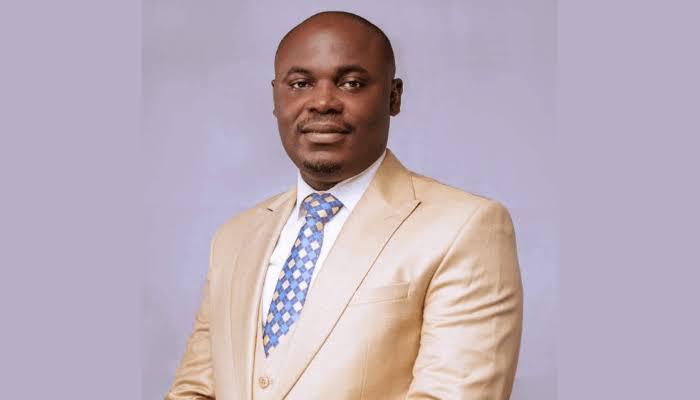
He has successfully demonstrated the ability to lead diverse team of professionals to higher level of success in cutting-edge markets and fast paced environment at this challenging period in Nigeria. Dr. Oyeleke Ajiboye, CEO, Efficacy Construction Company Limited, has shown that sustainable success is still achievable when corporate vision is driven with professionalism, hard work and ingenuity.
He is indeed an entrepreneur with an innovative mind whose managerial ingenuity has opened doors of opportunities for many Nigerians who are benefitting from his patriotic vision. In this exclusive interview, the efficacy boss shares his success story, challenges among others. Excerpts:
Can you give us an insight into your background?
I am a graduate of the University of Lagos, UNILAG, where I studied electrical engineering. I proceeded to obtain other post-graduate degrees in construction and project management and a PhD in housing. I also have Master’s, MBA and LLM in commercial law. I am the CEO of Efficacy Construction Company LTD and married with two children. The idea of starting my organisation sprouted when I was 19 years old at the Lagos State Polytechnic studying electrical engineering. During my ND One holiday, I thought of how to start making money through manufacturing or installing inverters. I didn’t want to do it with my name, so I started searching for a name that I could use for that kind of business. What came to my mind was Efficacy.
I consulted the dictionary, looked for the meaning of efficiency and came up with the name Efficacy. I penciled the name down, leading to my friends calling me ‘Mr. Efficacy’. In Year Three, I started repairing computers, it was at a time cyber cafés just came into operation. I think that was around 2002 and 2003. I would go to cyber cafés and help them repair their central processing units, CPUs, and work on monitors.
I learnt how to clone systems, do software and hardware. I also did exams on A+, C++, hardware, software, MCSC among others. I had this passion to excel because my background made me hate poverty. I am someone who did a lot of things to achieve my dreams. I would sell chicken, ice water and hawk yam or plantain flour otherwise known as ‘Amala’.
When I got the opportunity to proceed for tertiary education, I didn’t want to go back to such a life. When I was growing up, my parents had issues and were separated and it really affected the family’s finances. I remember that when I was growing up, I used to go to school three times a week and, on Tuesdays, I would hawk ice-cream in a neighbouring school.
I am happy that God also found me because there are many people who have done these things and have nothing to show for it. These things have served as lessons. One time at UNILAG, I had no food to eat, so I walked all the way to Mushin to see my aunt.
Unknown to me that she traveled, I waited till like 10pm because there were no phones to make calls at the time. Without any positive result, I had to start walking back to UNILAG. These situations were wake up calls for me to be financially independent.
I knew I had to work and plan. In Year Four, we had to do six months internship, so I had to start facing the business very well. I ran my business undistracted. By the time I was resuming Year Five, I had enough money to buy a car, which I needed because I was repairing monitors.
Then, computer monitors were not flat but big. I was servicing three cyber cafés – one in Ikorodu, and two in Palm Grove. I would carry the systems in my car, take them to Computer Village and fix them.
By the time I graduated, I got a job and started working even though that natural entrepreneurial skill was in me. My first job was at a construction company. When I switched jobs, the other job was in another construction company. In 2008, I registered Efficacy Homes LTD. and I have been using Efficacy Engineering since I was in school.
Later on, I resigned to face Efficacy squarely and God has been good to us. In 2016, we changed our name from Efficacy Homes LTD. to Efficacy Construction. We have grown beyond just housing to infrastructure development, civil works among others.
What is your definition of the words “integrity and merit?” How do they apply to you in your daily activities?
When people use the word integrity, it is almost like telling me to accept whatever they say because it is what it is. Integrity is built overtime. When you build it, people will begin to trust you because of an experience they have had with you and what somebody has said about you. For us as an organization practicing in the real estate sector, integrity is something that is very scarce in the sector and in the business.
It doesn’t mean that you won’t make mistakes or that you are perfect, it means that when you make mistakes or go wrong, integrity is what will make you come open to say, ‘sorry this happened, but I will remedy it.’ Integrity is doing things the way it should be done and following a standard procedure.
It is learning to do the right thing at the right time or being truthful at all times. When people are being truthful or strive to maintain integrity, it actually increases their level of efficiency. When it comes to merit, you cannot take it away from the word excellence or efficiency. Merit is built on consistency, doing the right thing over and over again.
It is just like the university system. If you have First Class in your first semester, it doesn’t mean you will graduate at all.
If you start failing from the second semester, by the time you get to Year Two or Three, you will be rusticated. Merit is pursuing diligence all the time. As an organization, we don’t just put the word ‘Efficacy’ out there, we try to look for solutions through strategic thinking, attracting the right people, working with the right people, developing the people around us and providing solutions to our clients.
It is often argued that some of the challenges facing Nigeria have to do with leadership and corruption. What is your take on this?
100 per cent! I cannot agree less. Nigeria is one of the most blessed countries I have seen in the whole world. By the grace of God, I have had the opportunity to travel and study abroad but I like it here in Nigeria and my family does too. Opportunities that abound in Nigeria: why do we have Indians in Nigeria or Lebanese flooding Nigeria. It is because there is something that they are seeing that others are not seeing. The situation is not peculiar to Nigeria.
The same way Americans are shouting that their country is bad and relocating to Canada is the same way we are relocating to Europe. From a personal perspective, I believe that our leaders need to do more; we need to hold the system accountable and the people who can increase accountability is government – the judiciary, police, the other security agencies and the civil service system among others.
Aside from being integrity-conscious, what are those other factors that have brought you this far in your career?
There are two factors. First is the God factor, knowing very well that God has helped me, and He is my only helper. One of my late mentors, Dr James, would say that pray as if your life depends on prayers and work as if your life depends on it. Those things have been guiding principles for me because I work very hard and pray. With these two things, God takes care of me. He helps me with my staff and team.
I have a very young and vibrant team here. A lot of them have graduated beyond Efficacy; some of them have gone abroad. Though we have been badly hit in the last two years because of the Japa syndrome as we’ve lost a lot of quality staff, we have to continue to look for ways to retain the best in the organization.
What are those factors that influenced your career path?
My experiences while growing up, I knew that if I didn’t work, I wouldn’t eat. Also, understanding that if I don’t work smart, I will be working like an elephant and eating like an ant. I didn’t have the luxury of a lot of things when I was growing up. I did a lot of things including game centre, bicycle rental business. Why? Because I know that money will always come to people that handle it well. As I got the money I invested it which helped me. I also read some books.
The first thing that changed my mindset was the first tape I listened to which title I can’t remember. It was an American tape. I read a book on principles of financial prosperity, it was written by Bishop Oyedepo. I also learnt some principles about how to manage money, how to save and how to multiply. One of my mentors also told me that money will buy you a bed, but it will not buy you sleep. Consequently, be careful of the kind of money you pursue.
What are the important lessons that have helped shape your career as a Chief Executive Officer?
There are different important lessons that I have learnt. In 2016, I went for a course at Stanford because I was very passionate about growing the business, but at every point I got to a certain growth level, the growth fell.
I met one of the facilitators of the programme and told him that I was trying to scale up my business. He said the first thing I should do was change my recruitment process so that when I get the right people, I should work on strategy. He also said that after strategizing, I will start execution and the cash flow will come. I had just one HR staff member, no corporate affairs department. However, I created a department.
I put corporate governance policies in place and I began to hold everybody accountable including myself. I created a legal department; documents were now being double checked through processes before they went out. I had to go for ISO certification and quality control.
They came at a cost, they were not cheap but those were the systems set in place since 2017 and we are still working on it. We started our ISO process in 2017 and eventually got certified between 2020 and 2021. There were some departments we needed to have in place, staff, methodologies and processes.
It took a lot of time. One of the lessons that I have also learnt is that you need to choose your fight in business. It is not everybody you should do business with or every client. For a company to retain its sanity in an environment like ours, it is not every business that you will do and must do.
Given the peculiarities of the Nigerian business environment, what are the challenges faced in your sector and how have you been able to overcome those challenges as an organization?
One of our greatest challenges as a country now is inflation. Everybody is suffering from it. Another challenge I know that we are facing as a country is security. When you look at every business now, what could be achieved with N2 million isn’t the same again, it has depleted. Since the increment of petrol price in May, I am not sure all organisations have increased salaries.
It is putting a lot of pressure on employees also. You have to be putting a lot of checks and balances in place and revisiting market study. At the moment, it is difficult to do an estimate, it is difficult to do purchase and procurement, it is difficult to manage contractors and sub vendors.
Inflation is a big challenge. When there is a little bit of hardship like it is currently, there is more security threat. Security personnel now connive with people to steal from business people because society is becoming more tensed. The situation won’t change if the economy doesn’t change.
How can government come in to change the situation?
I think one of the things government can do at this time is to reduce the interest rate on loans. Presently, bank loans have gone up to like 25 or 27 per cent. Government should inject funds into the banking system. Give palliatives to business owners who are qualified for it.
Government should reduce all interest rates to 15 per cent or 10 per cent so that companies that are already struggling can save their business. If subsidy is for saving money for the country, let the money recycle back to the system. Rather than share rice, I think reducing the interest rate on loans is one thing that government should do.
What is your advice to young Nigerians on the need to imbibe the values of integrity towards achieving success?
Social media is a movie and they shouldn’t live their lives by it because it is too-fake. When I see a lot of people trying to compete where there is no competition or trying to copy where there is nobody asking them for answers, I am stunned.
For me, I’ll tell them to run their race, not anybody’s race. Whatever you can do, do well. Don’t say everybody is doing cake and it is what I want to do. There is so much fake life out there and our youths are falling victim.
Disclaimer
Comments expressed here do not reflect the opinions of Vanguard newspapers or any employee thereof.