
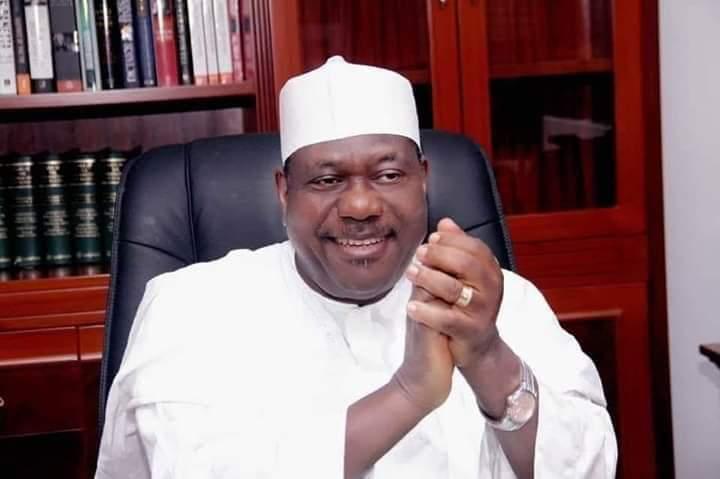
By Nnamdi Ojiego
The administration of President Bola Tínubu inherited a myriad of socio-political and economic problems. Poor infrastructure, unemployment, poverty, insecurity, increasing debt burden, fuel scarcity, economic downturn, inflation, and division along tribal and religious lines, among others were the challenges facing the country.
Corruption in government compounded the country’s woes, even as resources that were expected to contribute to gradually reducing the poverty rate were siphoned by a few people who took advantage of their positions in government.
The country was facing massive development challenges, including the need to reduce the dependence on oil for exports and revenues, diversify its foreign exchange sources, close the infrastructure gap, build strong and effective institutions, as well as address governance issues and strengthen public financial management systems.
The lack of job opportunities was at the core of the high poverty levels, regional inequality, and social and political unrest. High inflation took a toll on households’ welfare and price increases pushed more Nigerians into poverty.
The country was contending with a deadly insurgency in the North-East, as well as oil theft and violent criminality in the South-East and South-South, all while trying to improve infrastructure for Nigerians. Criminal elements orchestrated kidnappings for ransom throughout the country.
The extremist groups Boko Haram and ISIS-WAP targeted churches, schools, mosques, government installations, educational institutions, and entertainment venues in several northern and central states. There were renewed killings by herdsmen in Benue, Plateau and Kaduna – key crop-producing states – worsening the plight of farmers who were already faced with a myriad of crises, threatening the country’s food production. Hundreds of thousands of Nigerians have been displaced due to this violence.
Amid these, it was said that President Tínubu had reasoned that for his government to function optimally and have its policies and programmes monitored, coordinated, and implemented, and to effectively drive policy formulation in the Federal Ministries, Departments and Agencies, MDAs, he needed a consummate politician and a technocrat in one person.
Round peg in round hole
No other Nigerian fits more into this role than Senator George Akume, former governor of Benue State. There is no gainsaying that Akume is a consummate servant-leader, administrator and politician. Before coming to the limelight, he rose steadily from the civil service ranks and held several important positions including chairmanships of LGAs, and head of directorates before bowing out of the civil service as a Permanent Secretary to vie for the governorship of the state.
He was a two-term governor, three-term senator and a Minister of Special Duties under the administration of President Mohammadu Buhari and left each on a high note and has amassed the sophistication necessary to discharge the particularly important Office of the SGF.
Dubbed the engine room of the federal government, the Office of the SGF is saddled with enormous responsibilities. The office is responsible for organising Federal Executive Council (FEC) meetings and interfaces the federal government with state governments or any subnational body. These are no easy responsibilities; they require a tested hand like Akume to give these obligations the required bite.
Onerous responsibilities
With up to 20 important offices which include, but are not limited to Federal Road Safety Corps, Niger Delta Development Commission, Code of Conduct Bureau, National Identity Management Commission, National Poverty Eradication Program, National Agency for Control of AIDs, National Atomic Energy Commission, New Partnership for African Development, etc., the SGF has onerous responsibilities to discharge to ensure effective running of the Tinubu administration.
Careful observation shows that the former governor of Benue has brought a wealth of experience hitherto unknown to the SGF office. He has in the last 100 days dutifully discharged functions of his office to the best of his ability by acting as the adhesive tape that binds the presidency with the bureaucracy to ensure effective implementation of government policies.
As someone imbued with the requisite intellectual capacity, administrative competence, political imagination and leadership capital, he has impressed in the last 100 days as the nation’s leading bureaucrat.
On assumption of office, Akume had assured he would not disappoint Nigerians. “To have been selected to serve in this exalted position out of over 200 million Nigerians, it is a challenge to serve in line with the oath I have taken today. “I assure Nigerians I will do my best, I will not disappoint the President, I will not disappoint this country and I will not disappoint my party.
Honour to serve
“I believe Nigerians will find fulfilment in my responsibilities as I discharge that in their interest. It is an honour to serve the country and I am strongly persuaded that, guided by Almighty God, I will do my best and Nigerians will really have to reap the dividends of democracy”.
Living up to this promise, the SGF has provided the President with strategic advice on policy matters, offered recommendations to facilitate informed decision-making, overseen the day-to-day operations and administration of the government, facilitated collaborations, resolved conflicts, and promoted the implementation of government policies across various MDAs.
One of the major tasks he carried out in the last 100 days was serving as the Chairman of the 2023 Inter-Ministerial committee on Democracy Day. The event tagged “Hope Reassured”, held on June 12, away from the traditional May 29, was held in honour of the heroes who championed the political struggle against military rule and made extra-ordinary sacrifice for the enthronement of the democratic rule in Nigeria from 1999 till date.
Another commendable performance of SGF was that his office successfully completed the documentation process for all 45 Minister-Designates ahead of their inauguration by President Tinubu on August 21.
Bilateral Relations
He has consolidated the federal government’s fight against the triple scourge of AIDS, Tuberculosis and Malaria by enhancing collaboration with Global Fund when he received in audience a delegation from the Global Fund which approved about $1 billion for Nigeria as part of its grant to assist the country in the fight against tuberculosis (TB), malaria, and HIV/AIDS for the next three years.
The former lawmaker also sought to deepen bilateral relations with the British government in the area of security, agriculture and infrastructural development. He worked towards improving ties when he played host to the British High Commissioner to Nigeria, Richard Montgomery, when the latter paid him a courtesy visit in his office.
“We want to make a difference in the lives of our people. We are not after money, we are after infrastructure, we are after food security, and we are after energy. We believe with your support we should go further than this. We also have nine mandate areas. Honestly, by the time you support us, its mutual, you will be surprised that the relationship will soar to greater heights,” Akume said.
The former minister also courted the British’s government support to assist Nigeria to curb Boko Haram insurgency, banditry and farmers-herders clashes as they did during Nigeria’s civil war, and to support Nigeria in the area of education and provision of health, among others.
Employee’s Compensation
Furthermore, the SGF recently gave a boost to the compulsory Employee’s Compensation for workers in public and private sectors as well as its implementation in the states assuring that the FG was taking necessary steps to see to its realization
Akume who spoke to the executive and the management of the Nigeria Social Insurance Trust Fund, NSITF, during a courtesy visit to his office, assured that the fund would be assisted to realize its goals and objectives in view of the enormous roles it plays in the life of the Nigerian workers.
“This organisation (NSITF) has a lot to offer, too much to offer to the Nigerian workers in both private and public sectors of the economy. The injuries suffered by workers in the private sector and in the public sector are such that if you don’t come to their aide, they might be crippled for life.”
Restoring lost glory
There is no gainsaying the fact that some of the offices domiciled in the SGF are not working at full capacity and may require greater attention to rid them of indolence and neglect. Akume has applied his wealth of experience to rejig the offices under his supervision and have them work to form.
In a short while, he has turned around the moribund offices within his sphere of influence. His experiences both in the executive, legislative and ministerial offices were enough to effect reasonable changes in the MDAs. While his mild manner and sense of justice is effectively checking the indiscreet activities ongoing in federal offices across the country, there is hope that Akume’s period of service as the SGF is already helping immensely in restoring the lost glory of Nigeria’s public service.
Disclaimer
Comments expressed here do not reflect the opinions of Vanguard newspapers or any employee thereof.