
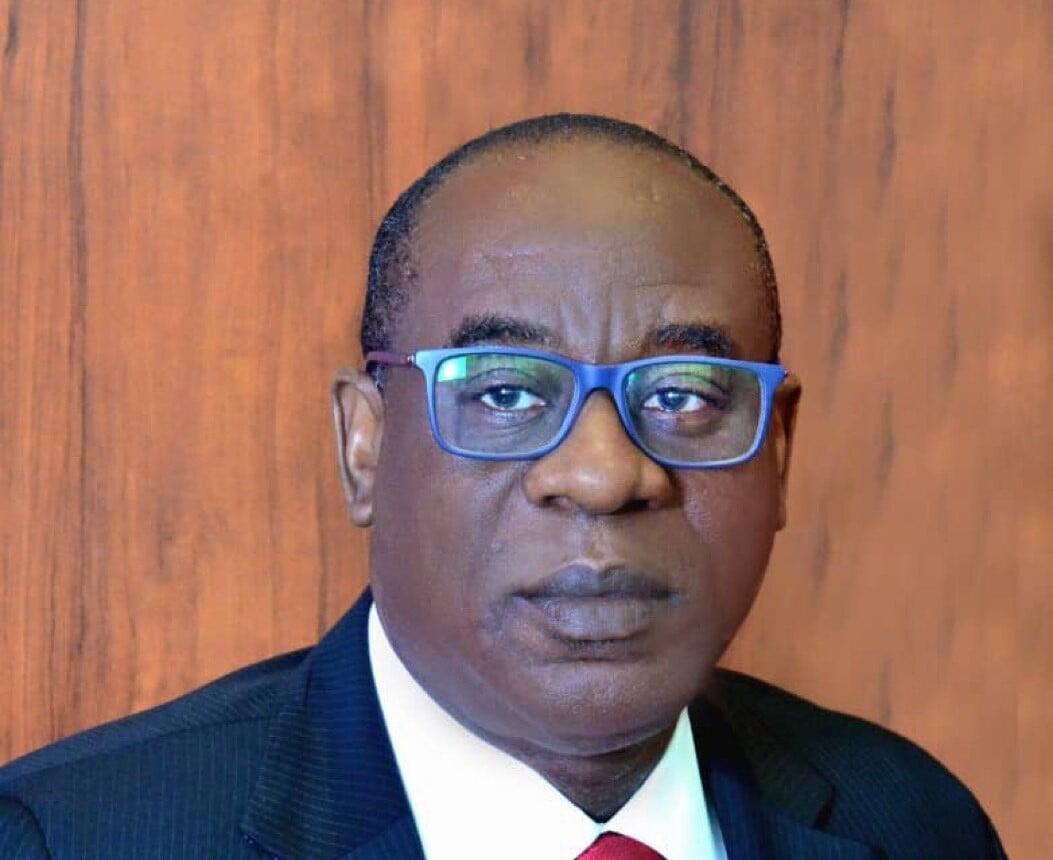
CBN Acting Governor, Shonubi
By Babajide Komolafe, Economy Editor
The nation’s quest for improved diaspora remittances inflow and increased financial inclusion has received an additional boost following new measures announced recently by the Central Bank of Nigeria, CBN as part of ongoing efforts to reform the financial system.
eNaira Payment Option for Diaspora Remittances
In 2022, Nigeria achieved Diaspora Remittances inflow of $20.13 billion, up from $19.2 billion recorded in 2021, driven by CBN initiatives like Naira4Dollars Rebate scheme, Export Proceeds Rebate scheme.
But following recent measures introduced to enhance transparency in the forex market, including elimination of the above scheme, the CBN announced new initiatives aimed at sustaining the growth in diaspora remittances inflow.
One of these initiatives is introduction of eNaira Payment Option to Recipients of Diaspora Remittances
Announcing the policy in a circular titled: “Operational Framework for eNaira Payment Option to Recipients of Diaspora Remittances,” and dated June 15, 2023 addressed to the International Money Transfer Operators (IMTOs) and the public, CBN Director, Trade and Exchange Department, Dr. Ozoemena Nnaji, said the new initiative would facilitate the payment of proceeds of diaspora remittances to recipients who choose eNaira as a payment alternative.
He said: “Under the guidelines, the IMTOs are required to apply for a one-time “No-Objection” to pay out in eNaira from the Central Bank of Nigeria (CBN).
“The bank shall also provide account details where foreign currency from IMTOs shall be received.”
Nnaji however stressed that the receipt of proceeds of diaspora remittance in eNaira remained optional, adding that the option of the digital currency payout shall run concurrently with the dollar payout.
According to the guidelines, IMTOs are required to open merchant wallets through the CBN and pre-fund the CBN account with foreign currency.
The CBN will consequently fund the IMTO merchant wallet with eNaira equivalent of the foreign currency earlier pre-funded by the latter.
The CBN further explained that the payment procedure shall involve a sender initiating a diaspora transfer with an IMTO of choice overseas providing details of the beneficiary’s wallet.
The IMTO then logs into the eNaira web wallet portal, debits its eNaira merchant wallet, and credits the beneficiary with the eNaira equivalent of the foreign currency sent at the origin at the I&E window rate.
Alternatively, the CBN said that IMTO could integrate with the eNaira portal from its platform via API provided by CBN and initiate the transfer of eNaira equivalent of the foreign currency sent at the origin at the I&E window rate.
The e-Naira is Africa’s first Central Bank Digital currency. Unveiled on October 25, 2021, by former President Muhammadu Buhari, the eNaira is designed to drive a more cashless, inclusive, and digital economy as well as complement the gains of previous monetary policy measures and fast-growing payments platforms.
The digital innovation is expected to support a resilient payment system ecosystem, encouraging rapid financial inclusion, reducing the cost of processing cash, enabling direct and transparent welfare intervention to citizens, and increasing revenue and tax collection.
With the new policy the eNaira will also facilitate diaspora remittances, reducing the cost of financial transactions, and improving the efficiency of payments.
Meanwhile, the Acting CBN Governor, Mr. Ade Shonubi has announced that the apex bank is currently reviewing the operational model of the e-Naira with a view to boost adoption and usage. .
Shonubi disclosed this while addressing the press at the end of the Monetary Policy Committee, MPC, meeting on July 25.
He said: “We have over 20 or 25 million people who are registered and have wallets but we have not seen the level of activity that commensurate with that number of people. So we continue to talk to them. The volumes increase, and we learn with each passing day. We are reviewing the model and we think soon definitely before the end of the year you will see significant growth and changes because the feedback we have gotten from the public and the marketplace has been distilled and we are listening to them. We believe it is going to have an impact on the adoption and then maybe we would have less new Naira notes to print.”
Financial Inclusion
In additional to the above, the CBN also announced two initiatives aimed at extending its reform agenda to efforts to widen access to financial services to the populace and thus enhance attainment of the 95 per cent financial inclusion goal by 2024.
The first in this regard is the decision to exempt Primary Mortgage Banks, PMBs and Microfinance Banks, MfBs from the cash withdrawal limits.
Recall that the CBN on December 14th 2022 introduced the Revised Cash Withdrawal limits. The CBN introduced maximum cash withdrawal limits of N500,000 weekly for individuals and N5 million weekly for organisations. The initial limit was N100,000 for individuals.
The CBN however allowed exemptions to the limits in the event of compelling circumstances where cash withdrawal exceeds the limits required for legitimate purposes. But such requests, the CBN explained in a circular, will attract a processing fee of 3 percent and 5 percent for individuals and corporate organisations, respectively.
“And in such cases, the financial institutions are directed to obtain some information from the customer, at the minimum, and upload the same on the CBN portal created for the purpose.
“The information includes a valid means of identification of the payee (National ID, International Passport, or Driver’s License); Bank Verification Number (BVN) of the payee; Tax Identification Number (TIN) of both the payee and the payer; and the approval in writing by the MD/CEO of the financial institution authorising the withdrawal”, the CBN added.
Furthermore, the CBN limited payment of third party cheques over the counter to N100,000 while directing banks to encourage their customers to use alternative channels (internet banking, mobile banking apps, USSD, cards/POS, eNaira, etc.) to conduct their banking transactions.
But in a bid to ensure that limits does not impede achievement of the nation’s financial inclusion goal, the in a circular to banks and other financial institutions, titled, ‘Exemption of Primary Mortgage Banks and Microfinance Banks from cash withdrawal limits’, the CBN directed that PMBs and MfBs should be exempted from the withdrawal limits.
Signed by the Director, Payment System Management Department, Musa Jimoh, the circular stated: “The Central Bank of Nigeria hereby directs the exemption of microfinance banks and primary mortgage banks that provide banking services to the economically active poor from paying the processing fees for withdrawals above the cash withdrawal limits for direct cash withdrawals from their corresponding banks.
“This is to enable them to continue to play their expected roles in the economy and provide specialised retail banking service to their customers.”
The circular added that, “Please note that the microfinance and primary mortgage banks are required to fully comply with the cash withdrawal limits in serving their customers as per the circular with reference number BSD/DIR/PUB/LAB/015/073 dated December 21, 2022.”
Collaboration for Financial Inclusion
In line with the financial inclusion efforts, the CBN also announced collaboration with two key global bodies to boost financial inclusion and growth of financial technology companies, FinTechs.
In this regard, the CBN announced a partnership with the Bill and Melinda Gates Foundation (BMGF) on how to deepen collaboration on financial inclusion in Nigeria.
Accordingly the CBN, led by the Acting Governor, Ade Shonubi, held a meeting with with the BMGF, led by Mr. Bill Gates in Abuja discussed new financial inclusion initiatives for the country.
Speaking at the meeting, Shonubi, reiterated the commitment of the CBN to continually partner with BMGF and other development partners to explore innovative solutions for driving access to finance.
Shonubi, who was accompanied by the Deputy Governor, Financial System Stability (FSS), Mrs. Aishah Ahmad, disclosed that much progress had been made in various aspects of financial inclusion.
He noted, however, that some challenges still remained in attaining the desired level of financial inclusion in Nigeria. The CBN boss therefore, called for greater partnership between the apex bank and the BMGF.
In his remarks, the co-chair of the Bill and Melinda Gates Foundation, Mr. Bill Gates highlighted the foundation’s focus areas for continued engagement in Nigeria to include health, agriculture and financial services.
Gates expressed satisfaction that support from his organisation was catalysing developmental actions in Nigeria.
He admitted that there were challenges and gaps and expressed optimism that the country would witness better outcomes given the new economic and monetary policies currently in place in Nigeria.
Disclaimer
Comments expressed here do not reflect the opinions of Vanguard newspapers or any employee thereof.